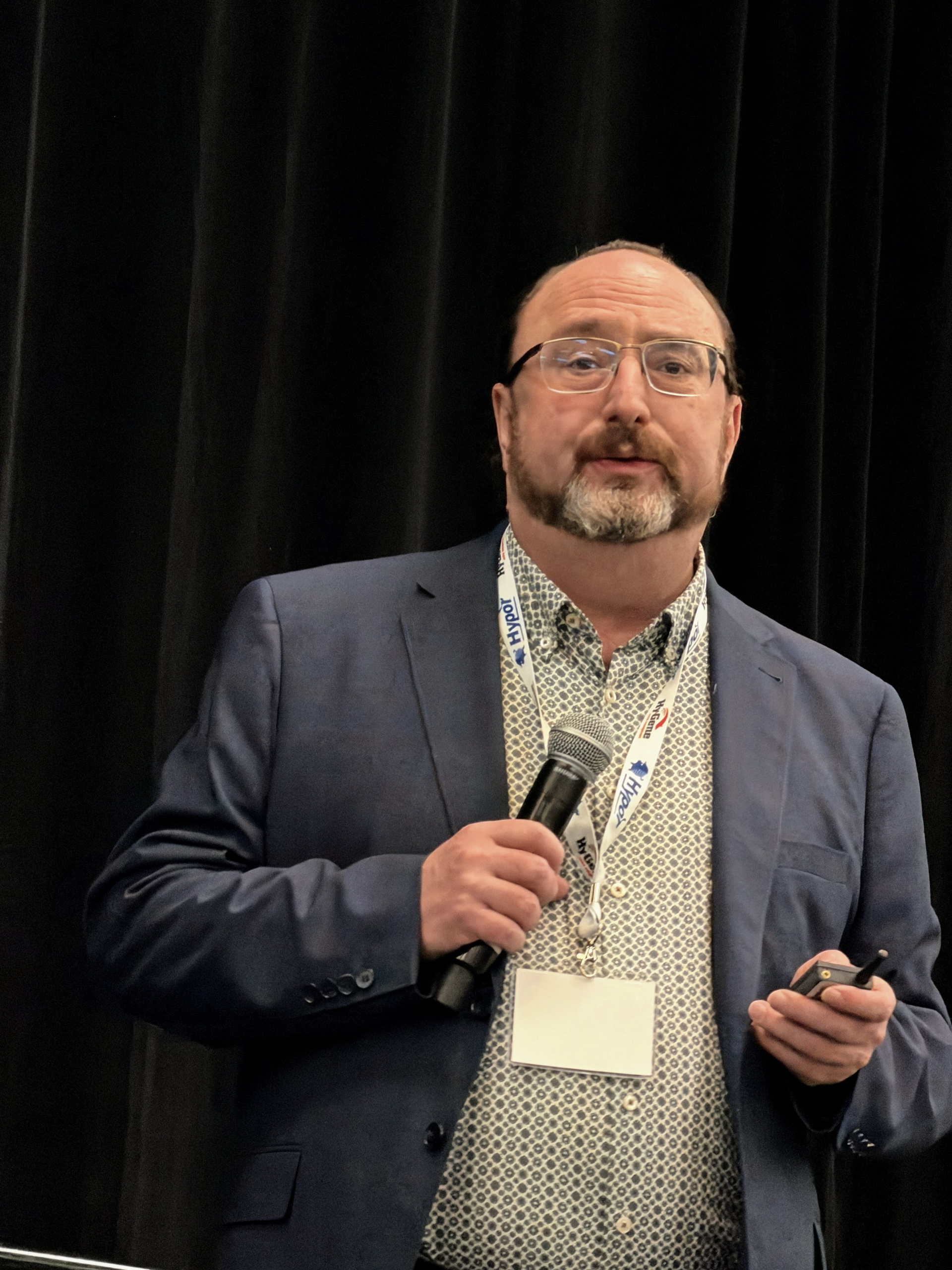
Speaking at the Manitoba Swine Seminar in Winnipeg, Cam Dahl, general manager of Manitoba Pork, told producers that 2025 delivered profitability, but uncertainty now defines the outlook for 2026.
Dahl described the past year as one of sharp contrasts. Strong demand for pork and pigs supported margins. Feed costs stayed manageable. Consumers continued to buy pork as an affordable protein. Manitoba also avoided the major disease outbreaks seen elsewhere. “When the industry is profitable, that matters,” Dahl said.
At the same time, political and trade pressures created instability that will not fade quickly. Dahl said uncertainty shaped decision-making across the sector and will remain a dominant theme in 2026. “Uncertainty really was the word of the year,” he said.
Manitoba exports roughly 90 percent of the pigs born in the province, either as live animals shipped to the United States or as pork exported globally. That reality makes trade the most important policy issue facing the industry. Dahl said rising protectionism threatens decades of integrated North American trade.
He cautioned producers not to view “America First” as a temporary political phase. “This is not about one election,” Dahl said. “There is broad support in the U.S. for moving away from free and open trade.” That shift matters deeply for Manitoba pork producers who rely on access to U.S. markets.
While Canada avoided prolonged tariffs in 2025, Dahl said the protection provided by the Canada–U.S.–Mexico Agreement now feels fragile. The agreement is subject to a major review in mid-2026, with three possible outcomes: renewal through 2032, a transition to annual reviews, or termination. Dahl expects annual reviews. “That keeps uncertainty front and centre,” he said. “And uncertainty slows investment.”
Tariffs are not the only concern. Dahl pointed to country-of-origin purchasing rules that took effect on January 1, requiring some U.S. government purchases to favour meat born, raised, and processed in the United States. “That discriminates against Canadian pork,” he said. Segregation costs processors money. “If they don’t have to spend it, they won’t.”
Dahl also raised concerns about state-level regulations such as California’s Proposition 12. The law requires pork sold in California to meet specific housing standards, regardless of where it was produced. Dahl said pork demand in California declined while prices increased. “Those who wanted to shrink animal agriculture are achieving that,” he said.
He warned that if similar legislation spreads to other states, North American markets could fragment further. Producers would face multiple production streams, higher costs, and fewer efficiencies. “That costs money,” Dahl said.
Beyond the United States, Dahl highlighted trade barriers in other major markets. A 25 percent tariff on Canadian pork entering China costs the industry about $100 million annually. In Europe, non-tariff barriers continue to limit access promised under long-standing trade agreements. “We signed the deals,” Dahl said. “Now they need to work.”
He reminded the audience that food and beverage manufacturing is the largest manufacturing sector in Canada, accounting for more than 20 percent of manufacturing value and over $175 billion annually. “We still get forgotten,” he said. “That has to change.”
Dahl said Manitoba Pork continues to engage closely with U.S. allies, including producers, processors, and state officials. Recent meetings reinforced the shared value of integrated markets. “They understand how important trade is,” he said.
Disease management formed another central part of Dahl’s remarks. He credited Manitoba producers for maintaining strong bio-security and collaboration. While much of the U.S. hog sector faced PRRS pressure in 2025, Manitoba avoided major outbreaks. “That doesn’t happen by accident,” Dahl said.
He reminded producers of the cost of failure. “The last PED outbreak in Manitoba cost about $100 million,” he said. “Prevention always costs less than recovery.”
Dahl said Manitoba’s success stems from a value-chain approach that includes producers, veterinarians, processors, and transporters willing to accept short-term costs to protect long-term stability. “That makes a massive difference,” he said.
Looking ahead, Dahl expects profitability to continue into at least the first half of 2026, supported by strong demand, disease pressure in other regions, and reasonable feed costs. Still, he said, uncertainty weighs heavily on long-term investment. “It’s hard to build a $15-million barn when you don’t know what trade looks like,” he said.
Dahl closed by telling producers that 2026 will likely mirror 2025, with solid fundamentals but rising instability. “Trade policy will decide the future more than production,” he said. “We have to stay engaged and keep pushing for certainty.” •
— By Harry Siemens