Canada’s Pig Code of Practice is undergoing a major update, with completion expected in spring 2028 and full influence on barn design and management by 2029. The National Farm Animal Care Council is leading the process, reviewing scientific research and priority welfare issues to shape new standards for sow housing, space, enrichment, and overall welfare. As producers prepare for the coming changes, the conversation is shifting from simple compliance to long term barn design, labour attraction, and practical productivity.
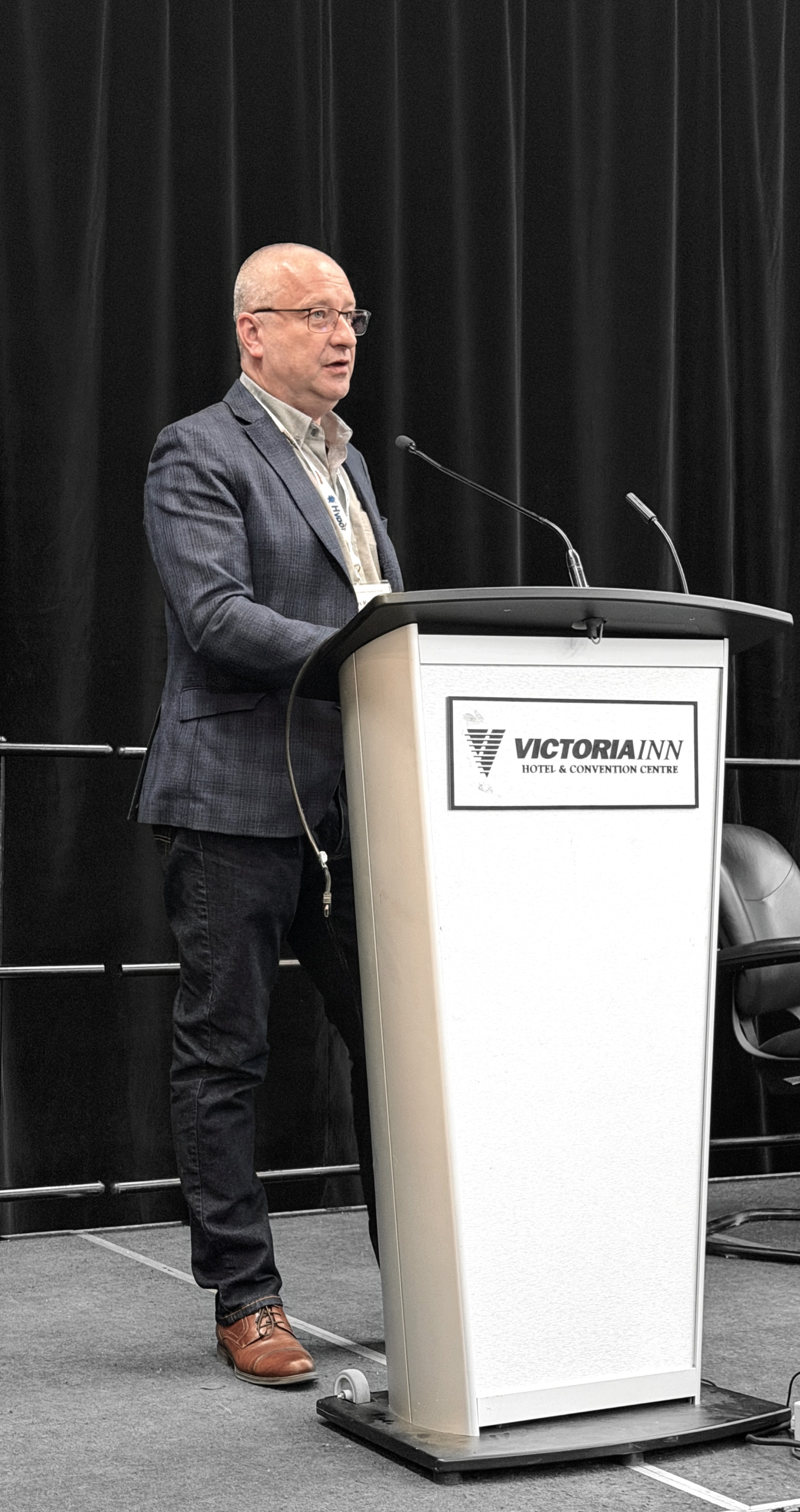
At the 2026 Manitoba Swine Seminar, Kevin Kurbis of New Standard Ag addressed those realities head on. Kurbis, who works closely with producers transitioning to loose sow housing, said the future of barn design must consider who will be working in those barns. “Who’s replacing us on these farms?” he asked. “It’s not by making a tougher environment. It’s going to be technology. It will be easy to use. It’s going to be a better, intelligent environment inside that building.”
Kurbis said loose housing succeeds when producers start with space, not equipment. He cautioned against relying on a single square foot number. “Twenty four square feet is not the right number for everybody,” he said. “It’s nice for some, but wrong for others.” He emphasized that space must be designed with purpose—resting areas, feeding zones, movement lanes, and social interaction spaces that reduce stress and improve sow behaviour.
Feeding remains the anchor of any loose housing system. “If you do that right, the other stuff gets easier,” he said. Whether barns choose electronic sow feeding, free access stalls, or hybrid systems, the goal is consistent, predictable access that lowers aggression and stabilizes the group. Comfort ties the system together. Kurbis described the ideal pen as one where 80 to 90 percent of sows are lying calmly when a person walks in. “That’s the key to success,” he said. “You’ll see it in their social interactions.”
Looking ahead to 2029, Kurbis said the industry is entering a growth cycle. Producers who avoided building during tougher economic years are now asking how to expand. “We’re going to see more pigs finished here,” he said. “Packers want more. Markets want more. And sow production will increase.” He added that producers are thinking long term, not short term fixes. “Guys are asking what the next 15, 20, 30 years bring. That’s good. Loose housing has to be part of it. Free farrowing is coming. Efficiency will matter more than volume.”
Kurbis drew one firm line on barn renovations: slat width. Many existing farrowing crates sit over slats with 1.5 inch openings—fine when sows never walk on them. But once crates come out and pens go in, those slats become a hazard. “If you don’t change that slat, you’ll have hooves getting caught,” he said. “It’s a real health concern. That’s my hard line in the sand.”
Producers are showing strong interest in upgrades. Many barns are aging, and operators are tired of patching with welding rods. Whether the 2029 Code requires it or not, Kurbis expects a wave of modernization. But he warned that the industry faces a major challenge: finding enough skilled people to build the barns. “Our biggest challenge will be having the people and teams skilled enough to build these barns,” he said. Residential construction may slow, but those tradespeople are not barn builders. Hog barns require specialized crews for ventilation, concrete, gating, slats, and automation. “It’s being talked about, but no solution yet,” he said.
As the new Code approaches, producers are balancing welfare expectations, economic realities, and the need to attract the next generation of barn workers. Kurbis said the goal is not simply to meet regulations but to create barns that are safe, efficient, and appealing to work in. “It’s not about fighting the regulations,” he said. “It’s about building barns people want to work in.” •
— By Harry Siemens