Devon Baete is the field operations manager for Squeal on Pigs Manitoba and has expanded wild pig trapping across Manitoba. With an education in Natural Resources Management and 15 years of experience working one-on-one with landowners as a watershed project manager, Devon brings a grass-roots approach to wild pig eradication.
Devon started the province’s only trapping program as a volunteer in 2018 and has worked with Squeal on Pigs Manitoba since 2020 and full-time since 2023.
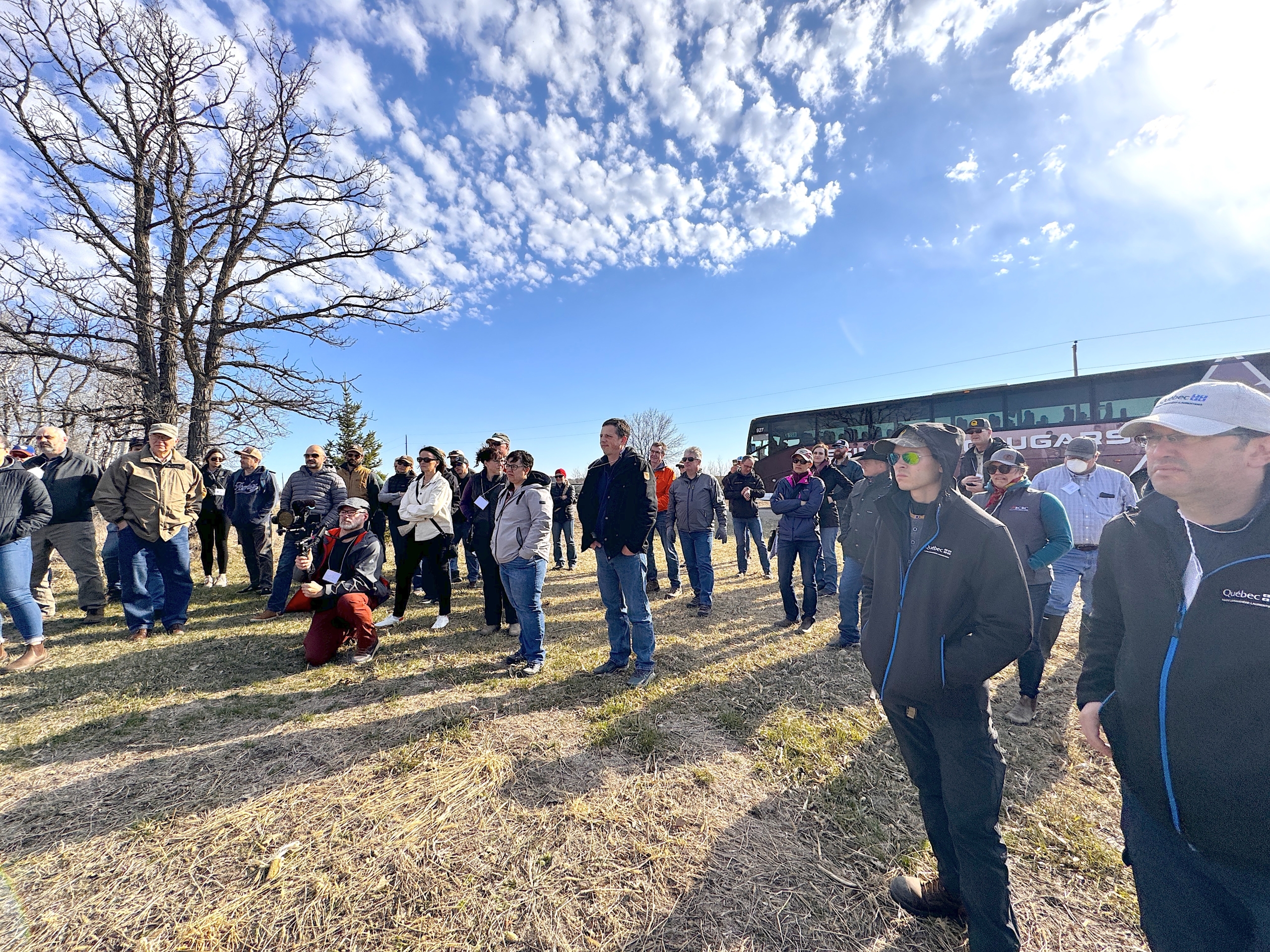
At the recent Canadian Wild Pig Summit in Brandon, MB., Devon presented his experience and then took the group on a personal tour of parts of Spruce Woods Park, demonstrating drone surveillance and trapping setups.
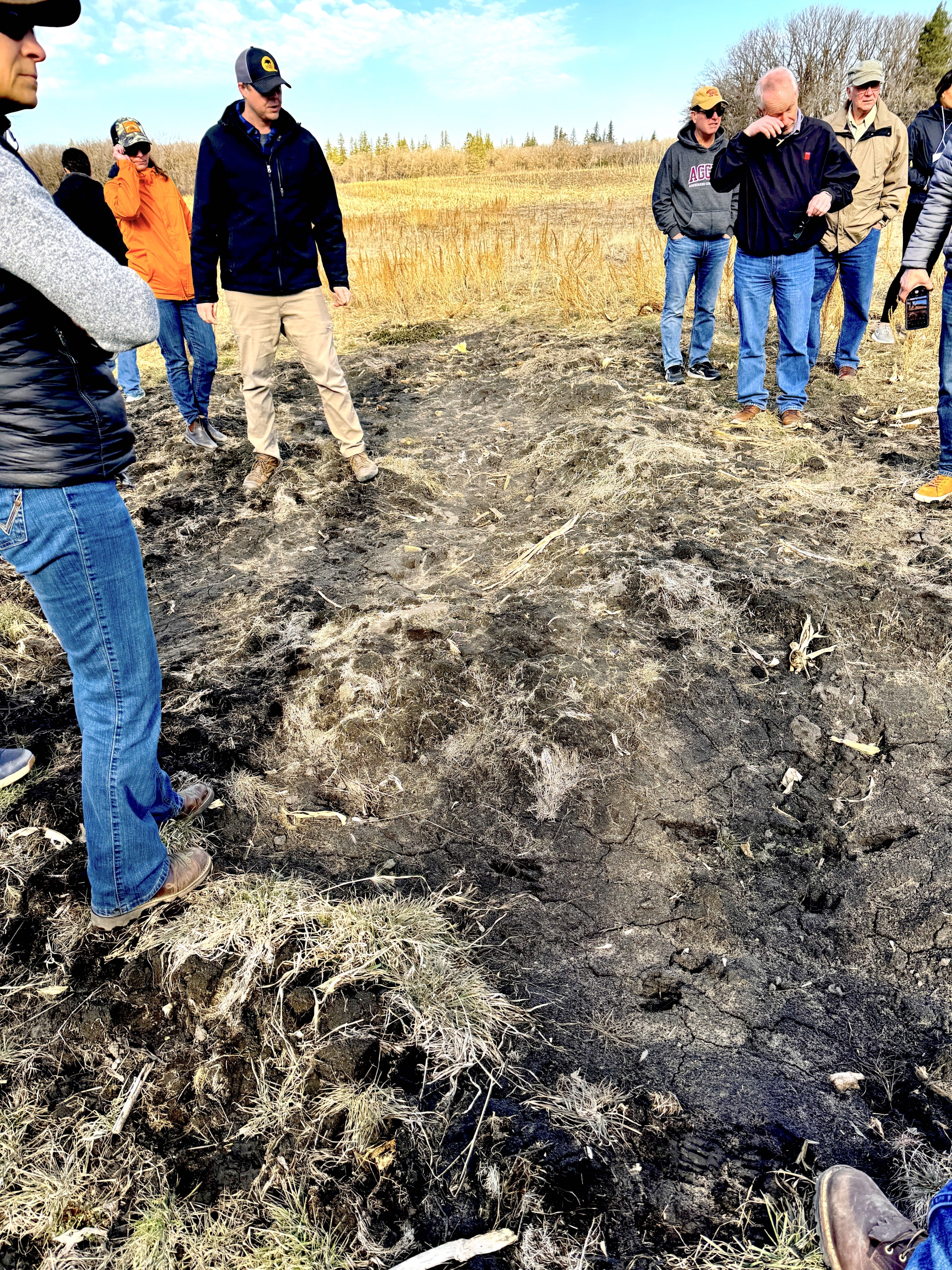
The tour on April 24 stopped near an area dug up by wild pigs, particularly in the previously grown corn field, which attracts them to feed.
“We’ve observed quite a bit of rooting in the vicinity with several farmers moving around more traps to address the situation,” he said.
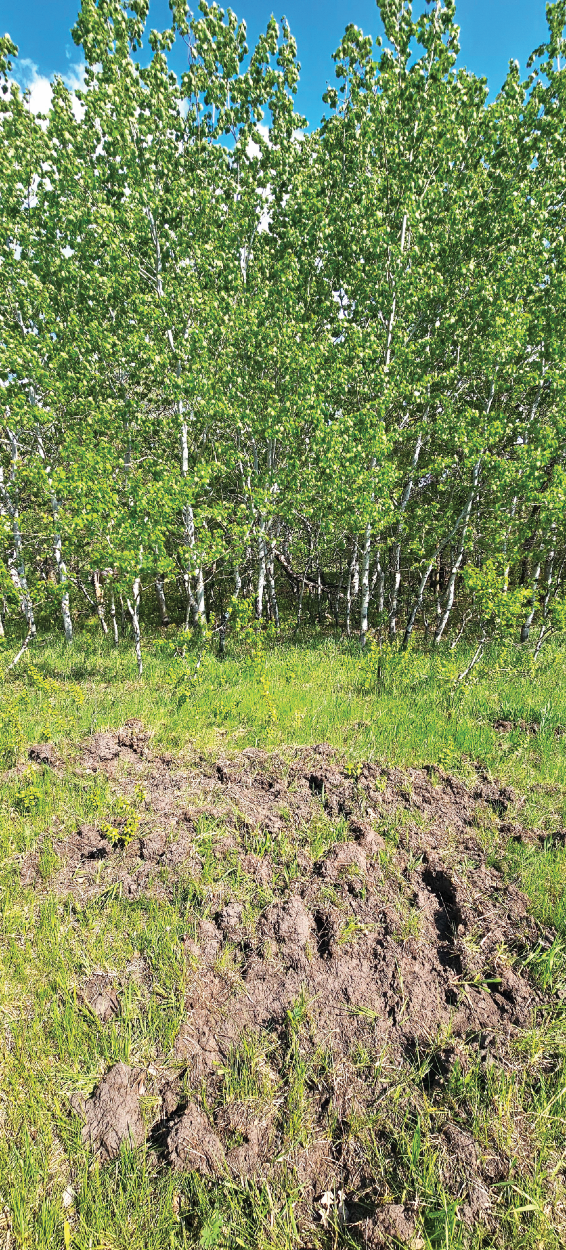
Devon and his crew found significant additional rooting near that area the week of May 20. The pigs move through Spruce Woods Park, travelling and feeding.
“They don’t tend to stick around for long but cause damage while there.”
Recent photos of the pigs’ rooting and damage could help understand the extent of the problem and plan more effective control measures.
At the recent summit, Devon shared how the setup involves around 30 corral traps distributed to landowners. These landowners are responsible for managing these sites and consistently capturing pigs. “Some landowners captured pigs last week despite ongoing meetings and other activities,” he said. “Significant planning is underway for the upcoming year and beyond, with a strong focus on increasing trapping efforts within Spruce Woods Park.”
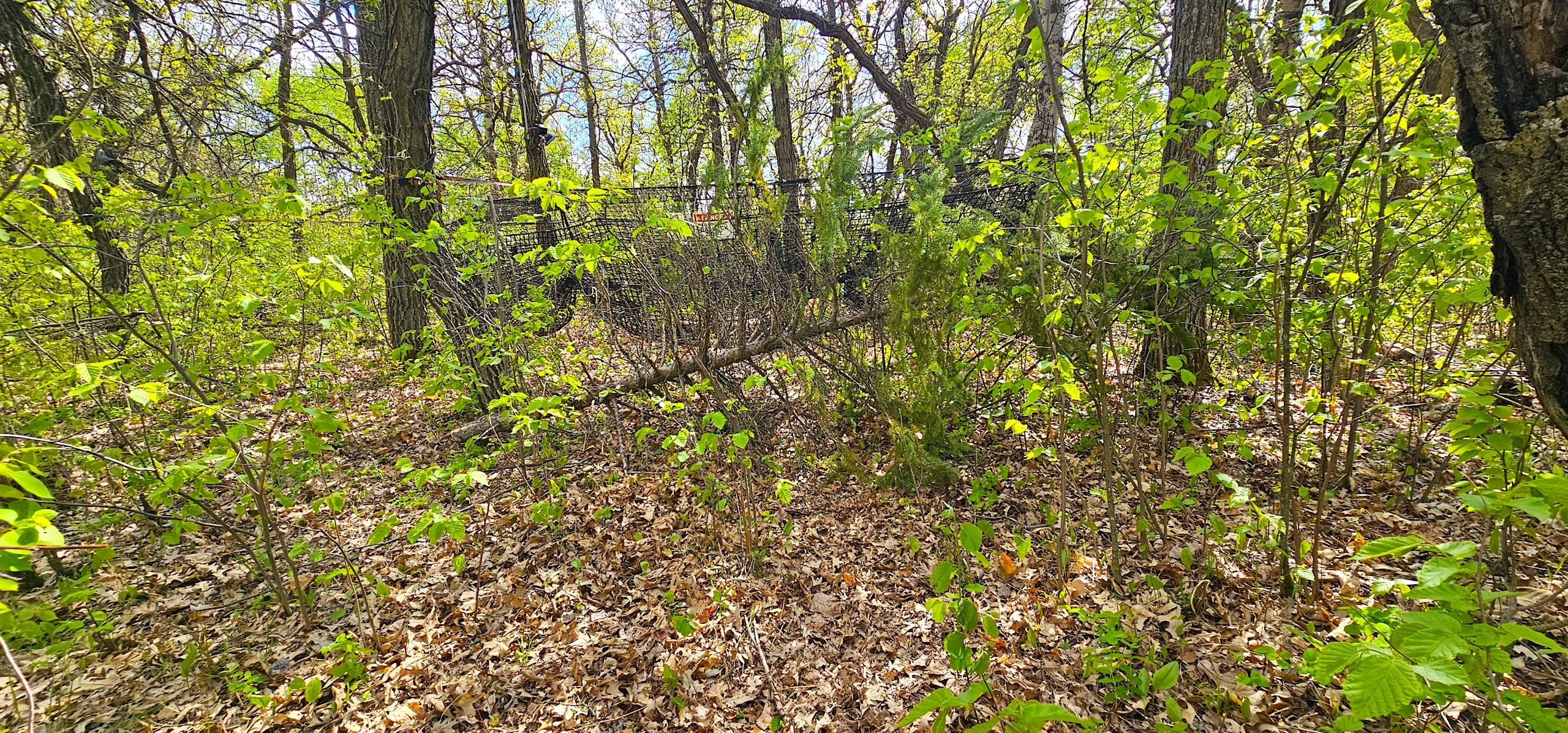
Devon said the specific technique and equipment vary depending on the location and the targeted pigs. Typically, the public reports rooting or damage. The team goes out to confirm the presence of pigs, setting up cell cameras to monitor the area.
Sometimes, the pigs do not return to these areas, but the cameras continue to provide surveillance. When pigs return, they set up metal corral traps with bait, and the team works closely with landowners to manage the trapping process effectively.
Trapping efforts near Spruce Woods Park involve various techniques and equipment, including corral traps, net-style traps, and thermal drones. The approach depends on the specific situation and pig activity, often guided by public reports of rooting and damage. The team collaborates with landowners for effective management, with the biggest concentration of wild pigs in Manitoba found around Spruce Woods Park. “While the exact population is unclear, current data from cameras and monitoring suggest that the population may drop.”
Devon keeps adding more cameras, monitoring, and setting up additional traps.
“Collaboration with landowners is critical to managing the pig population,” he said.
Success stories, particularly those north of Cypress River, show significant impacts from long-term trapping efforts. Expanding these efforts to other regions will yield similar positive results.
The largest number of pigs trapped at one time was 13 during a winter capture, including two sows weighing over 300 pounds and containing 16 fetuses, along with 11 juvenile pigs weighing 50 to 80 pounds each. In total, the mass of pigs captured exceeded 1,000 pounds.
After dispatching the pigs, the workers collect tissue samples, particularly spleens, and send them to the National Centers for Foreign Animal Disease for testing and creating a tissue bank. The landowner determines the fate of the pigs by composting the poor-quality pigs but has the option to process them, but common sense says no due to the high potential for parasites.
Fellow journalist Ed White, who has taken the tour before, noted the high risk associated with consuming these pigs, which are not comparable to heritage or organic pork.
“This collaborative approach with landowners, who manage the traps, proves more effective than hunting,” said Devon.
Next, Devon explained the intricate benefits of using drones to capture and eradicate wild pigs. Thermal drones require experience to use effectively, as pigs tend to stay under cover, unlike deer or elk, which are often out in the open. Pigs typically bed down under spruce trees, appearing as hot, oval-shaped thermal spots. Multiple pigs cluster together, creating large white thermal shapes under tree cover. “Identifying pigs is challenging, necessitating a focus on suitable habitats and careful observation of these thermal patterns.” •
— By Harry Siemens