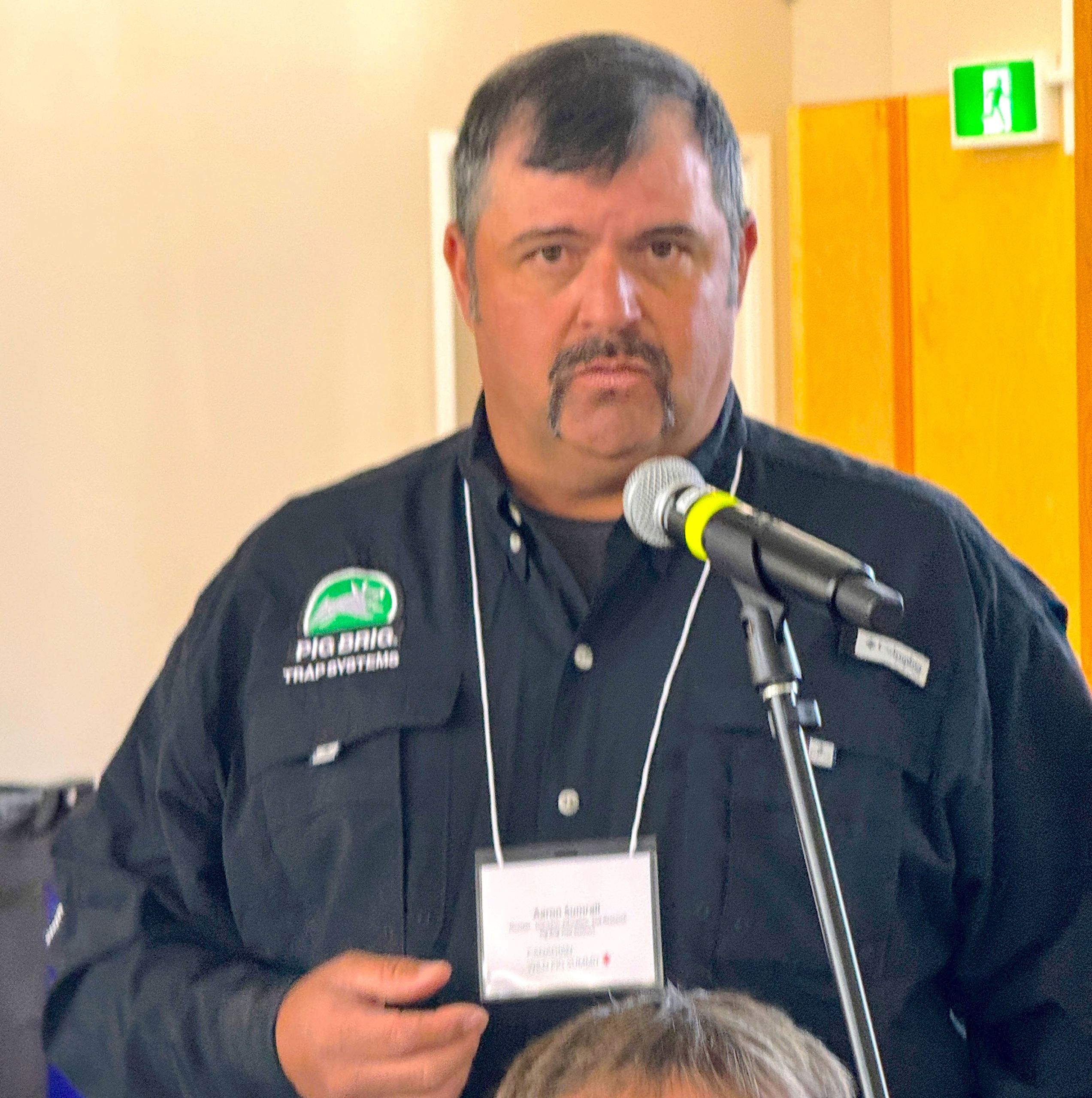

Aaron Sumrall, PhD is the Director of Outreach, Education, and Research at Pig Brig, a role he has held since joining the team in the fall of 2021. His research and management focused on feral pig management, including diseases, biology, behaviour, economics, damage, and human/feral pig dynamics.
Aaron leads Pig Brig’s global outreach, working with about 35 countries on wild pig management. His responsibilities include addressing concerns related to wild pigs, assisting with resource management and policy development, and collaborating with different cultures to establish sustainable solutions for feral pig issues.
Sumrall said the Pig Brig trap system is the world’s only patented net trap system. It was developed as an in-house product by leveraging years of experience from various company projects. Recognizing the necessity of an effective and adaptable trapping solution, Pig Brig extended this innovation to global use.
“This trap system represents not just a product but a dedicated team and family committed to its success and implementation worldwide.”
At the April Canadian Wild Pig Summit in Brandon, MB, a recurring question was why traps are used to eradicate wild pigs instead of relying on hunters.
But according to Sumrall, it won’t have the effect people might think it would have.
“Right, you’re not going to shoot your way out of a pig problem,” he said.
Wild pigs, or feral hogs, are creatures of habit. They often develop specific movement patterns and rotational behaviours in their habitats. Utilizing these predictable patterns can significantly enhance the effectiveness of eradication or control efforts.
When a group of pigs, known as a sounder, establishes a routine, it becomes easier to implement strategies for total control or eradication. Trapping systems like the Pig Brig net trap system can exploit these habitual behaviours by strategically placing them along their known routes and frequented areas.
However, using firearms to harvest individual pigs can disrupt these patterns. When one pig is shot, the remaining members of the sounder tend to scatter, making it much harder to track and trap them subsequently.
“This scattering behaviour complicates efforts to control the population, as the pigs become more wary and their movement patterns become less predictable,” he said.
Trapping systems and coordinated, low-pressure strategies are more effective in maintaining control and preventing the spread of disease.
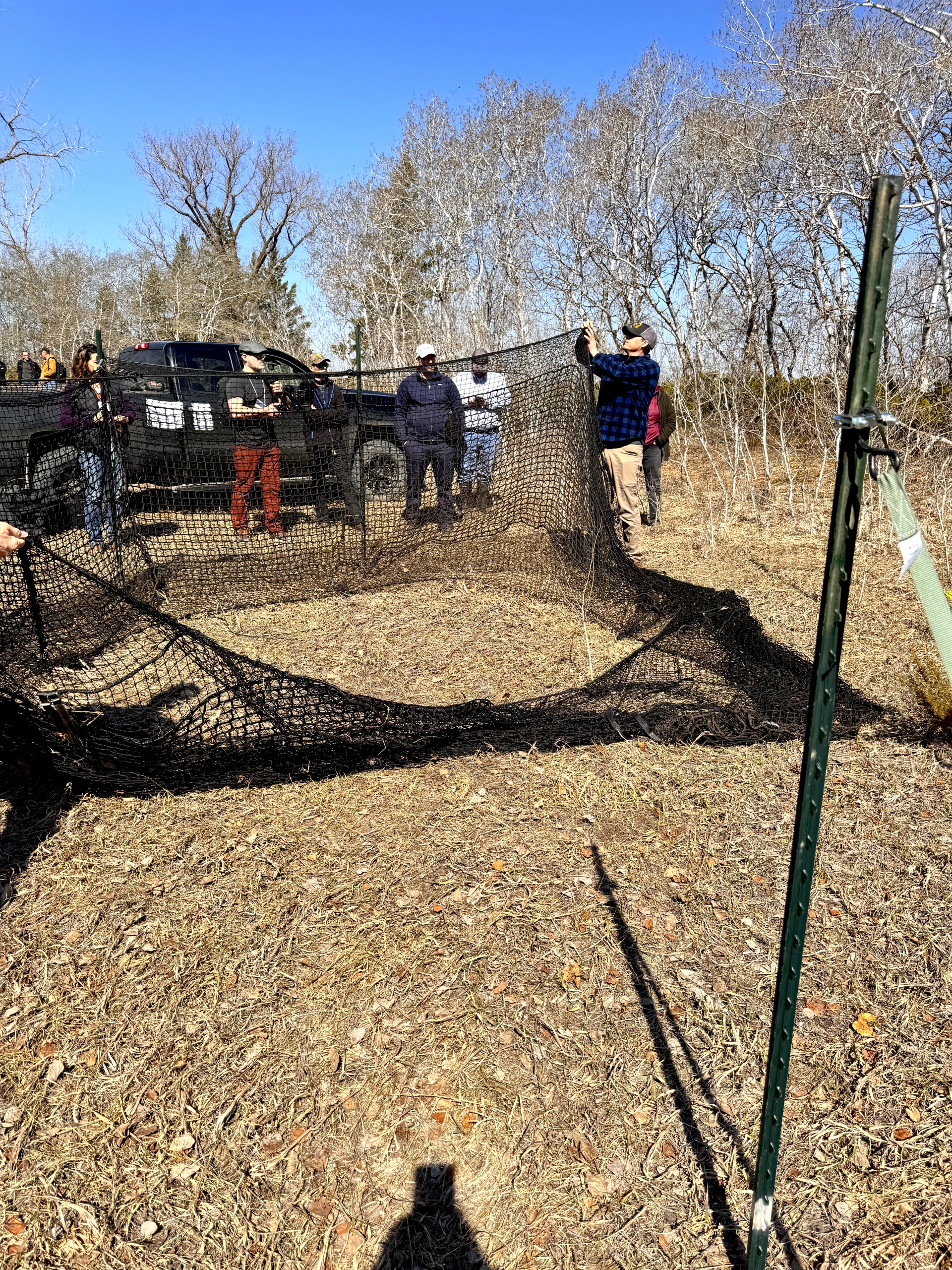
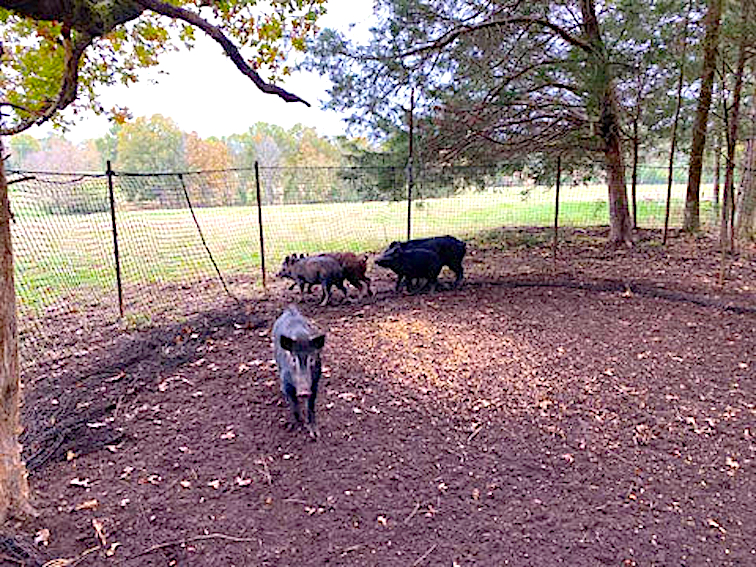
eradication. Photo supplied.
When dealing with solitary wild pigs that have established a predictable pattern, firearms can efficiently and quickly remove these individuals. Additionally, firearms can temporarily push back wild pigs in agricultural areas where planted crops are being heavily damaged. This provides critical time to implement other, more comprehensive management strategies for larger groups. In these contexts, firearms offer a quick response to immediate threats, helping to protect crops and manage individual pigs, while broader strategies are put into place for long-term control.
“But by and large though, whenever you reach for a rifle to manage a population like what we have with pigs, you’re reaching for a band-aid to put on a broken leg,” said Sumrall.
Wild pigs cause significant damage to farmland, and many farmers may not be fully aware of the extent of this issue. The problem is astronomical and increasing, with data suggesting that in the lower 48 states alone, wild pigs cause over $2.5 billion annually in direct losses at the farm level.
Collaboration with wildlife management authorities and initiatives like Squeal on Pigs can also help manage and reduce the wild pig population.
In states like Texas and Oklahoma, the economic impact of wild pig damage is significant. Texas estimates around $300 per pig per year, while Oklahoma values it at $390 per pig per year. This substantial economic toll underscores the importance of effective wild pig management.
Throughout his career, people inquired about coming to Texas or the South to hunt wild pigs.
“They believe they can help with our pig problem, but there are other solutions than hunting,” Sumrall said.
Often, hunters from areas with few pigs enjoy the experience so much that they illegally transport pigs back home to establish local populations for future hunting.
“This illegal transport exacerbates the issue, leading to astronomical damages to agriculture and native biodiversity. The only thing that keeps pigs from establishing themselves in new areas is the absence of water, as they thrive in almost any environment with sufficient water.” •
— By Harry Siemens