Dr. Jen-Yun Chou, a Research Scientist in Ethology and Welfare at the Prairie Swine Centre in Saskatoon, SK, recently addressed the annual Prairie Swine Centre producer meeting in Niverville, MB, on improving animal welfare for pigs.
Dr. Chou followed up on a question from the audience: “In improving animal welfare for the pig, for whose benefit? The consumer, the animal activists, or the pig?” She had not received this question before, but Dr. Chou believes that animal welfare is crucial for everyone involved—especially the pigs—and the humans caring for them. She emphasized the “one welfare” approach, suggesting that better animal welfare benefits human welfare.
Dr. Chou said this holistic approach will help the industry become more socially sustainable, as everyone will care more about animal welfare in the future.
Regarding her work, Dr. Chou focuses on helping farmers improve pig welfare on farms. Given budget constraints, she believes that all farmers want good welfare for their pigs but must balance this with cost-effectiveness. “What we need to do is find economically feasible solutions for them to provide good welfare on farms,” she said.
When asked how farmers can see the results of their efforts to improve pig welfare, Dr. Chou said adhering to the code of practice is essential. She noted that this code is continually updated with input from the industry to ensure it remains practical for current farming conditions. “The first thing we need to achieve is to follow the code of practice to provide basic pig care on farms,” she explained.
Though she has only been in her position for two months, Dr. Chou has started engaging with producers to understand their challenges. Some producers have expressed difficulties, such as increased sow mortality and transitioning to group housing. “It is essential that we work with the producers to understand their problems and challenges and then try to figure out solutions together,” she stated.
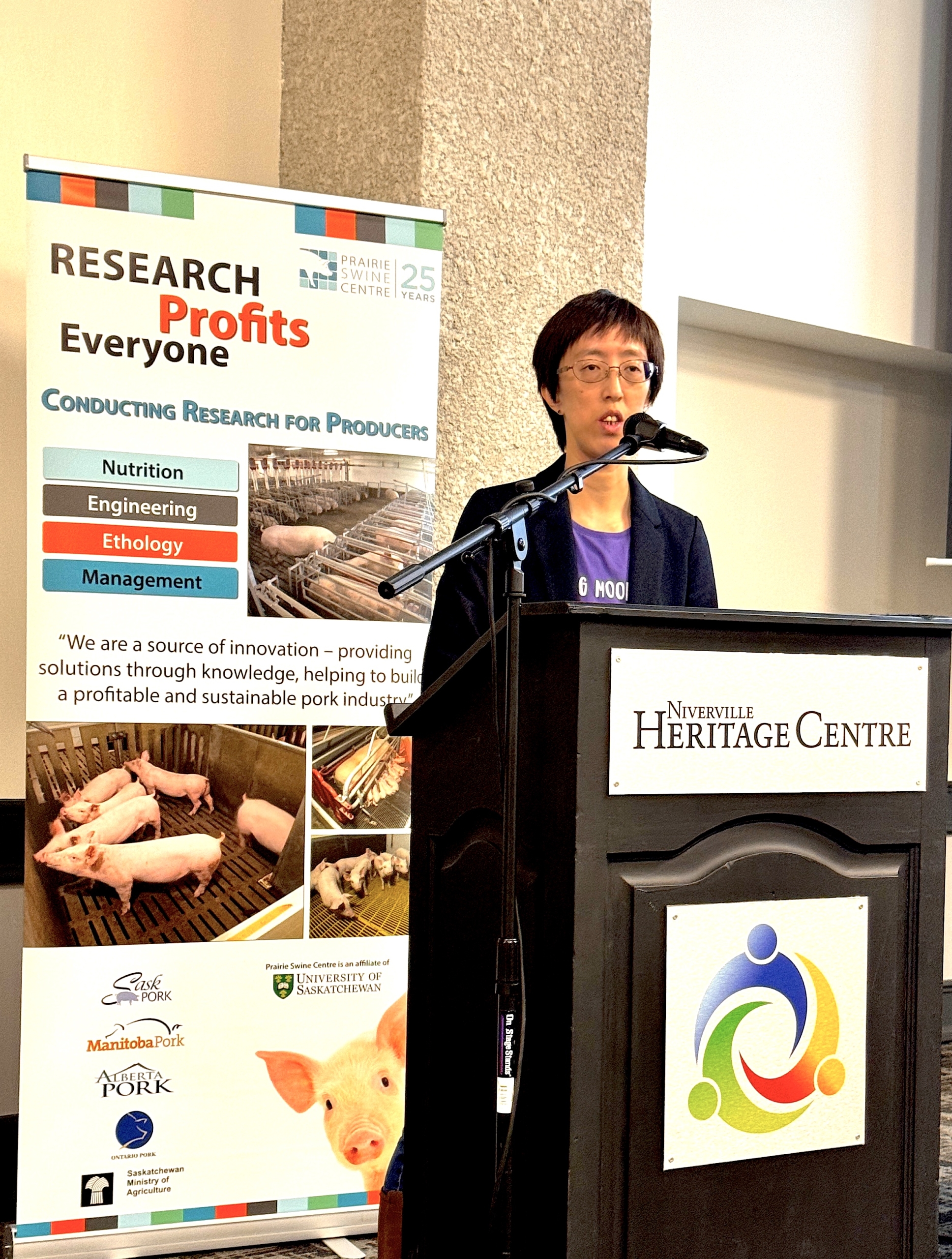
Revisiting those who benefit from improved pig welfare, Dr. Chou reiterated her belief that it benefits everyone. She shared an example from her time in Ireland, where she raised pigs and took pride in their welfare. “Improving pig welfare will affect human welfare. It’s not easy, but it’s the challenge we should take on because we want to be a socially sustainable industry,” she said. She emphasized that consumers will increasingly care about pig welfare, so the industry must adapt accordingly.
Addressing the economic benefits for farmers, Dr. Chou acknowledged that achieving good welfare while maintaining profitability is challenging but necessary. “A pig in good welfare will grow well. We need to see it in an economic sense that it grows so well that it makes sense,” she noted. In the long term, she believes that achieving good welfare will benefit everyone involved, including the farmers.
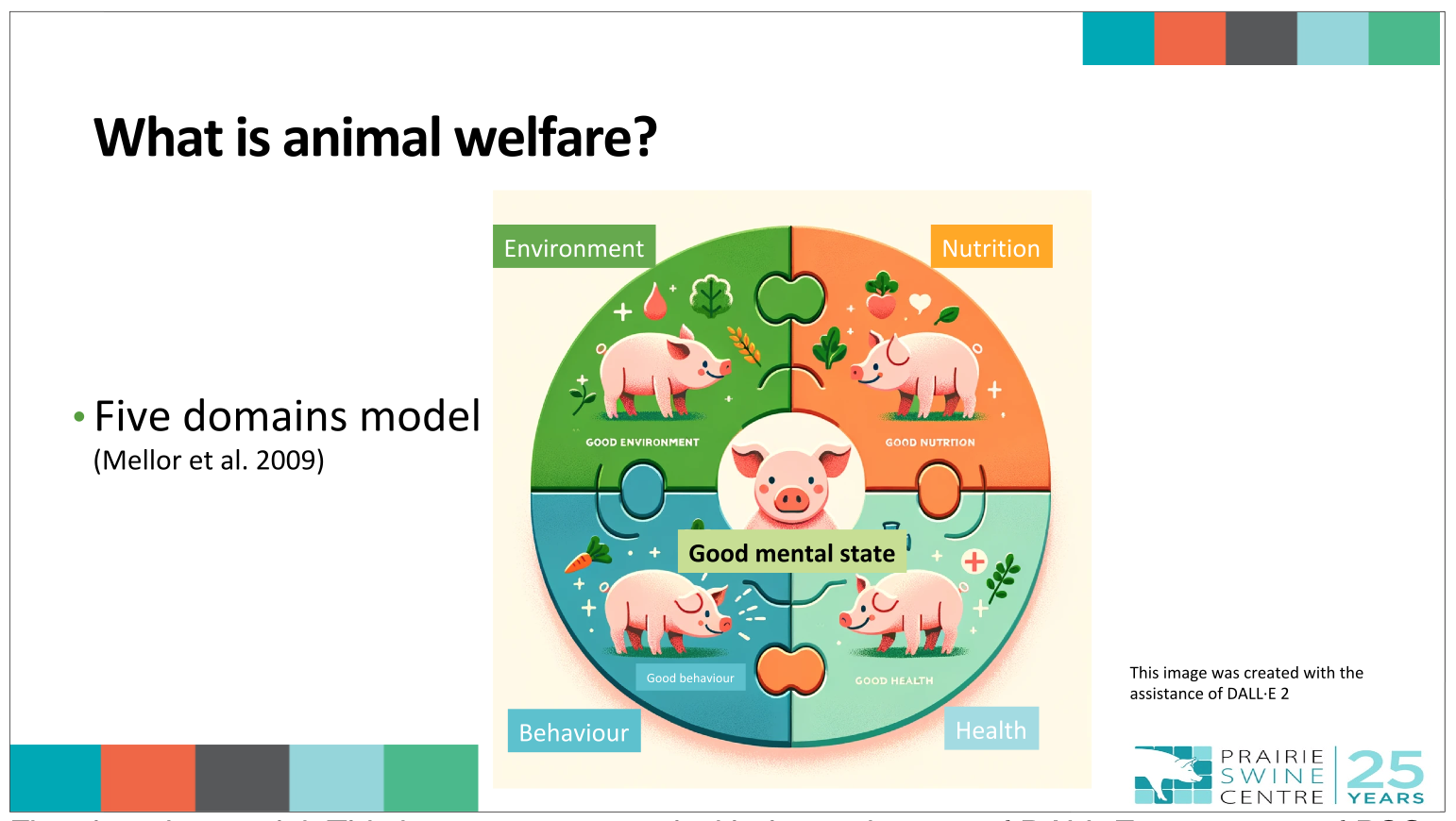
Dr. Chou also explained the concept of animal welfare using the five domains model by Mellor. “So what is animal welfare? I like to use the five domains model by Mellor. We know that animals have some basic needs, the basic domains we need to fulfill. They need a good environment and nutrition to express behaviours that are important to them and to be in good health. So these are the basic needs of the animals, and I think we all agree on that,” she said.
Dr. Chou continued, “These are the four basic domains. So what happens if these domains go unmet for the pigs? Then we see not a very good animal. The animal can be thirsty, hungry, in pain, stressed, or even distressed. This is not the animal we want to see, right? When the producer meets all four domains, we see a good animal. The animal is in a good mental state. This is the last domain in this model, which I think is sometimes overlooked but is very important, as it connects all the basic domains.”
Dr. Chou’s comments highlight the multifaceted benefits of improving animal welfare, underscoring the importance of sustainable practices for the industry’s future. •
— By Harry Siemens