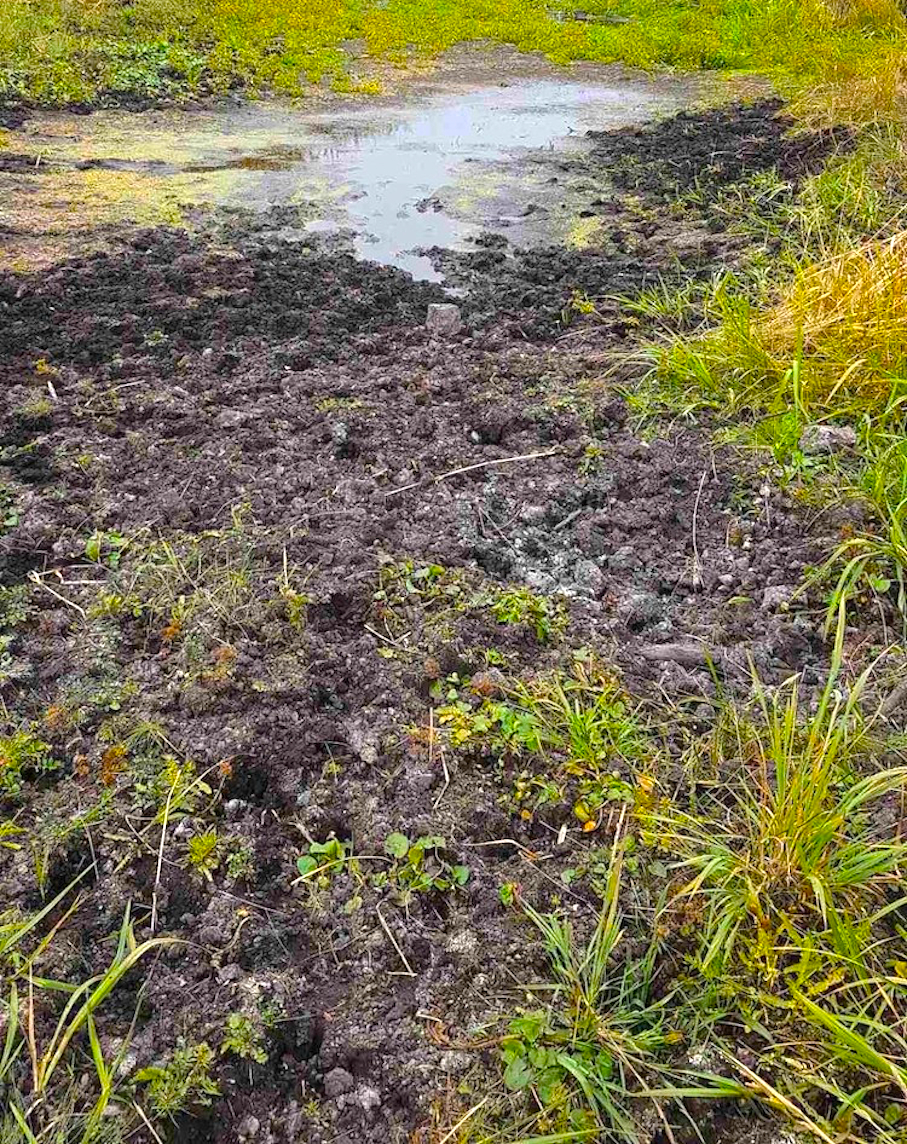
Damage from wild boar wallowingThe Saskatchewan Crop Insurance Corporation (SCIC) uses cell phone cameras and remote trapping technology to locate and capture feral pigs roaming the province. SCIC oversees efforts to eradicate escaped or released feral pig populations from Saskatchewan.
Dale Knouse, the manager of strategic operations with SCIC, explains their approach:
“We’ve been doing this for quite a while now, and in places where we have some established populations, we’re starting to see quite reduced activity,” said Knouse.
The Saskatchewan program is well-suited to using remote-triggered trap gates manufactured in the U.S. They can monitor the pigs through remote cellular cameras that show their numbers and types.
“We trigger the trap gates themselves through a text to the mechanism, and it drops the gate. That allows us to do that work away from the traps, so we’re not having to disturb anything,” he said.
Pigs are sensitive animals, and they can sense when things change, so having those remote-triggered cell gates helps ensure success by avoiding the traps.
Knouse is confident that populations in those areas are reducing. SCIC remains committed to continuing its feral pig eradication program, assigning long-term resources to the effort. The team expresses confidence that their ongoing work will significantly reduce the feral pig population in Saskatchewan.
Knouse urged the public to help by reporting sightings of pigs or evidence of their presence, such as pig wallows in marshes or disturbed areas of grass or ground. For more information, visit SCIC.ca and search Wild Boar Control or SquealonPigs.org.
Hannah McKenzie, the Wild Boar specialist with Alberta Agriculture and Irrigation, said that damage to the landscape usually indicates a wild boar population. The risk of spreading diseases, especially African Swine Fever, to domestic swine, makes wild boar eradication a priority in Canada.
“The tracks are quite similar to deer but have a bit less of that pointed heart shape and more rounded toes, and the dew claws tend to be outside the track instead of inline,” said McKenzie. The scat is something folks can watch out for, but with the tracks and the scat, unless it’s that perfect track or that classic-looking scat, sometimes it can be hard to tell that it’s wild boar.
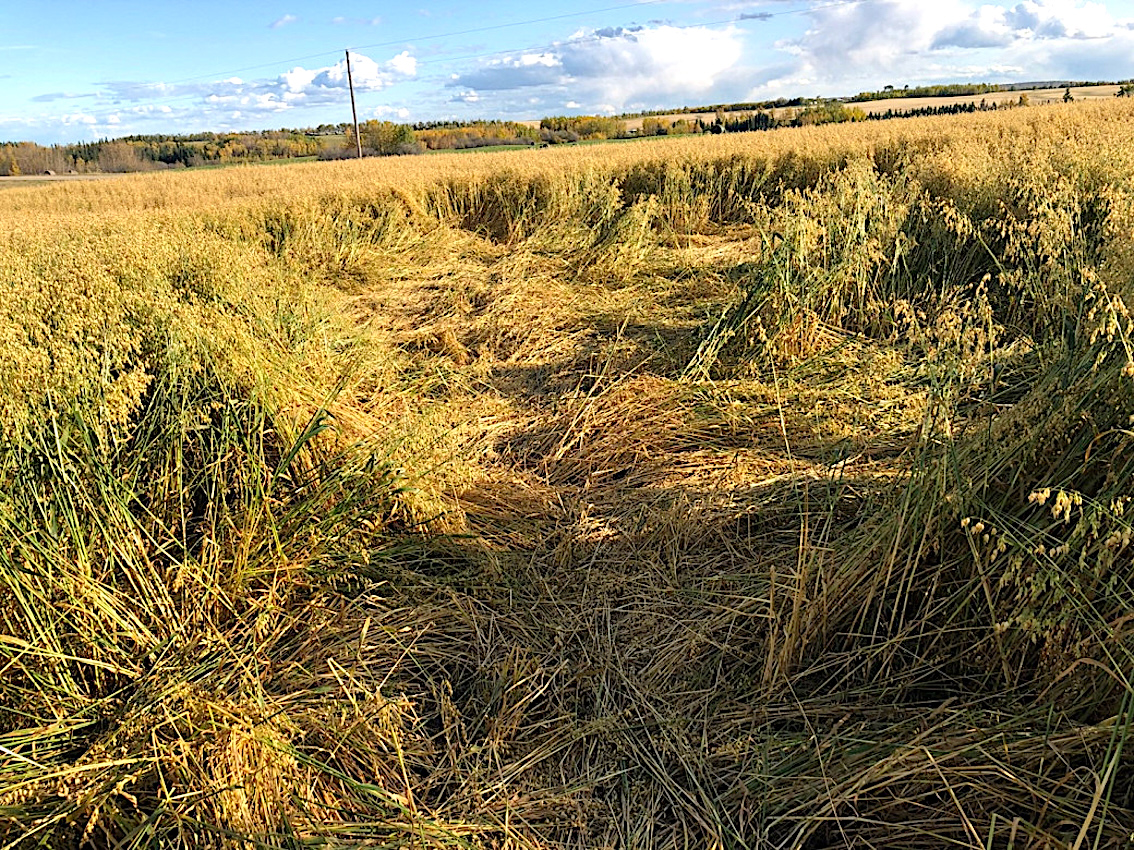
Crop damage from wild boar
She encourages people to watch out for some of the damage that they cause to the land. Those are usually good signs that wild boar are in the area—for example, wallowing. In this area, they would roll around or wade into water or muddy areas to cool off. Wild boar don’t sweat, so they need always to be near water to stay cool, particularly in the summer. They also use that mud as a parasite deterrent.
“If there’s wild boar in the area, often you’ll see this muddy wallowing with lots of tracks around that area. People can also look for rooting,” McKenzie said.
Wild boar are omnivores and eat pretty much anything they can fit in their mouth. One of their main ways of feeding is using their nose to root up the ground and eat any roots, bulbs, or shoots underground. This damage can stand out, sometimes as extreme as if someone has rototilled the area.
“So, looking for signs of wallowing and rooting is often a good indication that there are wild boar in the area,” she said.
McKenzie noted that more information on wild boars and pictures of what to look for can be found on alberta.ca You can report sightings by calling 310-FARM or filling out the online Report Wild Boar form on Alberta.ca •
— By Harry Siemens