
Imagine in the future – perhaps the not so distance future – when humans need an organ transplant they turn to pigs as the donors.
It might sound like science fiction, but researchers at the University of Saskatchewan (USask) are working to make it a reality by exploring xenotransplantation – the transplantation of organs from one species to another.
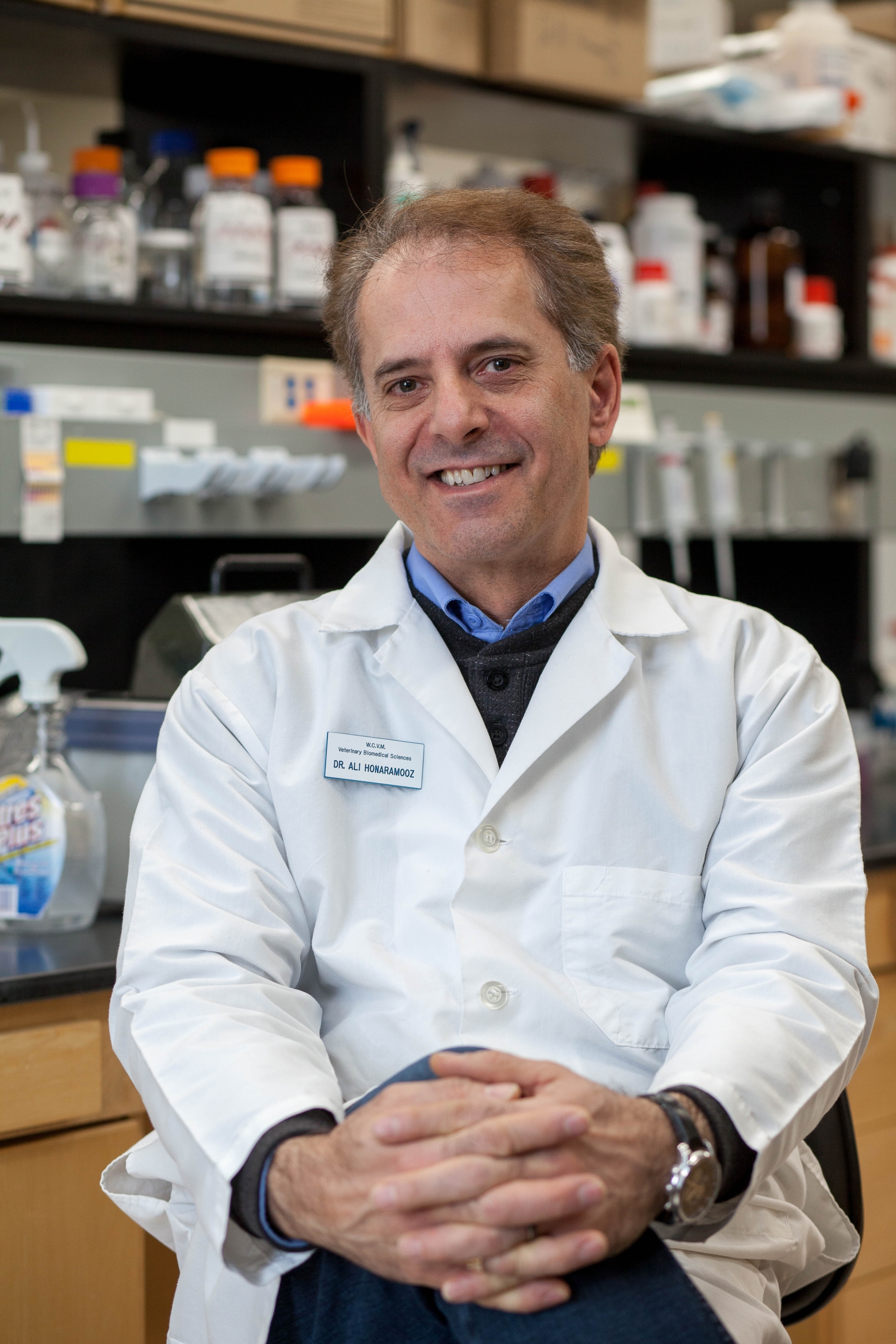
Dr. Ali Honaramooz (DVM, PhD) with the Western College of Veterinary Medicine (WCVM) at USask, suggests they are on the verge of a major change with how medicine is dealing with organ failure.
Honaramooz received $250,000 through the New Frontiers in Research Fund (NFRF) Exploration program, designed to provide support to ‘high-risk, high-reward’ research projects.
The funded project will explore methods for creating better transgenic pigs for organ xenotransplantation.
“We’re very excited. We think it’s game changing research,” Honaramooz told Prairie Hog Country.
Honaramooz said it is critical such research is carried out in this country.
“Hopefully we can set the stage for Canada not to miss the boat in this area . . . We want to establish the future on solid ground,” he said, adding it is the sort of groundbreaking technology other countries and big companies are pursuing and if Canada does not keep pace Canadians might find they have to pay massive costs to access one day.
It’s not good enough “to sit back hoping somebody else does it first,” he said.
While the research will be cutting edge, the idea of animal to human transplants is not new.
“The idea of using animals from transplantation into humans is fairly old,” offered Honaramooz.
Initially the thought was to look to other primates; baboons and chimpanzee, as donor animals, he said.
But surprisingly they were not so well-suited even though they were primates as are humans. They are not the same size, not easily bred, and there is greater resistance from the public, said Honaramooz.
Pigs by contrast have similar sized organs, a similar physiology, and are far more easily bred. Interestingly, for example, Honaramooz said pigs are three times more closely related to humans than are rodents, an example of how they are more naturally compatible as a potential organ donor.
Honaramooz also noted, “one pig can help save several people,” explaining in time they should be able to supply heart, kidneys, liver, lungs, skins – in total some 200 potential transplants.
“We’re talking big time change in how we treat different diseases.”
There are however major barriers to such transplants that Honaramooz highlighted which have prevented continued and successful xenotransplantation work in the past. Two of them are biomedical and result in acute rejection.
First, the surface of pig organ cells carry with them a carbohydrate that does not exist in human organs, causing primate bodies to reject non-primate transplanted organs.
Second, pig cells carry genes of different retroviruses – dozens of them – that could be potentially harmful to primates and cause zoonotic concerns.
Those two issues can be handled with next-generation genetic editing tools like CRISPR-Cas9 and have indeed been addressed successfully. Honaramooz said transgenic pigs with organs more suitable for transplantation have been and continue to be generated by various labs around the world.
In that respect steps have been made.
Earlier this year the first living person to receive a kidney from a pig died, just under two months after his transplant. His survival time was similar to that of the first people to receive pig hearts, both of whom died roughly two months after their transplants.
The research now is to develop ways to reduce rejection of the transplanted organs.
Honaramooz said the key is likely to be to genetically manipulate the organs so that they do not trigger the human immune system to attack them as being foreign to the human body.
In addition, Honaramooz noted there is concern about whether porcine organs might introduce viruses to the human recipient.
“Basically all species have a set of junk genes. . They don’t do anything,” he said, adding they are no longer impactful on the species, but they can contain viruses from ages ago.
The question is could those dormant viruses “get into the genes of the host (organ recipient)?” asked Honaramooz.
The answer might be to ultimately “delete these retroviral geneses,” said Honaramooz.
That is where CRISPR (an acronym for clustered regularly inter-spaced short palindromic repeats) technology can become a major tool.
“This has tremendous potential for greater modifications,” said Honaramooz.
While varied efforts are required Honaramooz said USask is uniquely suited to lead this area of research due to the diverse expertise and research centres on campus – in particular having Vaccine and Infectious Disease Organization, VIDO-InterVac on-site. VIDO-InterVac is perhaps best known for its work creating a COVID vaccine.
In terms of Honaramooz’s work, he said VIDO is one of the few high bio-security facilities in North America large enough “that pigs can be kept there.”
“USask has the perfect combination of having the College of Medicine with an organ transplant program, WCVM has expertise in creating transgenic pigs in a new way that gives us an advantage … and VIDO is one of the few institutions in North America that can house large animals at containment Level 3,” Honaramooz said in a USask release. “We have the right combination of expertise. We think we can be a source for initiating this research in Canada.”
One of the greatest hurdles at this point has been public perception, and the subsequent policies – particularly in the United States – from government agencies that have regulated or completely restricted xenotransplantation.
These restrictions have only recently started to loosen with the advancement of research on xenotransplantation.
A successful pig-to-human heart transplant in 2022 where the patient lived for an additional two months, and the first ever successful kidney transplant earlier in 2024, have re-vamped public interest in xenotransplantation, said Honaramooz.
“Public perception was hindering research,” he said in the release. “Now we are seeing people walk out of the hospital with a pig kidney – now (the public) is going to think that could be a possibility to save the life of a loved one down the road.”
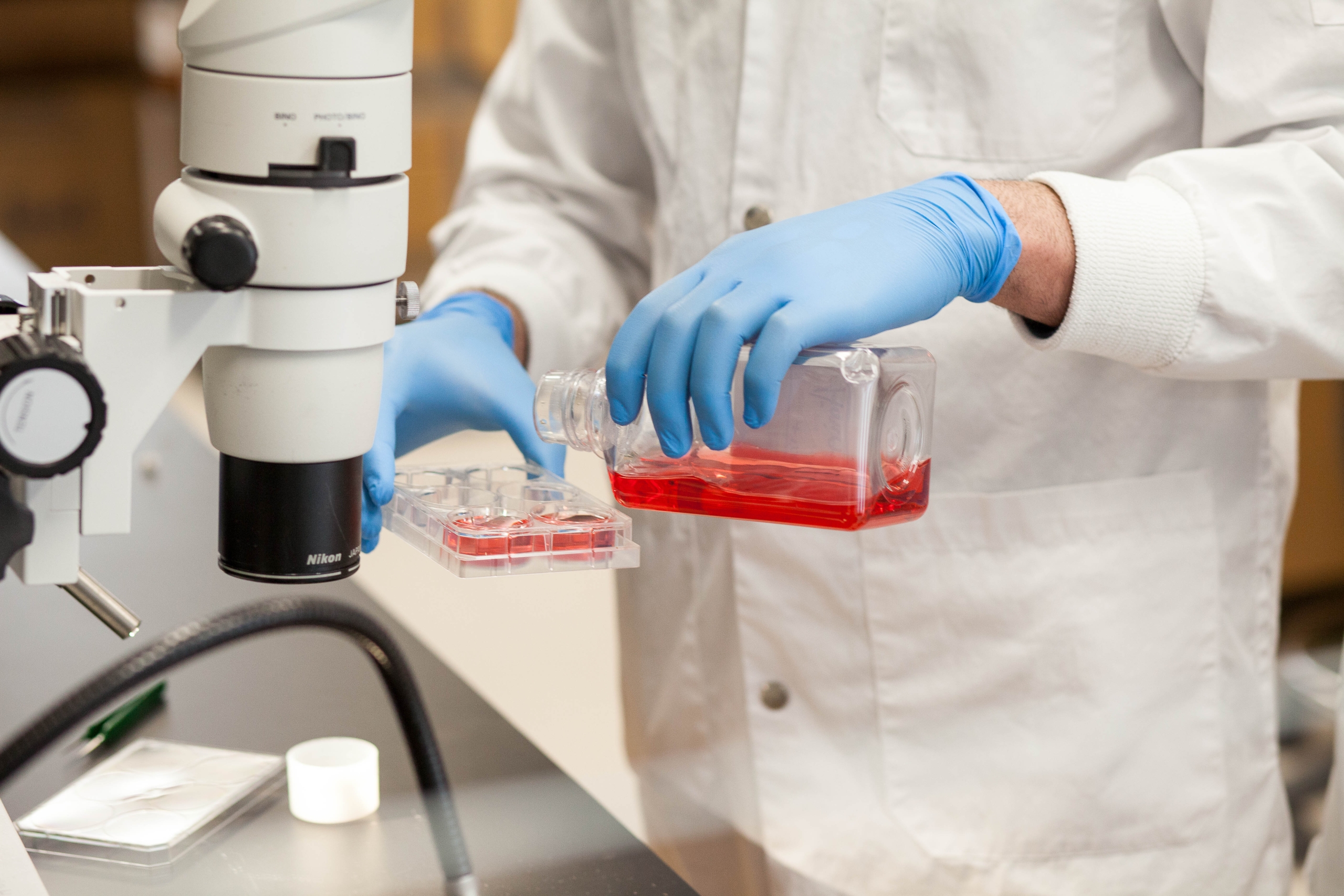
Honaramooz’s research will delve deeply into better, more efficient ways to produce pigs that are better suited for xenotransplantation purposes. Using innovative methods developed at USask, WCVM researchers can breed these transgenic pigs through genetically editing male pig sex cells and allowing them to breed naturally or use those cells for invitro fertilization. The process is faster and more cost effective than creating genetic clones of transgenic embryos, which is the more common method.
Honaramooz told Prairie Hog Country that transgenic pigs have been bred for some 20 years, and that effort has been refined over time with technologies such as cloning,
Though USask is not on the verge of attempting xenotransplantation yet, Honaramooz said he hopes to see a centre created on campus to be a hub for xenotransplant research in Canada that takes advantage of the university’s world-class facilities – and this funding will be the ‘seed’ for that greater future project.
“Hopefully at some point we can attract more talent in this area and have them work out of the University of Saskatchewan toward this goal,” he said.
So, how far out are the results Honaramooz is hoping for?
“I hope in our lifetime. Ten years is not too ambitious,” he said, referring to the already tried transplants calling them very much “proof of concept” and providing something of a road map in terms “of modifications need to be done” to make such transplants fully viable.
“Every step we take you get an organ more compatible with humans.” •
— By Calvin Daniels
Photos supplied