Keep the faith and stop foolish rules and regulations.
Like other professions, careers, and life choices, farming presents challenges. Yet, farming is also a primary industry that builds communities, feeds the world, and provides an excellent rural living standard.
In today’s highly regulated world, government officials decide about things they know little about. Very little thought goes into how these decisions will affect production, application, production costs, and independent livelihoods.
Much of this came to my mind while travelling across the prairies, looking at crops, their stage of growth, and the amount of moisture or lack thereof on our recent honeymoon trip to Sylvan, Lake, AB.
Yes, a shoutout to my lovely new wife, Angelinda, who moved in with me in Winkler, Manitoba.
Stories will appear in this month’s AgriPost outlining a good crop across Manitoba, the Prairies, and parts of the United States. Yet localized areas show some heavy drowning out, and heat and dryness in other parts shut down some crops for the season. Then you have all the millions of acres in between.
Not to speak of the markets in seasonal doldrums down from the highs of the last three years. It makes for some worrisome and stressful times when it costs $400 to $600 an acre to put in a crop without guaranteeing any return until it is in the bin. Farm community builders keep reminding me that as the farmer goes, so do many of the smaller rural communities. When cattle, pig and crop prices barely reach the break-even points, communities suffer.

That is the farmer’s input side of things. Cam Dahl, the general manager of Manitoba Pork, keeps raising regulatory issues and urging the federal government to take action to improve the regulatory competitiveness of Canadian agriculture domestically and internationally.
Cam, a great farm leader with an astute eye on what is happening or who is doing what to the farmer and a personal friend, says that while some regulations, such as those related to food safety, are necessary, regulations always come with a cost.
“We compete in an international marketplace. When we find that the cost of regulations on Canadian agriculture is higher than in other countries like the United States or Brazil, it means that Canadian farmers are less competitive in the international marketplace, which reduces the bottom line for producers here at home.”
It leaves less money to invest in the industry’s growth, provides fewer jobs, builds good viable farm operations, and, of course, affects the development of local communities.
Dahl said one of the most cited examples is the carbon tax, and I agree with him wholeheartedly. “That’s a regulation or legislation that imposes a tax on Canadian farmers that doesn’t exist in other countries. It’s making it more expensive to heat and cool barns here in Canada and Manitoba, making us less competitive.”
The carbon tax hurts not only in controlling barn temperatures but also in delivering produce, live hogs, feed procurement, market deliveries, and all other fun things.
Again, Dahl said we need to find a way to balance the need for regulations to meet the safety requirements for food or workers with the need not to have rules just for the sake of regulations and impose that extra cost on Canadian farmers.
He notes governments worldwide are taking actions to limit the flow of Canadian agricultural goods, such as the U.S. voluntary country labelling and European regulations restricting Canadian red meat exports.
He calls on the Government of Canada to do everything in its power to counter those foreign regulations that undermine the competitiveness of Canadian farmers. •
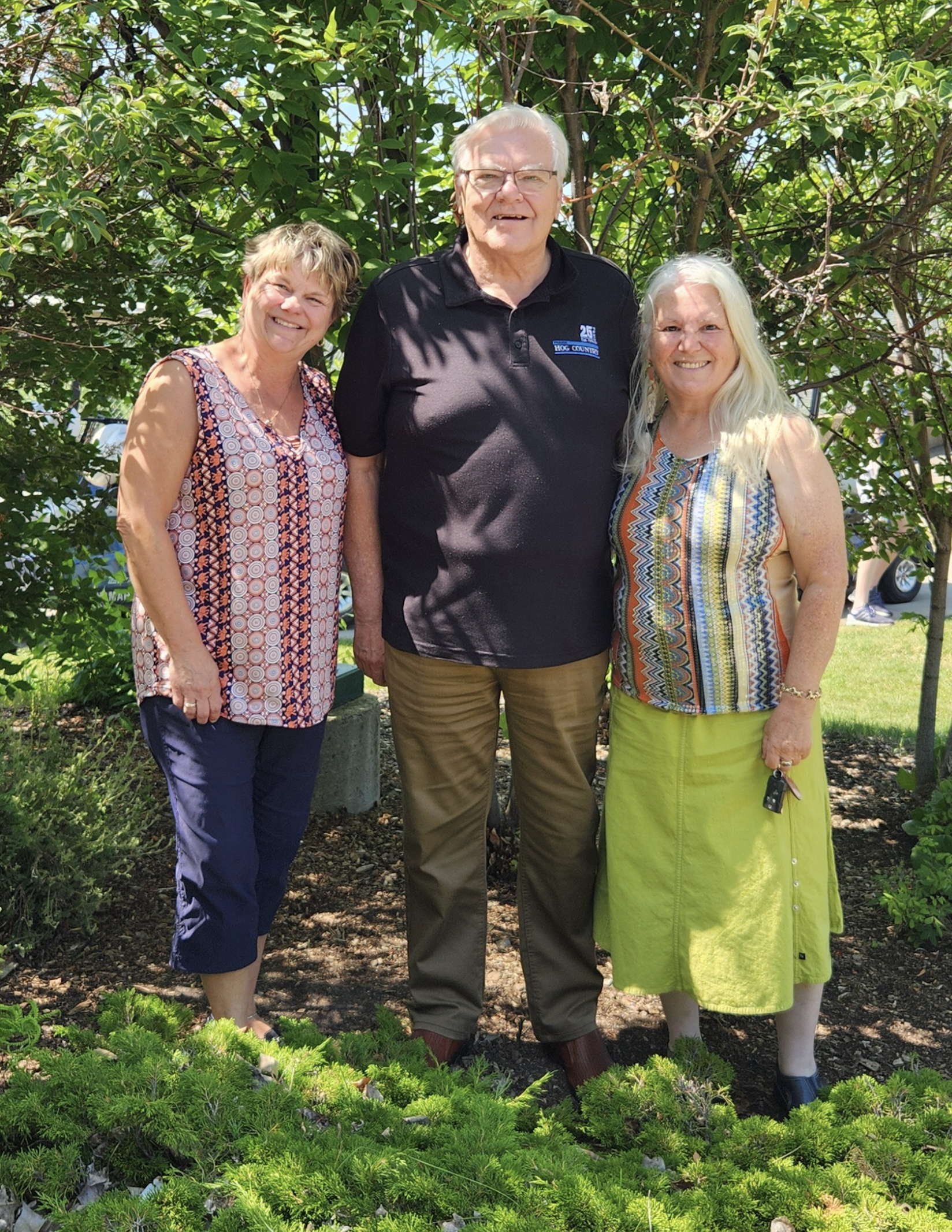
A wonderful blessing to see the happy new couple.
Having two parts of the PHC writing team, Brenda and Harry, together was great.