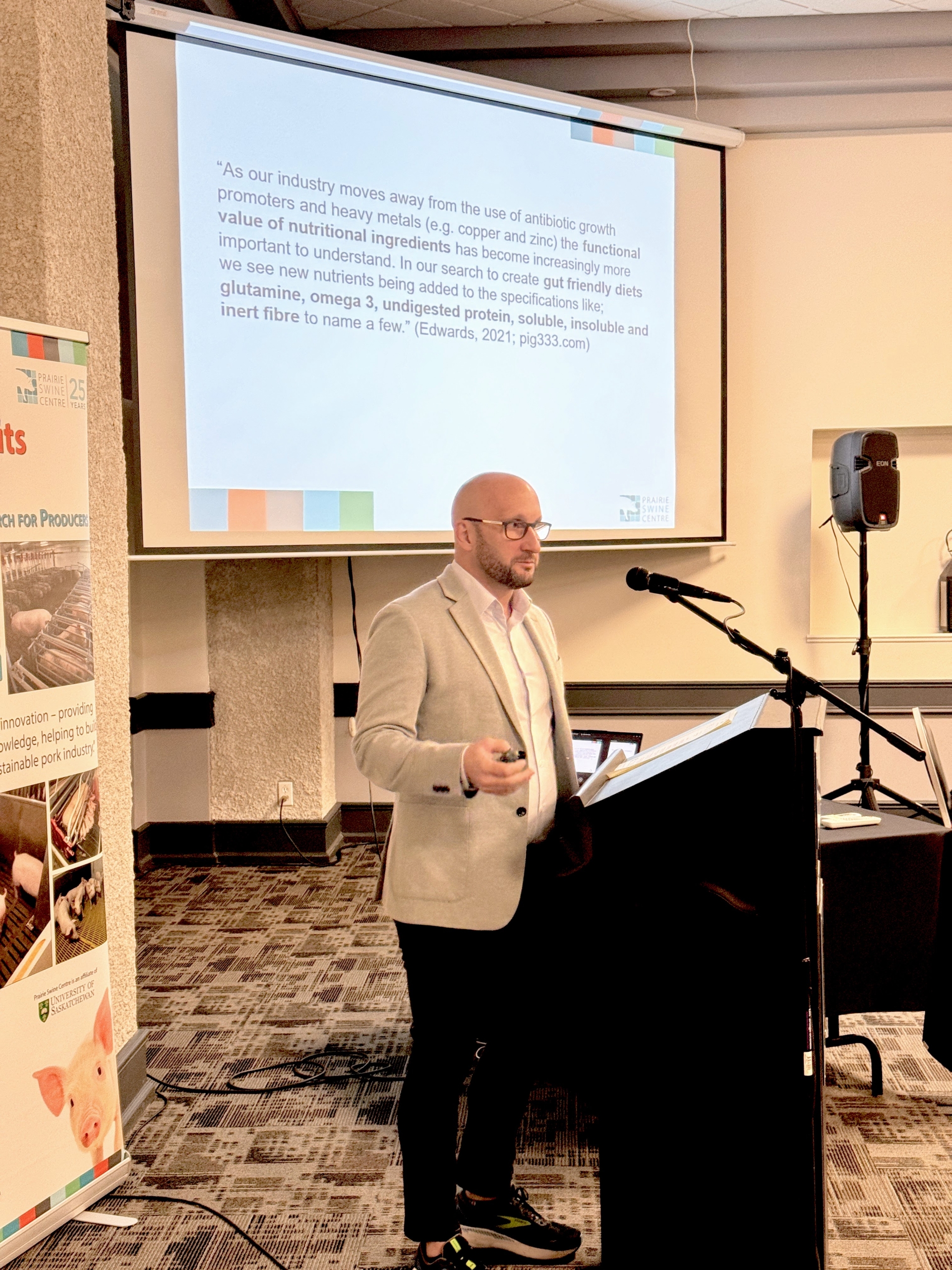
During the 2024 Prairie Swine Centre producer meetings, held in collaboration with Zoetis and PIC, Dan Columbus, a nutrition researcher at the Prairie Swine Centre, delivered an insightful presentation titled “Insights into Mycotoxins in Swine Diets.”
Columbus provided information about the prevalence of mycotoxins, their effects on pigs, issues around sampling ingredients for mycotoxins, and mitigation strategies, including binders, detoxification, physical removal, and grain sorting. Due to their prevalence, mycotoxins in swine diets are a recurring issue. The problem worsens, highlighting the need for immediate and practical solutions.
Columbus explained that mycotoxins are secondary metabolites produced by moulds and fungi. They exert toxic effects and cause adverse physiological responses when ingested by animals. Researchers can measure over 400 identified mycotoxins, but only a few are of significant concern in livestock. Grains contaminated with mycotoxins are commonly downgraded for use in animal feed, as they are unsuitable for human consumption.
He noted that for pigs, the primary mycotoxins of concern are aflatoxins, zearalenone, fumonisins, ochratoxin, ergot, and deoxynivalenol, with deoxynivalenol being one of the most significant.
The effects of mycotoxins can vary but generally include a reduction in feed intake, vomiting at high levels, impaired growth, skin lesions, gut health problems, kidney and liver issues, and adverse effects on reproduction.
“Pigs are the most susceptible species to mycotoxin intake, with cows being the least susceptible and chickens falling somewhere in between.”
This susceptibility is likely due to the large microbial populations in ruminants that can detoxify mycotoxins, whereas pigs lack this pre-gastric microbial population.Columbus emphasized the importance of mitigation strategies to counter the effects of mycotoxins. The industry has developed several feed additives to help mitigate these effects. Absorbents or adsorbents can bind mycotoxins and prevent their absorption in the animal’s gut. Other strategies include using blends of yeast products, microbials, enzymes, and antioxidants to support the animal’s response and detoxify the mycotoxins. Physical methods, such as grain sorting and cleaning, can also help remove mycotoxins from feed.
“Mycotoxins cost producers money,” Columbus stated. “Contaminated grains are downgraded for grain producers, resulting in less revenue. Mycotoxins reduce animal performance and health for livestock producers, potentially increasing mortality and costs associated with mycotoxin analysis and mitigation strategies.”
He said many mills will test for mycotoxins when ingredients come in, but analysis can be pretty variable.
“Sometimes, producers notice problems in their pigs and then look to test for mycotoxins in their diets.”
Columbus told producers that the research continues to focus on improving nutrition to support animal health, particularly in the context of reducing antibiotic use.
“We’re looking at how to change nutrition to support the animal’s health. Specifically, my work has focused on the amino acid requirements of sick versus healthy animals and whether adding certain amino acids can benefit the immune system and gut development.”
He underscored the critical need to address mycotoxin contamination in swine diets. His insights into prevalence, effects, and mitigation strategies provide valuable guidance for producers seeking to maintain the health and performance of their herds. •
— By Harry Siemens