The first glimmer of sun is peeking over the horizon for an Alberta team’s push into the world’s most populated country.
Alfred Wahl and Penny Jones – married 53 years and co-owners of Leduc-based Polar Genetics (2012) Inc – have targeted Kerala, a coastal state on the southwestern tip of India, as a focal point for exporting their lines.
“Who should be doing this? Well – me,” Alfred said while relaxing at home late in April, just before heading back to India. He has dedicated the next few months to working with government officials and farmer-investors involved in a program to update their swine industry.
“I’m the only one who has interest in working on this pig development program – that’s all,” Alfred said during a visit with Prairie Hog Country.
The seed was sown in 2006, when he and Penny were still involved with Peak Swine Genetics and working on export markets in China. Already battle-scarred from negotiating with Chinese officials, they were participating in a Canadian kiosk at an international trade fair when they were swamped with questions from Indian delegates, says Penny.
“We set up this meeting where we would do these presentations, so we had all these pig farmers and vets and everybody filling this building because there was going to be a lunch.
“We all got up, we all did our shtick and the most amazing thing happened is that we were absolutely rushed by this group.”
Where the Chinese had waffled and dragged their feet, the Indians were eager to learn about opportunities for trade with Canadian suppliers.
Pork’s share of India’s protein market, at just over nine million head, pales in comparison to China’s population of 252 million pigs (statistica.com). Most of those pigs are in backyards or very small farms and some are feral, running loose and scavenging for whatever they can find, said Alfred.
Farms tend to be very small, and most are concentrated in the northeast, he said.
However, there is a strong contingent of pork eaters in the southwest and a desire within the region to improve the pork industry, primarily to offer a safer product to those consumers.
Feral pigs produce a less desirable product, loaded with disease and riddled with parasites.
Backyard pigs are a little better off, confined somewhat and fed largely on food waste.
Government officials and farmer-investors are determined to build a “made-in-India” solution to improve the quality of pork available to consumers.
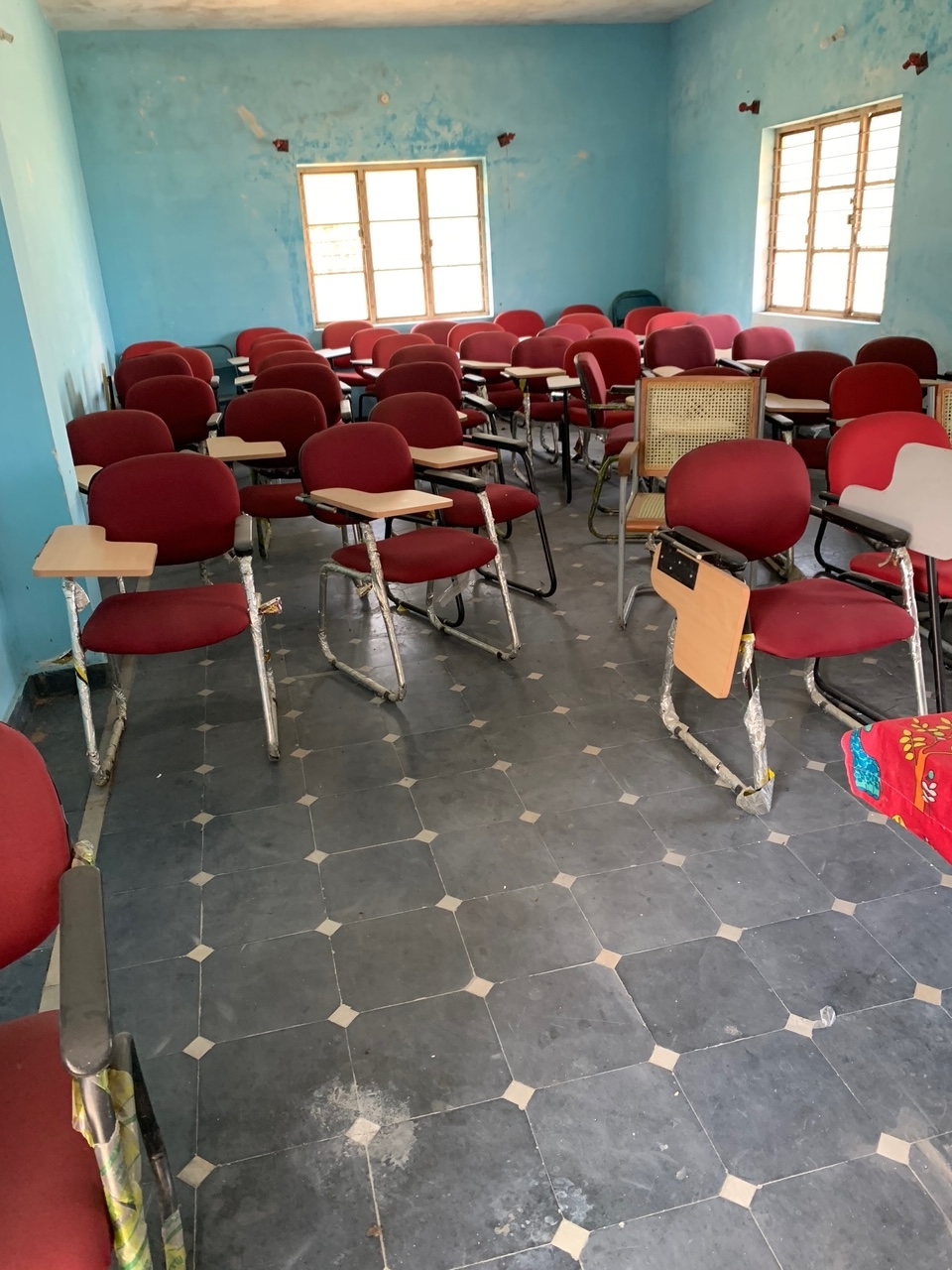
The classroom is in the Training Centre building on site. Farmer training will occur there. The whole farm needs to be updated and improved for rearing purebred breeding pigs.
A public-private partnership (PPP), endorsed by Prime Minister Narendra Modi, has been created to bring government and private investors together to build a farm where pigs can be safely confined and properly fed, says Alfred.
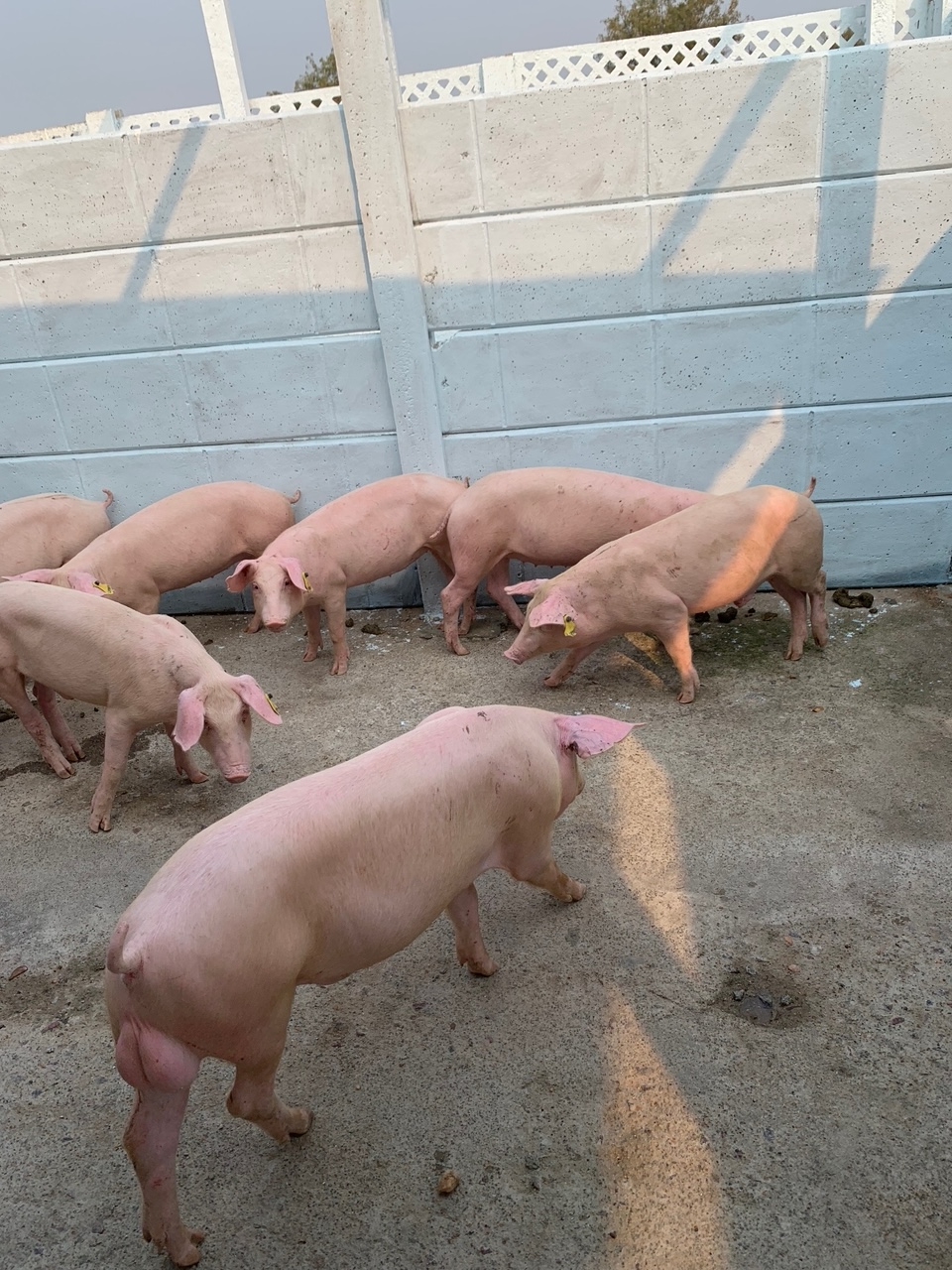
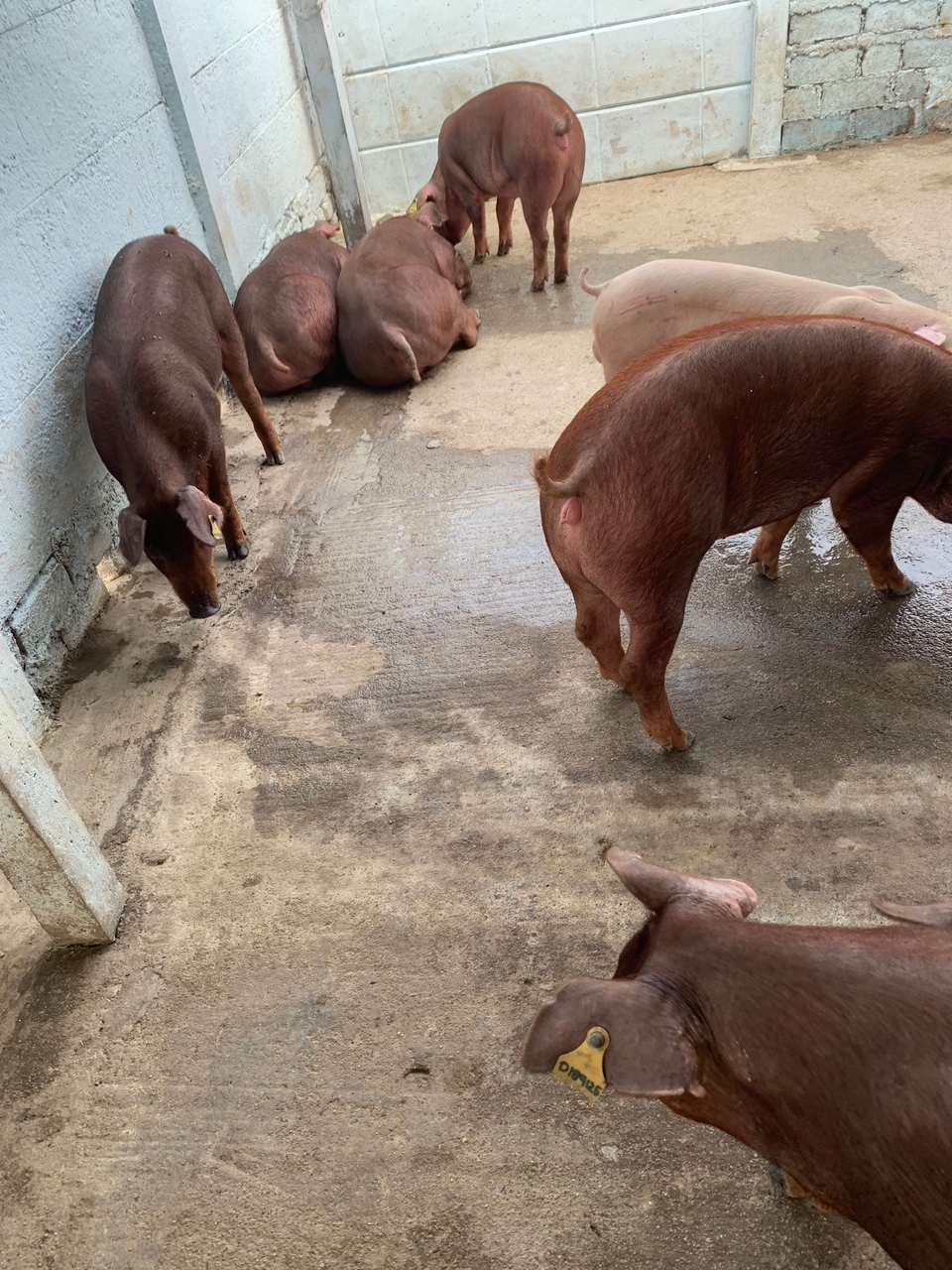
He and Penny have been shipping Duroc, Landrace and Yorkshire (DYL) genetics into a handful of existing farms. New slaughter facilities are being built in Edayar and Vijayawada to process the hogs that come out of those farms.
While Indian regulations currently prevent Polar from bringing live sows into Kerala, the existing farms are using Alfred’s expertise and sows bred on Polar’s lines to improve local bloodlines and build up their commercial herds.
Polar was able to set up a group of 22 Yorkshire gilts on one of the farms, where breeding started in April, said Alfred. The product of those gilts will be seedstock for the three farms involved in the program. In general, semen shipped from Canada is reserved for gilts, with mature sows bred by live cover.
Breeding is enabled on a farm pyramid model, in which farmer-producer organizations share access to purebred boars to develop their programs.
“There’s intention to build three pig breeding pyramids, so a nucleus of 150 sows, 50:50:50. We’ve identified two (FPOs), and then the third farm will be this 3P.
“With 100 each of Yorkshire and Landrace sows, the farms can support 1,000 sows in multiplication, producing 200,000 pigs a year,” said Alfred.
The new PPP farm, which has not yet been named, will round out the program to fill the barns and supply the processors.
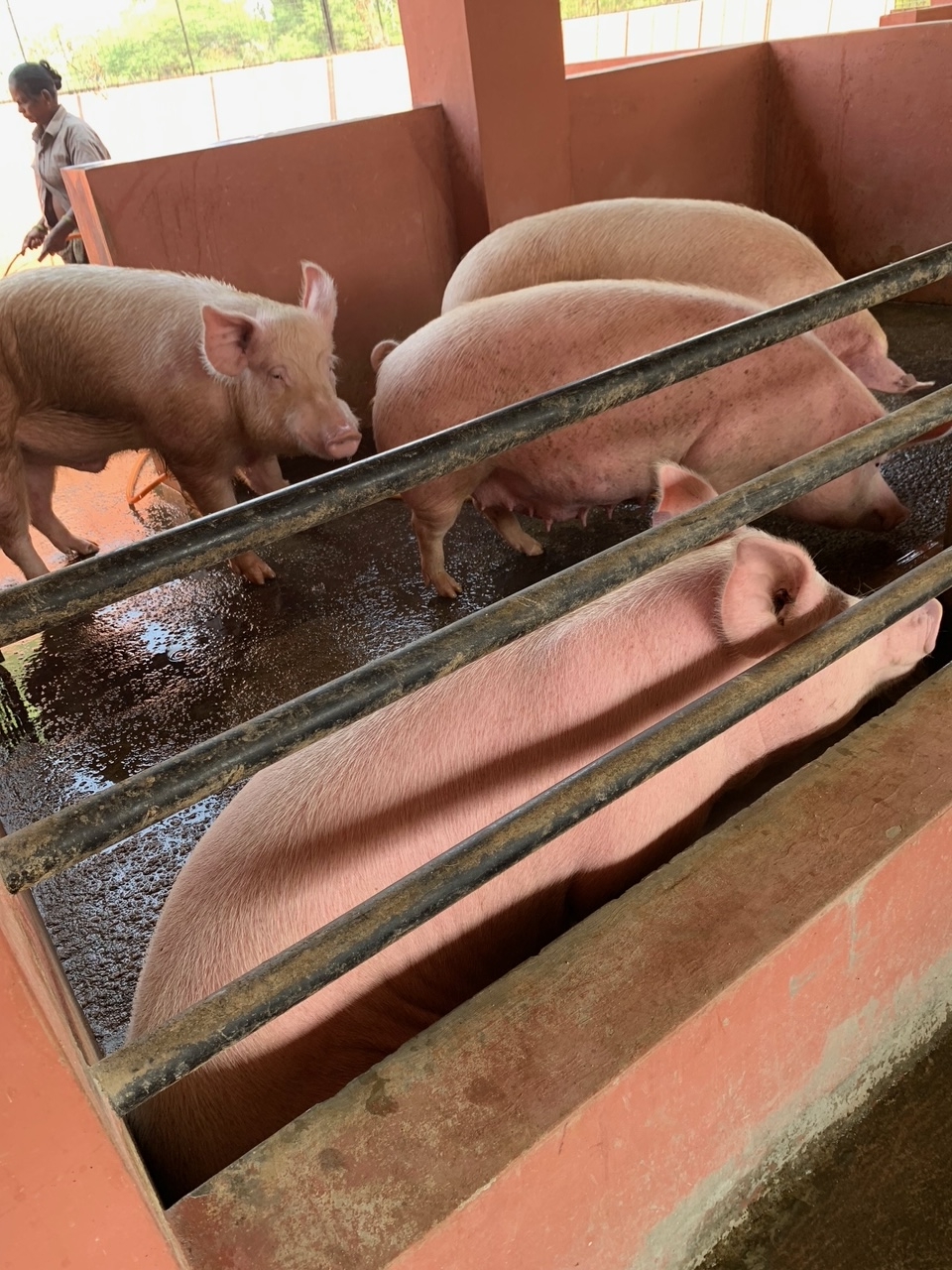
Three farms totalling 600,000 pigs becomes almost 10 per cent of India’s total swine population, he says.
At this point, potential investors are watching from the sidelines to see how the program unfolds, said Penny.
“We’re just beginning to blossom and to be talked about, and once one person has it, they’re all watching it. This thing will go like ‘Poof!’, said Penny.
“This is intended to spread our agricultural practices there to help them with production and safe food … and this thing will grow correctly as it catches on.”
Alfred says that while their venture in China was a miss, he and Penny expect good results in India, which recently passed China as having the largest population in the world.
Going through multiple levels of government to connect with the right people has been the most difficult part of the journey, said Penny.
“Then they retire and then you’ve got to find out who to meet with again and our designated people that are over there get moved out, and then you’ve got to meet a new one, so we spent a lot of time on the ropes, finally getting to the point where there was a Health Certificate and you could do this, and then COVID hit and shut us down for four years.”
Travel restrictions that delayed the project have now been lifted, allowing Polar to pick up from where it had stalled.
Alfred and Penny made a visit to Alberta Pork’s regional meeting at Red Deer in March, so he could update his connections in India about developments within the province and across the country.
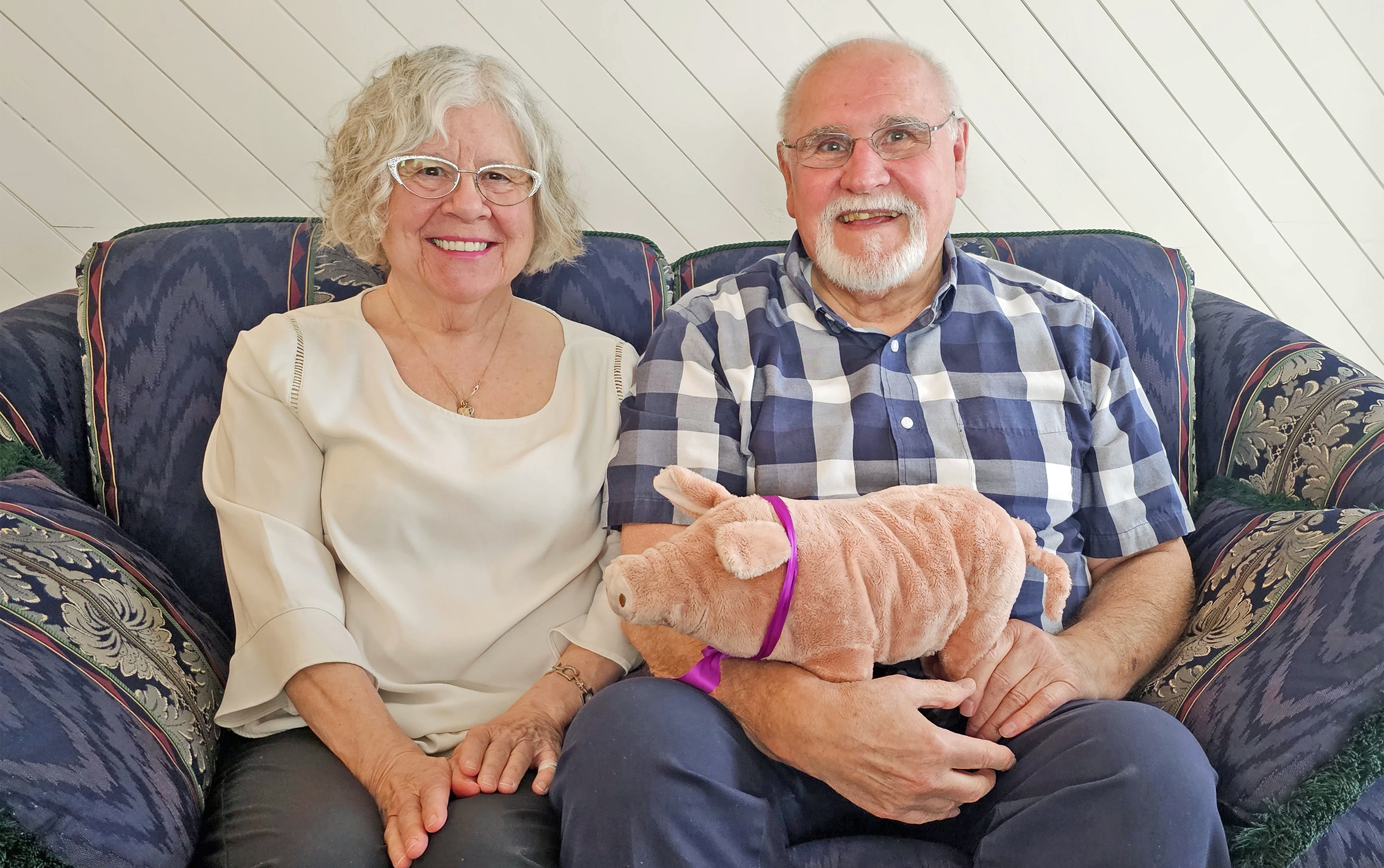
“We’re ready for it to be picked up and so that’s us,” said Penny.
“We also thought you know, like we’re really old, but you know our legs and our hips are good, so we thought, like, why would we retire when we’re still healthy and we still have this ability?”
She says retirement really hasn’t been an option, even though people may have assumed they were ready to shut down in 2015, when Alfred was presented with Alberta Pork Congress’s Lifetime Achievement Award. Seven years later, they continue to achieve, even though they spend a lot of time separated by 12 time zones.
“We’ve never been dependent on each other. Alfred’s always travelled. I’ve always looked after things. It’s been this independent tradition,” said Penny.
“It’s interesting how people will throw their emotional thing on to you, like that’s the way I’m supposed to be feeling, but I don’t. I’m glad to be part of this. I do my part here at the desk shovelling papers through and whatever needs to be done.”
She says she is confident that the sun is about to rise on their latest venture. •
— By Brenda Kossowan
India farm photos supplied by Alfred.