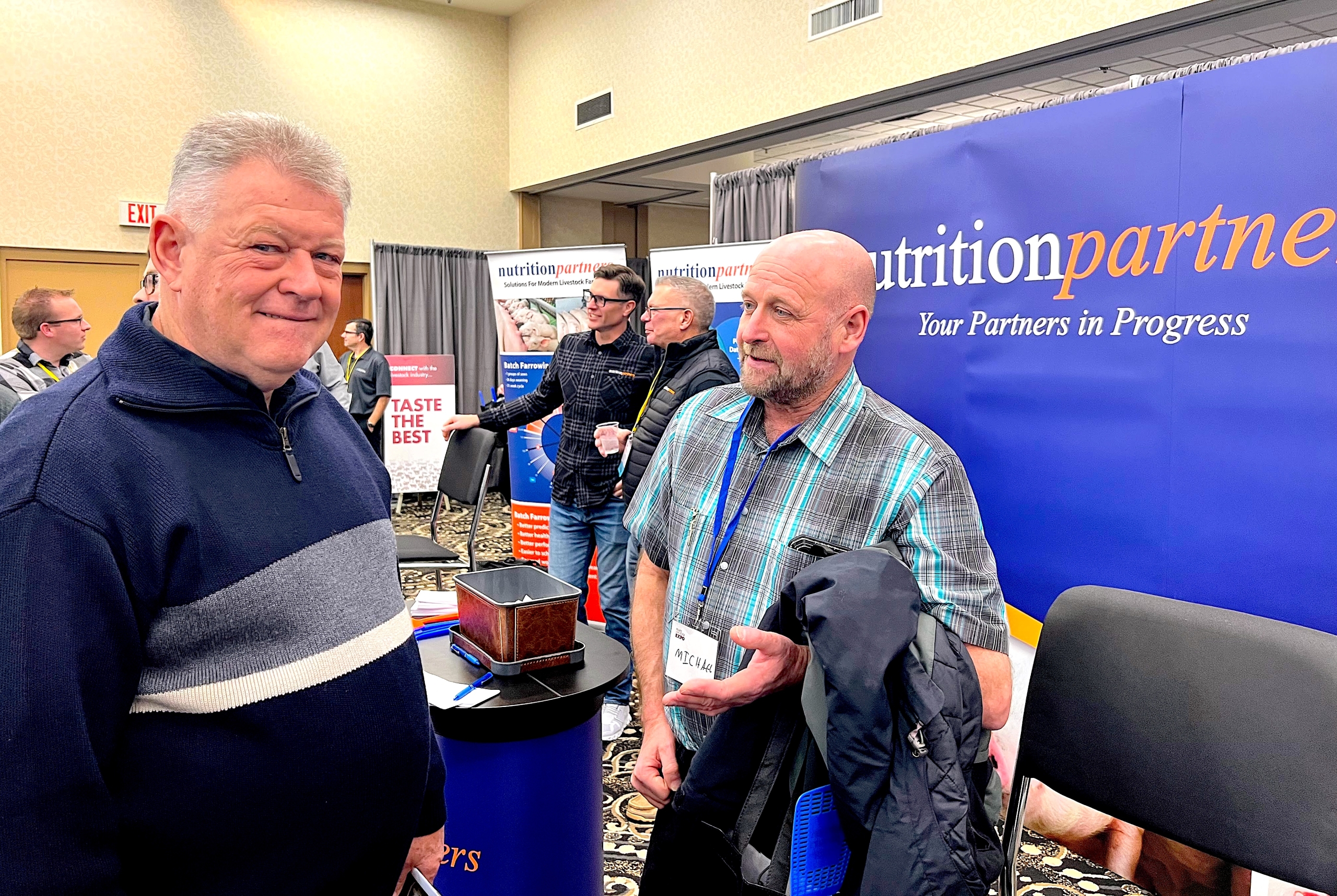
Dr. John Carr a world livestock consultant, veterinarian, and lecturer said the hog industry needs to focus more on the time management of the hog worker.
He reflected on how his role as a veterinarian has changed from answering the telephone to rushing out on a farm call. Next, the vet became more of a consultant, thinking of how to maximize pig welfare, look after the animals, and make the animals as happy as possible.
“You achieve that and then move into production, and you want production with welfare and everything else.”
In the last few years, Dr. Carr’s career has moved more toward people achieving excellent welfare, well-being, and healthy pigs, with good production and happy staff.
“This next phase of my career is looking after people and getting all the jobs done with fewer people. Because it is a reality for various reasons.”
And maybe society needs to look at this; people are moving away from agriculture. As a boy, the farmer tended and looked after the land and improved it for the next generation.
“And for some reason, we’ve managed to perverse that into that the farmer is now evil and polluting the land. So I am trying to understand how we’ve lost the conversation. Farming cares for the land, and it doesn’t pollute the land.”
There needs to be more people interested in farming, which creates a big problem in society.
“With the planet, the way we are, in increasing the population, pigs, poultry, fish, lamb, beef … I mean, we’ve got to feed people. So I’ve got to feed people, maintain good welfare, maintain excellent performance; otherwise, I can’t pay the bills.”
It’s also important for the farmer to keep the staff happy with less staff and make the job more entertaining, more interesting for people.”
Dr. Carr’s argument with clients is to employ professional stock people instead of labourers.
“I don’t want people just moving manure, sweeping passageways but professional stock people who love pigs and want to look after them and give them a great performance. So I need to figure out the tools they need to make that happen.”
He said time is one of those tools, but the jobs still need more people working on the farm. So the question is how many jobs does the farm need and how much of it is to create work?
It’s interesting how sows can farrow alone at night but appear to require help during the day and how much does a human over-interfere with these animals?
“Some readers may be horrified to have a vet saying, well, do we need to be there at the point of farrow? Because the obvious answer is, of course, you need to be there. Well, these animals farrowed without us for millions of years. So that’s one point.”
A third to half of the animals farrow at night with no human in sight and those animals still survive.
“The question is, do you have more stillborns at night than during the day? Check your records. I mean, have a look. If the answer to that question is no difference, we’re just over-interfering in these animals.”
The average sow will be fine and knows what to do better than any human interfering. The gilt, the parity one sow who never had babies before, she may need more attention. That doesn’t mean she needs to have a hand put inside her, but she might need more attention.
He’s not saying to abandon the animals but thinking about having limited time.
And particularly with batching much more farrowing on one day than before, so that means there’s a lot of work on the farrowing day.
“So you’ve got to think about managing those eight or 10 hours.”
That is one small example and it’s time to start thinking outside the box regarding staff, which the farm hires, and the job requirements.
And while it is evident, this is a major role for the veterinarian who has experience in animal science and behaviour and speaks for the animals.
“But the word doctor means teacher, not healer. And tomorrow’s veterinarians need to be much more teachers. If I teach you how to look after a sow as best as possible, I won’t need to heal her.” •
— By Harry Siemens