
Opportunities exist for producers willing to take a calculated risk, says an independent producer based in Saskatchewan.
Daryl Possberg is general manager of Polar Pork Farm System, a 12,000-sow isowean facility that rose from the ashes of its predecessor, Big Sky Farms.
While the outlook is bleak in terms of production costs, particularly with high grain prices and a shortage of labour, pork producers cannot kick at the prices they’ve been getting for the last two years and there are opportunities to improve margins, Possberg said in a hallway chat with Prairie Hog Country during the 2023 Banff Pork Seminar.
“I was quite encouraged to listen to Brett Stuart’s assessment of where he thinks inflation is going and where he thinks interest rates are going,” said Possberg.
In his presentation to delegates at the opening of the 2023 seminar, Stuart, president of Global AgriTrends and a repeat visitor to BPS, gave an overview of world markets and offered some insight concerning inflation, interest rates and export trends.

The industry has been living under the weight of “doom and gloom” for the past three years, but there are good days ahead, said Stuart.
“I think there are some real reasons for optimism, and I hope you see that as I go through my slides today,” he said.
Although the risk of a global recession remains, Stuart believes Canada and the United States can expect a soft landing. Amidst a tightening of global hog supplies, North American pork is now the most affordable, he said. COVID waves in China will pass and therefore allow economic recovery while a switch in Pacific flows from El Nina to El Nino should produce more rainfall and therefore improve growing conditions for US and Canadian farmers. US winter wheat is in tough shape, but there is plenty of corn coming out of South America.
Based on supply and demand, hog farmers should have a good year ahead, but it could be tough for processors, said Stuart.
He advised producers to be cautious, however, of the trend for climate policies based on activism rather than science.
Possberg said Polar’s decision to produce isoweans made economic sense for the business, because the family does not have cropland to grow its own feed or capitalize on high prices for grain. He continues to buy corn from the United States because it costs less than Canadian feed grains.
“We’re pig farmers, we’re not grain farmers. And when you start doing things like finishing pigs, if you’re not able to add value to your farming enterprise through the manure and being able to feed that back into your farm enterprise, you’re at a competitive disadvantage.”
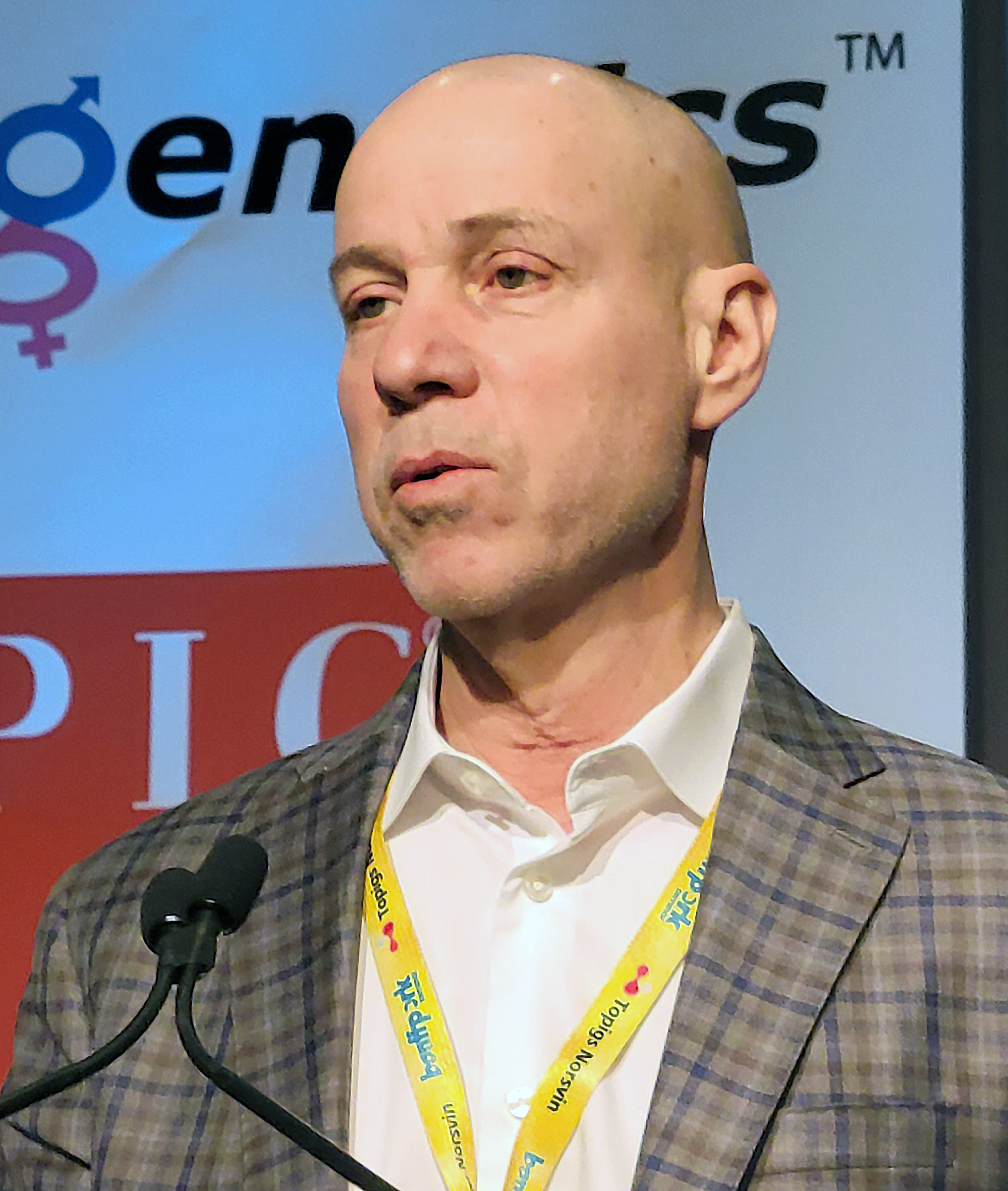
His observation echoed comments by BPS presenter Steve Weiss, founder and president of Iowa-based NutriQuest. Within his take-home messages for producers, Weiss pointed to the rising value of manure as a fertilizer in the face of climate policies that have pushed up the cost of commercial products.
Weiss showed in his presentation a vast difference in profitability between producers, and then looked at where the most profitable farms are finding and exploiting opportunities including taking value from their manure.
Animal health is the biggest difference, with Canadian farms having a distinct advantage over other exporters, said Weiss.
He described a US farm that had been highly successful and is now struggling through “a myriad of things,” led mainly by a “nasty” PRRS (porcine reproductive and respiratory syndrome) virus that broke in all five of its sow barns.
Stuart had described the health hazards that exist in China’s multi-floor “hog hotels,” said Weiss.
“I cringed, too, when Brett talked about those hog hotels. Canada is sort of the opposite, with the biosecurity that this massive landbase affords,” he said.
While achieving high health is the main thrust of a successful production stream, other practices factor in as well to ensure premium income with the least possible costs of production, he said.
Weiss, Stuart and Possberg all expressed concern with the impact of California Proposition 12, which would dramatically raise the standards for housing pregnant sows.
The proposed legislation is now under review before the US Supreme Court, with a decision anticipated within the next few weeks.
“There is no doubt that Proposition 12 standards for raising pigs will cost farmers money,” said Possberg.
“What they will have at the end of it is a higher cost of production cost structure than what they had before, so they’re spending money to make themselves less competitive.”
If Proposition 12 is allowed, all farmers in the US and Canada will have to make the appropriate changes, said Possberg.
“I think everyone would have to switch. It would be no different than the Pig Code. In 2024, there’s going to be a large number of Canadian producers that change because they have had to change. If Prop12 is the price of creating pork, that’s going to be a stepping up of the whole cost structure and it just isn’t going to change,” he said.
Weiss stressed the importance of making strong alignments to create a sound footing. For example, the producers who have the best packing agreements are those who treat the processors as customers.
“Integration has really been successful, I think, in that regard. But I think this win-lose mentality versus an alignment, is it sustainable? Maybe. But is it a recipe for success? I don’t think so.
“Price discovery matters, so in my view, I think the industry needs to be aligned in terms of how it pays for hogs, whether that’s cutout based (or otherwise).”
Weiss said he is hearing talk of Canadian prices being based in Canadian rather than US markets, which speaks volumes for alignment within the value chain rather than the adversity which has traditionally existed between producers and processors.
Arturo Urbieta, a senior manager with synBios in Mexico, said opportunities are available for foreign investment in his country’s production stream, which is trending to consolidation in new regions, away from the endemic health issues that plague the traditional hog production regions.
“I know there are lots of Canadians operating in Mexico. I have heard that HyLife has a facility, and there are some investments among suppliers in the industry and processors that have a presence in Mexico.”
Mexican producer Roberto Sarmiento concurred with Urbieta’s comments, stating that investing with local farmers is the easiest and most effective means of investing in pork production in Mexico. Smithfield has done that with two Mexican production companies, said Sarmiento.
Possberg said opportunities exist in Western Canada for any Dutch farmers seeking alternatives as their government makes an aggressive move to clamp down on production in The Netherlands. Farmers there have been protesting a government move to invest billions in reducing nitrous oxide emission by forcing the closure of intensive livestock operations through relocation and buyouts.
Possberg said his advice to those farmers is that it could be worth their while to seek new opportunities in Canada.
“Some of the costs, some of the new buildings, the numbers have been absolutely astronomical. But if you look at some of the recent stuff that’s coming out, lumber prices are coming down, the cost of moving things around is starting to go down considerably. There are still labour issues. But if you take that out of there, it’s getting closer, not further away from something that you can make some sense out of.
“If my choice was to produce a pig (in The Netherlands) or sell out on that and come to Canada, yeah, you’d do that in a heartbeat.”
Possberg commented that the COVID pandemic made dramatic changes in the world economy and in how swine producers do business.
“I would say I’m very comfortable with margins right now. I would like to see more of our pigs finished in Canada. Pre-COVID, we were exporting an awful lot of pigs. Post-COVID, we have a deal with Maple Leaf, where Maple Leaf bought some of our production for the sole purpose of keeping pigs in Canada, and that to us is a wonderful thing.
“COVID from a financial perspective was a huge shock to our system, with those plants shutting down, with a lot of our business being directed towards United States. It was very difficult to get through. It certainly has created an awareness that it is important to have local slaughter wherever possible, and local value-added.
“It does also underscore some of the relationships that we have with our existing customers in the United States . . . who did everything they could to help us through that.
“I have some optimism from that, because our industry has gone from ‘make a dollar, spend 10’ to ‘make a dollar, sit back and really assess the situation.’
“We’re not going back to the same old cycles that used to pound the industry out of profits and would knock people out of business through the hog cycle. We really aren’t seeing that. We aren’t seeing small profits resulting in large expansion,” said Possberg. •
— By Brenda Kossowan