With the July 1, 2029 deadline for group sow housing drawing closer, Manitoba pork producers gathered in Portage la Prairie on July 14, to hear firsthand experiences from producers who have already made the transition.
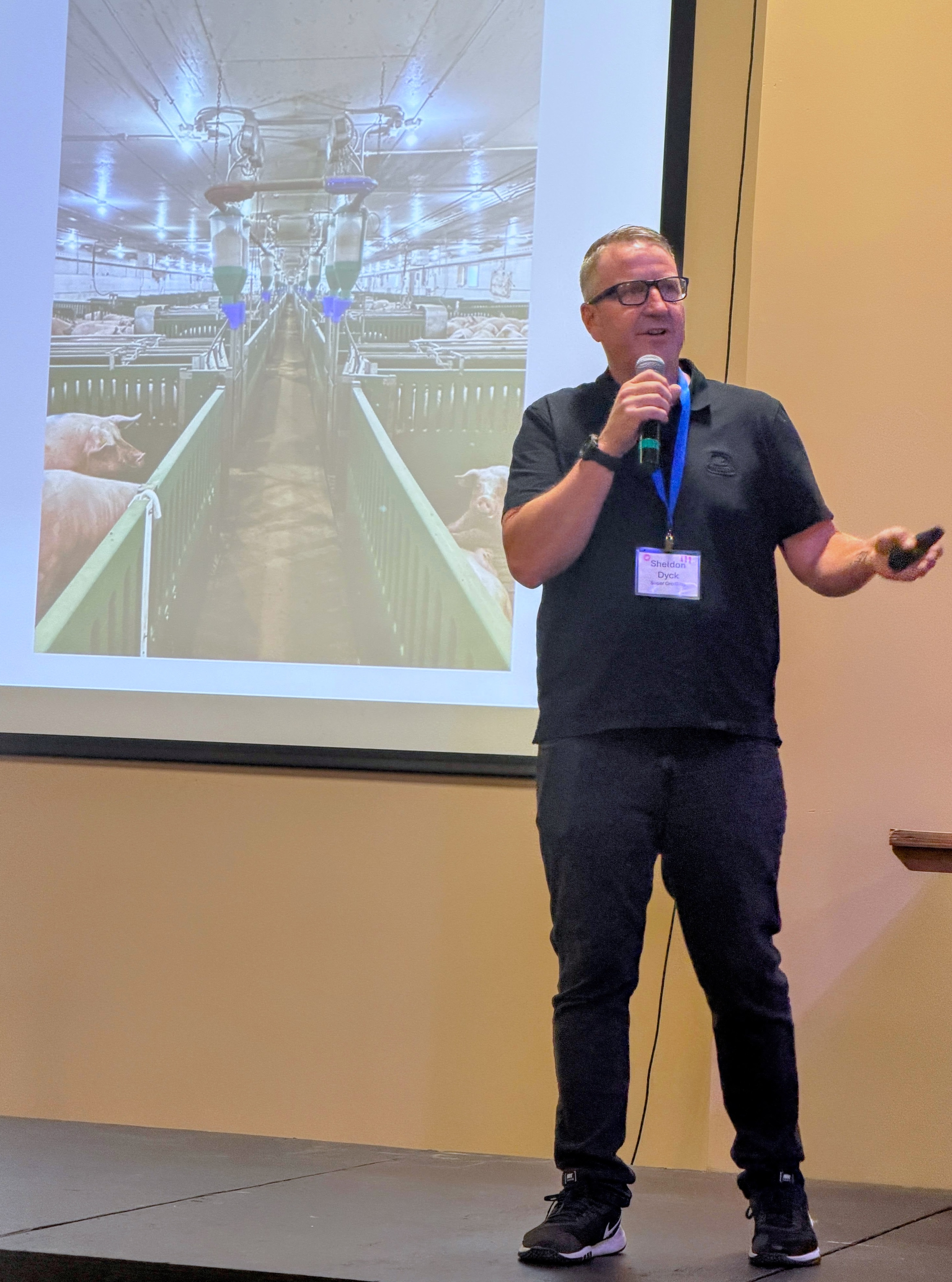
The Manitoba Pork Group Sow Housing Forum featured presentations from equipment suppliers, technology companies and producers, but one of the strongest messages came from Sheldon Dyck of Super Gro Gilts, who shared nearly a decade of experience managing electronic sow feeding (ESF) systems.
Dyck told producers there is no single solution that fits every farm.
“Every farm is different,” he said. “There’s no right answer or right fit for every operation. You have to know your own farm and choose a system you can manage.”
Super Gro Gilts operates approximately 3,000 sows across a commercial farm, a multiplication unit and a gilt grow-out and nursery near La Broquerie and Marchand in southeastern Manitoba. Dyck lives near Cleveland, Manitoba.
The company’s move to group housing began unexpectedly in 2017, after heavy snow caused the roof of its breeding barn to collapse. Although no sows were lost, the damage forced the owners to rebuild and convert to group housing using an electronic sow feeding system.
Today, Dyck said the system has proven successful.
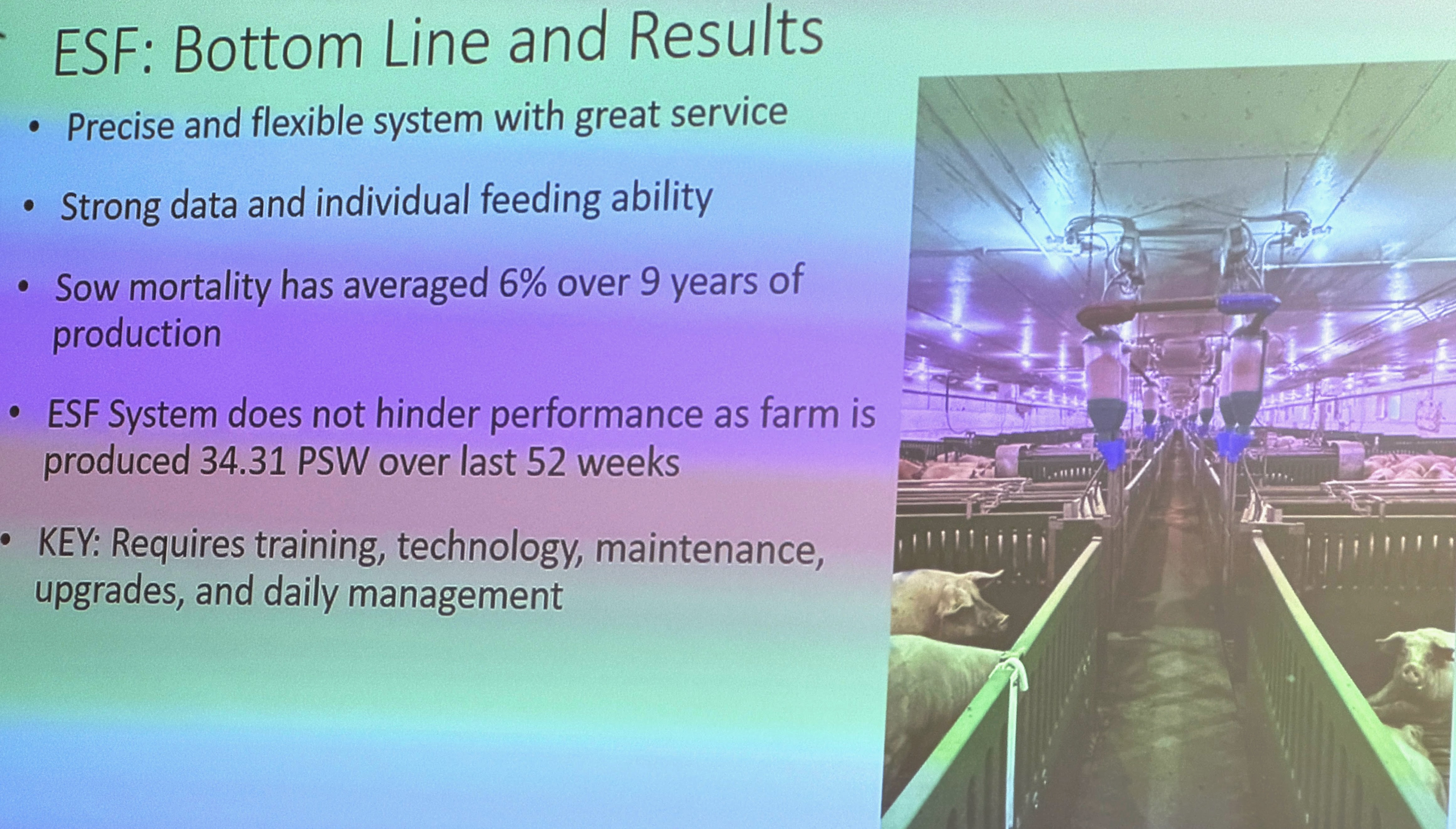
Electronic sow feeding allows each sow to receive feed based on parity, body condition and stage of gestation. Every animal carries an RFID identification tag, allowing the computer system to monitor feed intake and identify animals that have not eaten or may require attention.
Rather than creating competition at feeding time, Dyck said the sows quickly establish routines.
“They develop their own hierarchy and feeding pattern,” he explained. “They don’t all rush the feeders at once.”
He stressed that technology alone does not guarantee success.
“The key is management,” Dyck said. “You need good stockmanship, but you also need people who are comfortable with technology. The system requires daily monitoring, maintenance and attention.”
Despite early concerns about group housing, Dyck said production has remained strong.
“We’ve maintained production, kept sow mortality around six per cent and produced more than 34 pigs per sow annually,” he said.
Following his presentation, Dyck encouraged producers who still face conversion decisions to start with one resource above all others.
“My number one recommendation is to talk to other producers,” he added. “Go see what they’re doing, ask what worked and what didn’t. Our industry is small, and producers are willing to help each other.”
He also urged producers to carefully evaluate suppliers.
“Find a service provider you can build a relationship with,” Dyck said. “Some companies can sell equipment, but service after the sale is what really matters. When you have a problem at midnight or on a Sunday morning, you want someone who answers the phone.”
Looking beyond the 2029 deadline, Dyck believes succession may become an even bigger issue than group housing itself.
“Our investor group is getting older, and many barns are more than 20 years old,” he said. “A lot of owners are asking whether someone will take over their farms when they retire.”
He said many producers now face difficult decisions about whether to renovate older barns, build new facilities, repurpose existing buildings or exit the industry altogether.
“I don’t necessarily see consolidation,” Dyck said. “What I do see is a real need for the next generation to come in. That’s the biggest challenge. Young people simply can’t afford to buy these operations on their own.”
Dyck credits his ownership group with creating a succession plan that allowed him to become an owner.
“They brought me into the ownership group knowing I would help take Super Gro Gilts into the next generation,” he said. “Without that kind of plan, I couldn’t have done it.”
For Manitoba producers weighing their own decisions, Dyck’s advice remained simple: start planning early, learn from others and build relationships that will support the transition well beyond 2029. •
— By Harry Siemens