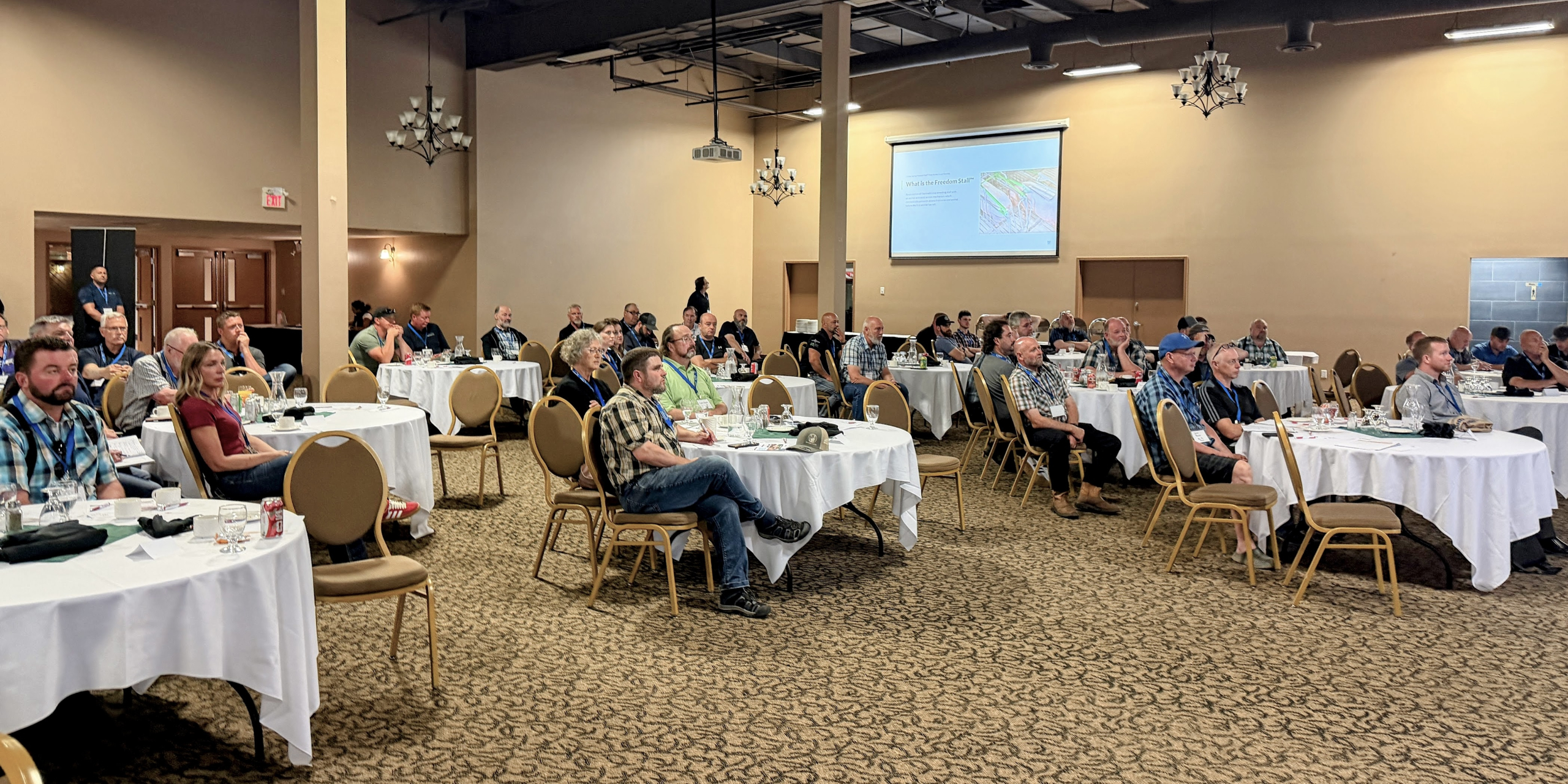
As Manitoba’s pork industry works toward the July 1, 2029 deadline requiring group sow housing, Bill Alford believes the sector is preparing from a position of strength rather than uncertainty.
The general manager of h@ms Marketing Services says producers are already making plans to modernize their operations while positioning themselves for continued growth beyond the deadline.
“A lot can happen in three years,” Alford said. “But Manitoba’s pork industry will be well positioned by the July 1, 2029 group sow housing deadline. Producers are actively planning to convert their existing sow barns, and we’re also seeing modest growth and expansion coupled with those conversions.”
Unlike predictions that the new housing requirements could trigger a major restructuring of the industry, Alford expects stability.
“Current economic conditions suggest the number of producers remaining in the industry will be relatively stable heading into 2029 and beyond,” he said.
He acknowledged some producers may change their business model rather than leave the industry altogether.
“There will be some producers who move from farrow-to-wean or farrow-to-finish operations into finishing production, but overall I expect the industry to remain stable.”
Alford also believes fears that group housing will reduce productivity have largely disappeared as more producers gain experience with the systems.
“Group sow housing has been adopted by an ever-increasing number of producers over the past decade,” he said. “Production practices have become more efficient over time as well.”
He noted that improving productivity has always been a hallmark of Canada’s pork sector.
“Productivity gains have been a consistent theme in the pork industry, including within group sow housing production systems.”
That continued efficiency, he said, will be essential to maintaining Manitoba’s competitive position.
Alford does not expect the transition itself to threaten hog supplies for processors.
“The overall profitability of pork production will continue to be the main driving factor for the long-term supply of hogs,” he said. “Group sow housing has been largely embraced by both producers and processors.”
Instead, he believes profitability, not housing design, will determine future expansion.
Consumer expectations will also continue shaping the industry’s future.
“Animal welfare and consumer perception are important over the long term,” Alford said. “We need to continue to keep a close eye on consumer trends and perception of the pork industry as a whole.”
He said producers have a shared responsibility to maintain public confidence.
“It is in every producer’s interest to follow best practices in hog production, with particular attention to animal welfare.”
Looking beyond 2030, Alford sees international trade as the industry’s greatest challenge.
“The Manitoba pork industry, and Canada in general, depend greatly on open access to international markets,” he said. “Favourable trade conditions will always be a prerequisite for continued success and growth of the Canadian pork industry.”
As the industry continues investing in new facilities and technology, Alford hopes Manitoba will emerge even stronger by the end of the decade.
“By 2030, we hope to see widespread renewal and investment in the industry’s infrastructure, including processing plants,” he said.
He believes the next generation of success will depend on continued innovation.
“The key to remaining competitive will be efficiency and productivity through the adoption of new production methods and technologies.”
For Alford, the 2029 deadline is less about meeting a regulatory requirement than about modernizing an industry that has consistently adapted to changing markets, evolving consumer expectations and new production practices. •
— By Harry Siemens