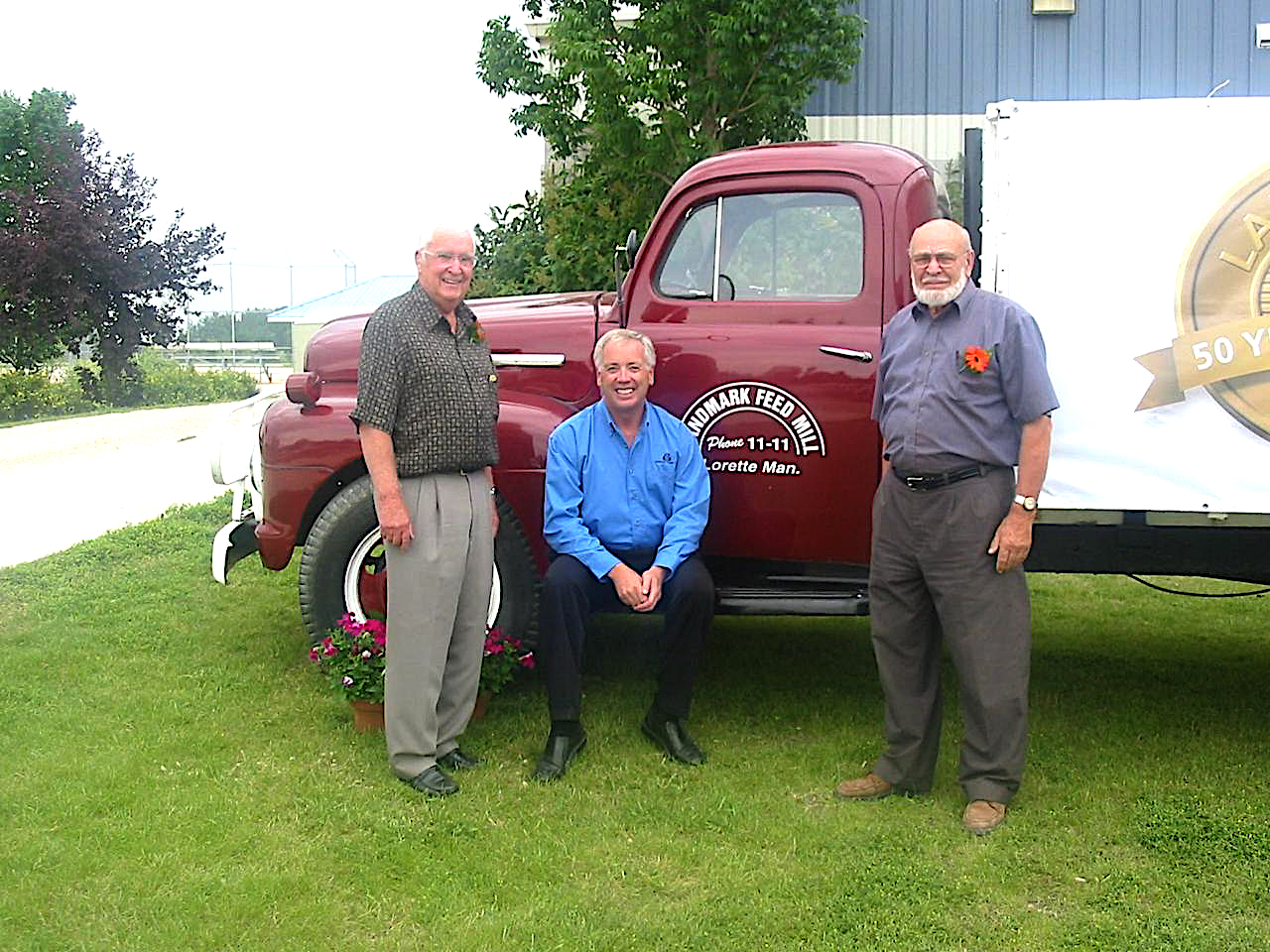
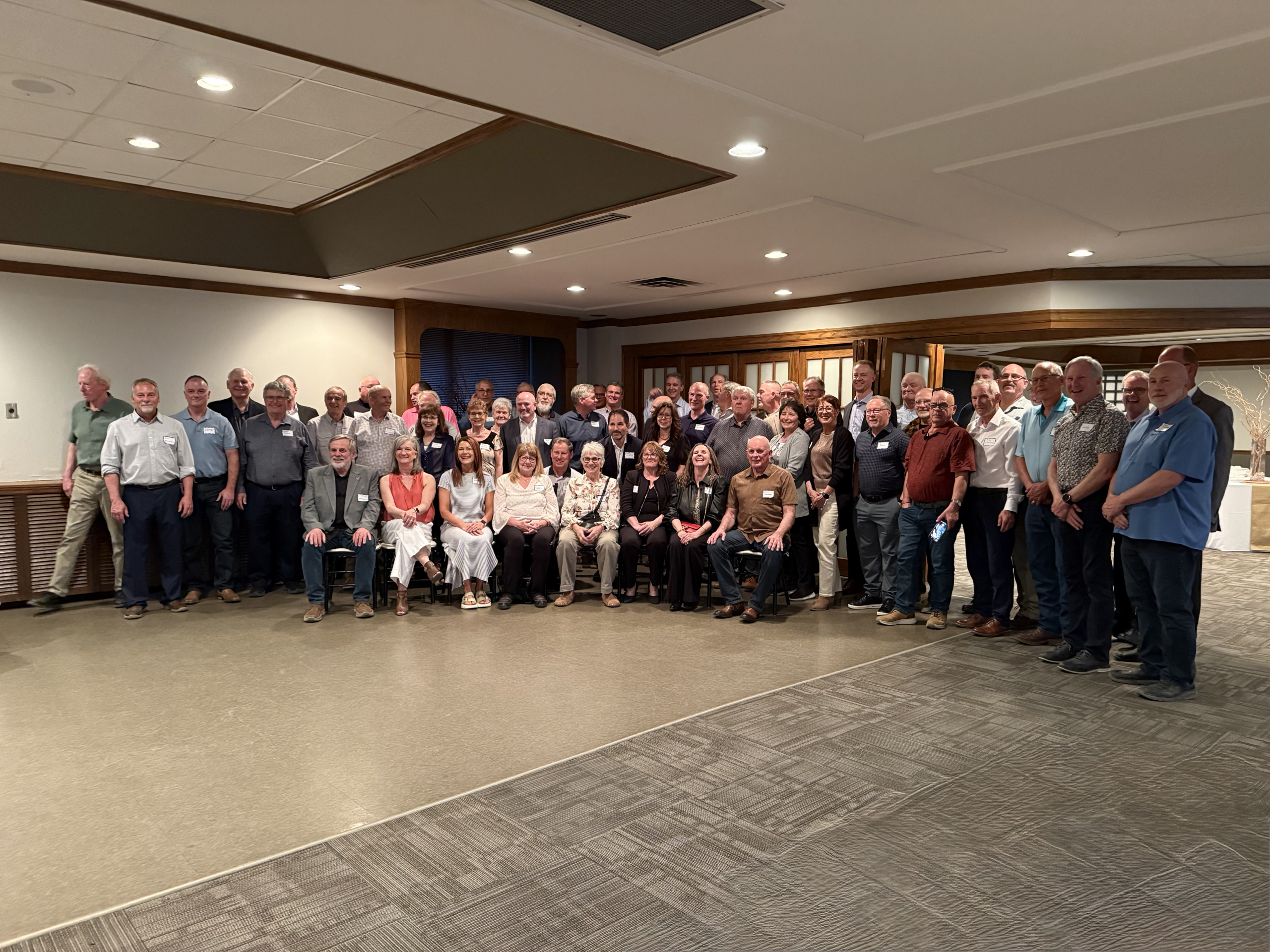
A recent Landmark Feeds reunion in Manitoba brought together memories of a company that started small, grew steadily and left a lasting mark on the feed and livestock industry across Western Canada.
For Randy Wolgemuth of Steinbach, Man., the story remains deeply personal. His father, Jake Wolgemuth, started Landmark Feeds with a small custom grinding mill and about $5,000. Looking back, Randy said what stands out most is not the money or the equipment, but his father’s willingness to work hard, take risks and serve people well before worrying about growth.
“In those early years, everything was built on relationships and reputation,” Randy said. “Dad wasn’t afraid to start small because he believed that if you treated customers fairly and delivered value, the business would grow naturally over time.”
That lesson stayed with Randy as he later moved into his own business path. He said watching his father build Landmark Feeds taught him that strong businesses rarely happen overnight. They require vision, persistence and consistency.
“Success comes from showing up every day, solving problems for customers and continually adapting while staying true to your principles,” he said.
Randy said integrity played a central role in the way his father conducted business. Jake believed a person’s word mattered. He cared about customers, employees and producers, and he understood that trust in the feed and livestock business was everything.
Those values also shaped Randy’s decision to form Team Landmark. He said the move did not mean walking away from Landmark Feeds’ past. It meant taking the lessons learned from the family business and applying them in a new way to changing markets and new opportunities.
“Forming Team Landmark was really a combination of continuing the entrepreneurial spirit I inherited from my father and building a company with its own identity,” Randy said.
He said the hardest part was proving himself independently. A strong family business reputation can open doors, but building a separate company means earning trust again on your own merits.
Today, Randy sees Landmark Feeds and Team Landmark as connected chapters in a larger story. Both were rooted in entrepreneurship, producer relationships and long-term service.
Ed Waddell also played an important role in Landmark’s growth story. He joined Bruce Campbell and Ted Bailey in late 1980, when the business already had a strong poultry customer base, including egg layer operations, turkeys and broilers. A new dairy line had also been installed at the newly acquired mill in Otterburne. At that point, hogs represented only about five per cent of the business.
Waddell’s role was to manage Regal Feeds, the newest member of the Landmark Group, and help the company break into the hog business.
The key turning point, he said, was the move into “all in, all out” pig farming. Instead of adding a few pigs each week and shipping a few each week, the system completely cleaned out the finishing barn before refilling it. That gave customers a major advantage.
“Closeout statements were routine, so each change could be evaluated,” Waddell said. “When customers made money, they naturally wanted to expand.”
Waddell described Campbell as “the senator,” a man with a gift for making customers and employees feel comfortable and appreciated. He called Bailey the astute businessman who missed very little in the operation. Waddell saw himself as the developer, willing to think outside the box.
That spirit carried into Elite Swine and helped hog customers grow and prosper.
Waddell said Landmark Feeds earned trust for one key reason: performance. Batch after batch, customers made money through good and bad markets. That performance built relationships that lasted for decades.
For Randy, the Landmark name still means legacy, perseverance, relationships and faith in hard work.
More than anything, he said, it represents people — customers, employees, partners and family members who helped build something meaningful over the years. •
— By Harry Siemens