Sometimes choosing a breed of pig just comes down to a bit of local history.
When Leah Purdy returned to her family’s central Alberta farm in 2017 she thought she might like to get a few pigs to raise for meat. Her mom suggested Lacombe pigs because Leah’s grandfather knew some of the scientists at the Lacombe Research station and had met Dr. Howard Fredeen, one of the developers of the Lacombe pig. Her mother even remembered going to the Fredeen’s home for Sunday dinner.
When Purdy started her search for the pig developed at the research station less than an hour away it was “crickets.” She could not find Lacombe pigs anywhere, despite the breed being one of the top commercial breeds in Canada at one time.
Like other farmers, Purdy’s family once raised pigs on their farm near Crestomere. The family even raised some Lacombe pigs in their commercial herd.
In 2017 Walter Preugschas, a Barrhead pork producer and the last commercial producer of Lacombe pigs sold his herd. A woman bought some of the pigs and eventually sold her herd of six animals to Purdy in 2019.
“They formed the beginning of my herd. I kept some of their descendents. Every time I have new genetics or new pairings I offer them out to anyone interested.”
Her herd now consists of four sows and two boars. Both boars are from a farm in Ontario, where she needed to reach to expand the herd’s gene pool.
“I do really like them. They are fairly low maintenance. They know their schedule very well. If they see anyone around the farm at the time they are normally fed you will hear about it from them. In general, I think they have a really good temperament. For the most part they are a fairly docile, easy to keep animal.”
The Lacombe breed was founded at the then named Canadian Department of Agriculture Research Station at Lacombe. Research and selective breeding began in 1944 and the pigs were registered as a breed in 1957 and released to the public in 1958.
In an article published in a 1969 Canadian Journal of Animal Science, the developers of the Lacombe pig, H.T. Fredeen and J.G Stothart described the breed as a “white, flop-eared breed, characterized by rapid growth and desirable carcass characteristics, was developed from a Berkshire-Landrace-Chester hybrid foundation by a selective breeding program.”
The breed was exhibited to the public at the First National Swine Show held at Brandon on July 1, 1957. On October 7, 1957, 50 boars were distributed, the applicants were determined by public draw.
In 1968 purebred Lacombe comprised 11.9 percent of all pedigree certificates issued for pigs in Canada. The article said the “National ROP test averages indicate that superior growth rate documented for the Lacombe prior to release continues to be a distinctive breed characteristic.”
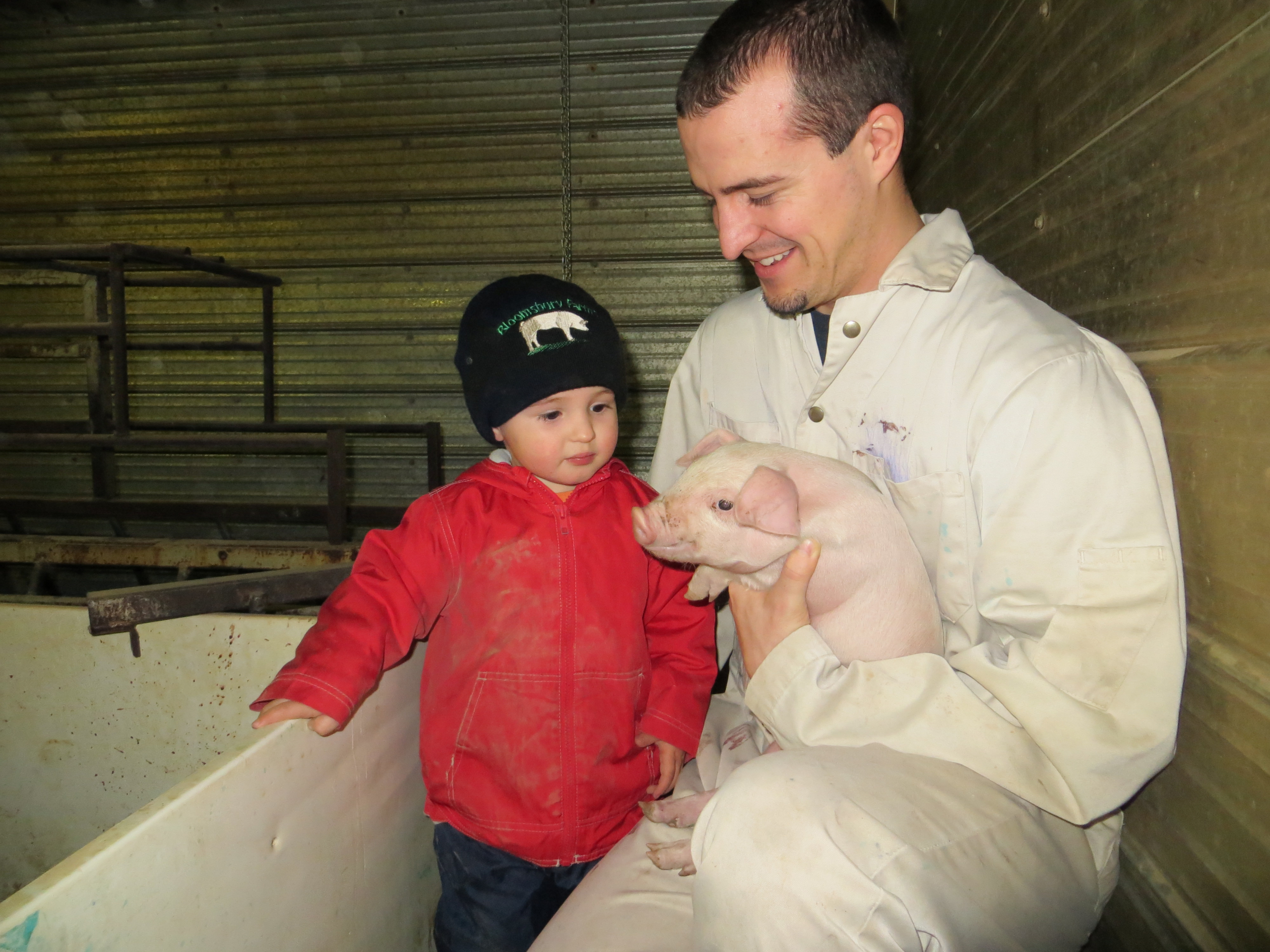
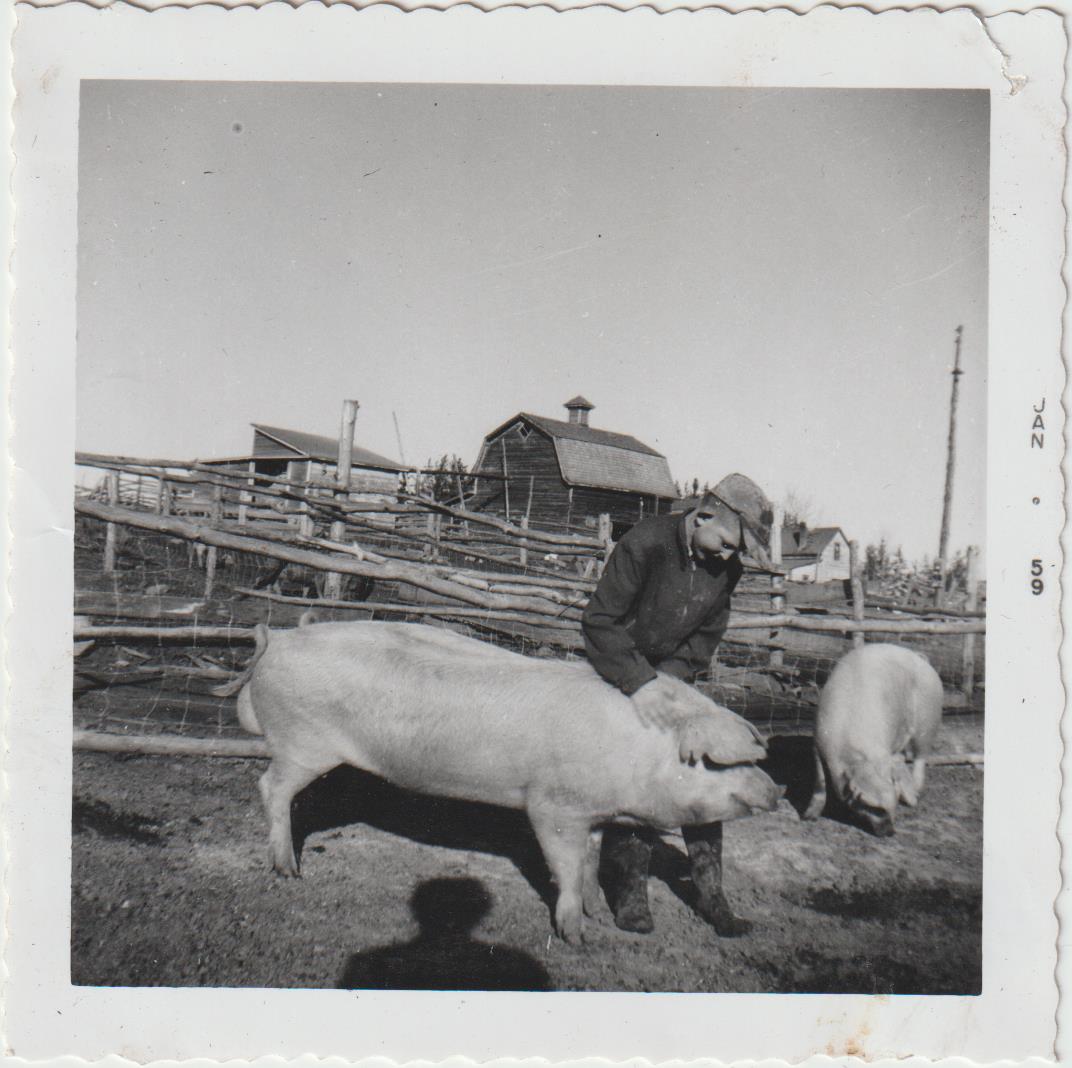
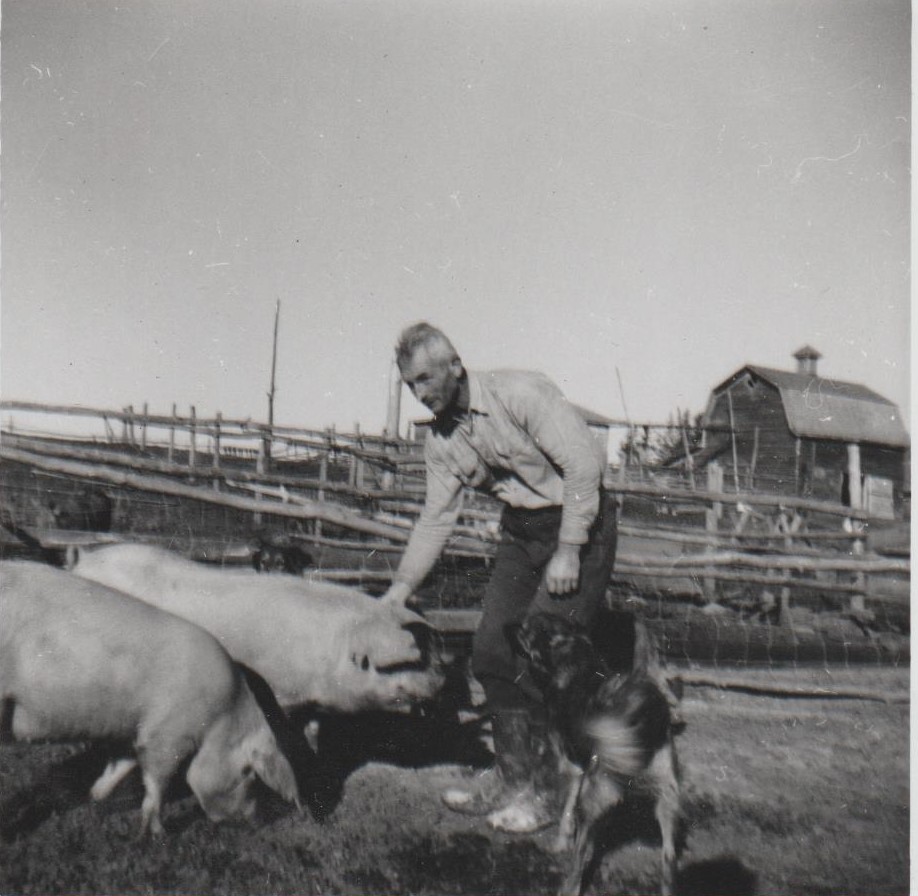
It was this new line of purebred pigs that attracted Preugsches’ father who had recently emigrated from Germany. The family submitted an application for one of the 20 groups of three gilts and one boar from the research station’s public draw. Their name was the first one drawn. Their family later became widely known Lacombe breeders across Canada. Their farm was also the last commercial Lacombe operation when it sold its herd in 2017.
It wasn’t just the development of the breed by scientists at the Lacombe station that revolutionized prairie hog production, farmers were supported by extension work from station scientists, said Preugsches.
“Dr. Fredeen was the geneticist that produced the Lacombe pig, but he was also a mentor to hundreds of pig breeders in Alberta and Canada. He would show up at meetings and be instrumental in helping them figure out cross breeding programs. It was not just the development of the breed, but the extension that went around that.”
The Lacombe thrived in a crossbreeding program, especially with smaller herds. When hog operations expanded the Lacombe lost its edge. The market for purebred animals shrank and large breeding stock companies weren’t using the Lacombe in their new lines.
When Preugschas sold his herd, Quebec farmer Elwood Quinn arranged to buy 10 bred Lacombe gilts to help save the breed. Quinn, president of Heritage Livestock Canada, formerly Rare Breeds Canada, fought to preserve endangered breeds of livestock to safeguard genetic diversity.
Preugschas also arranged to send embryos and semen to the Canadian Animal Genetics Resource program in Saskatoon as one more measure to save the breed.
“We felt it was important enough to do it.”
According to Heritage Livestock Canada, in 1981 there were 1,743 registered, of which 648 were boars and 1,095 were females.
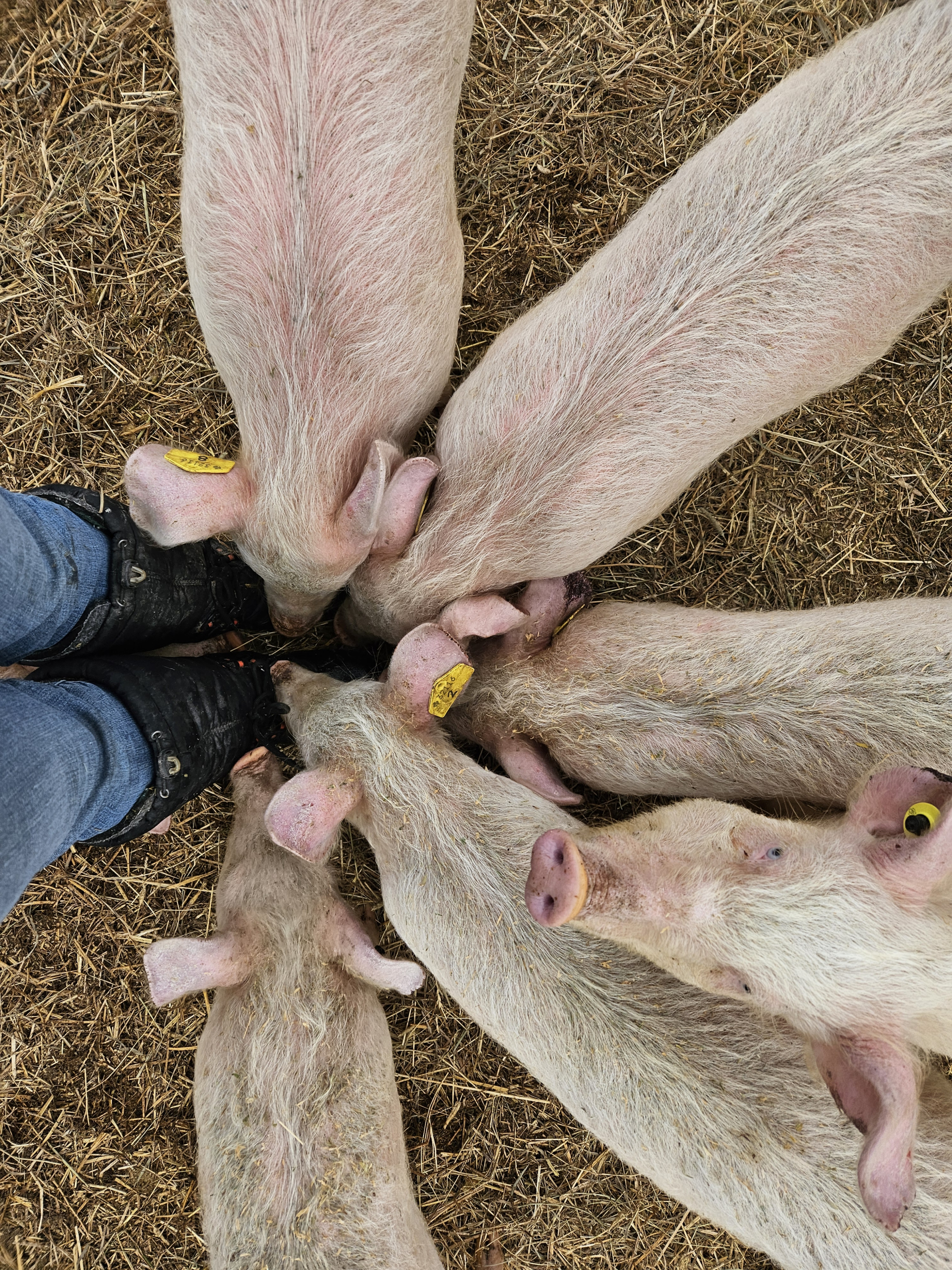
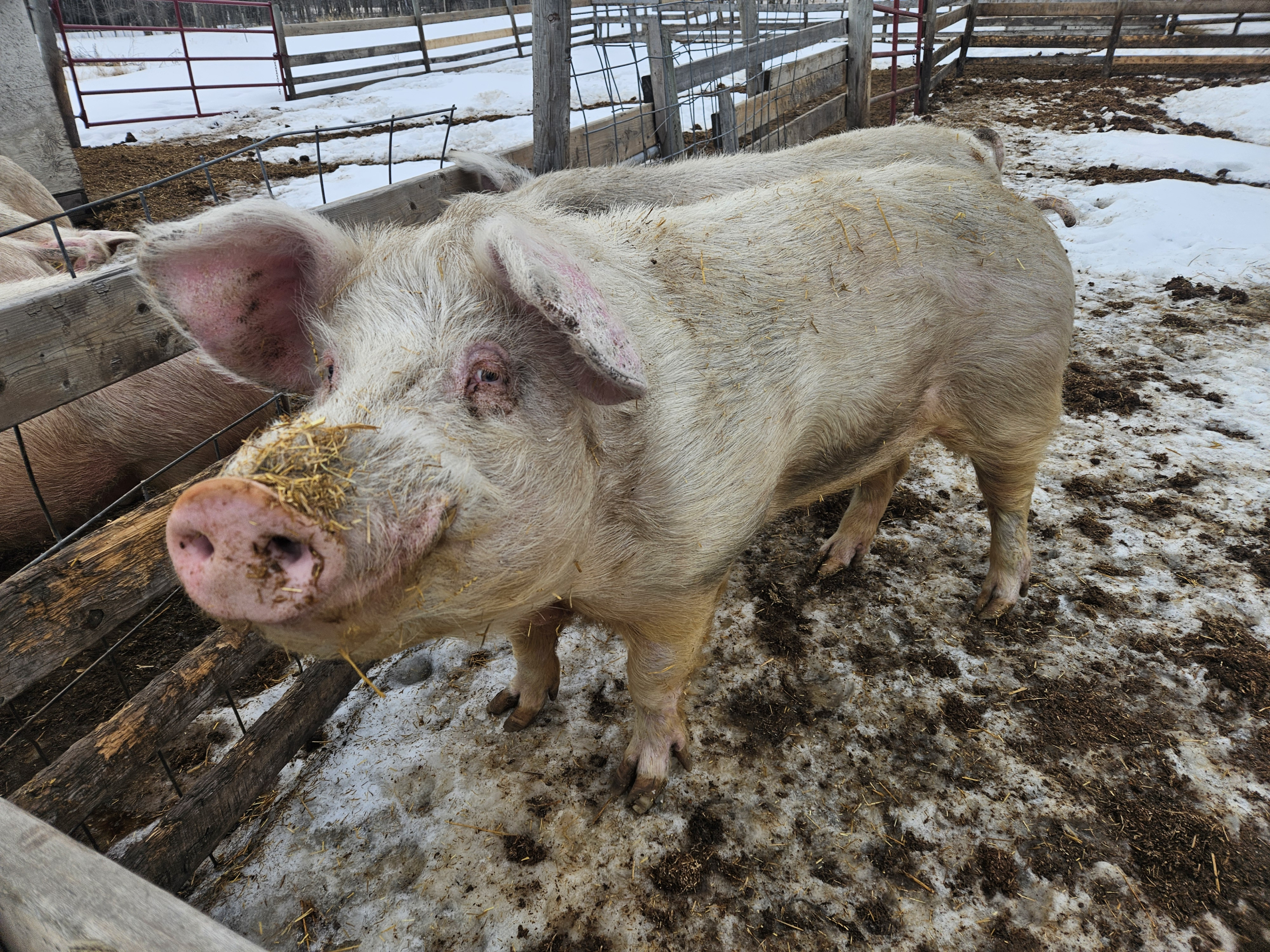
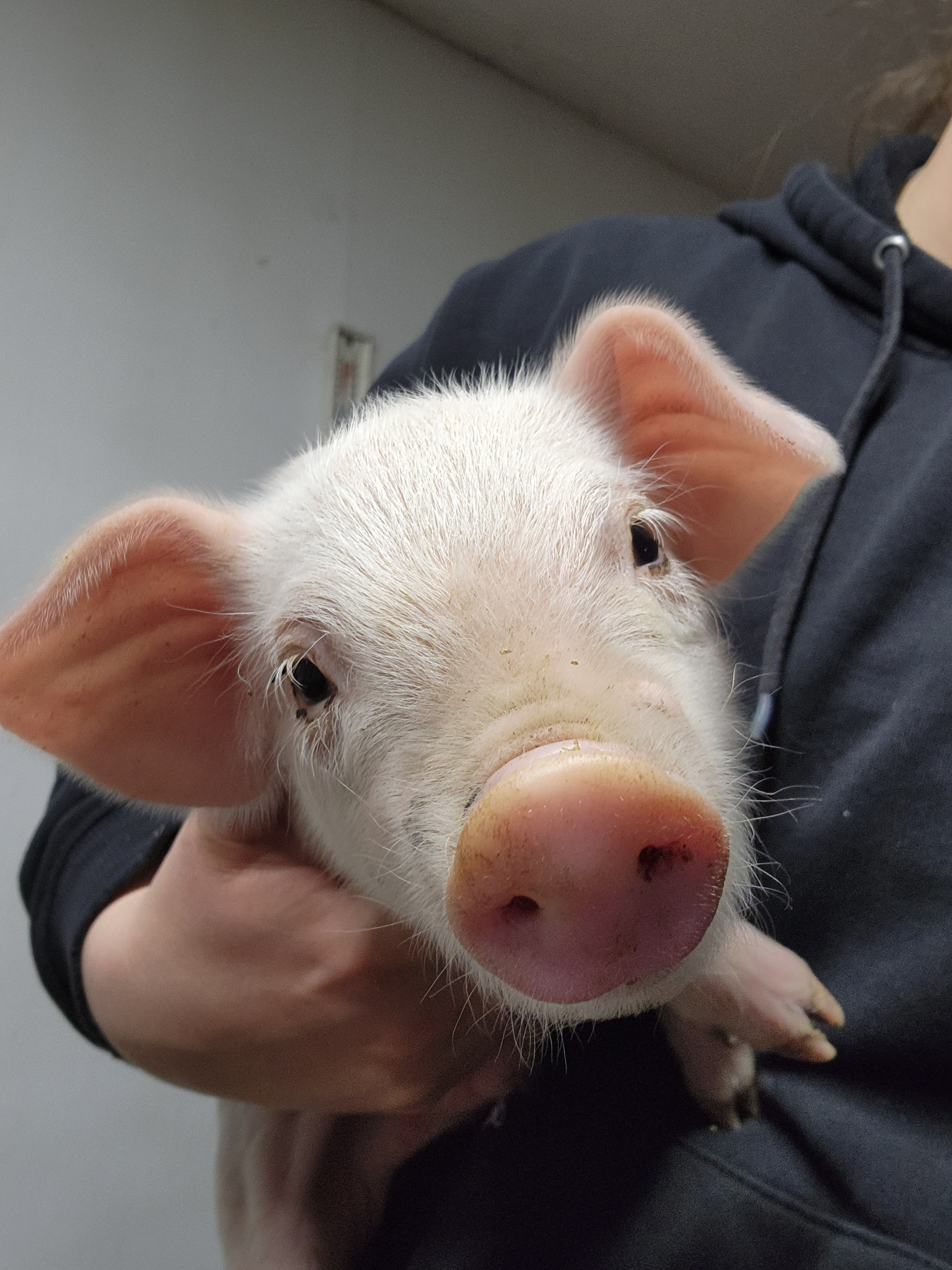
There are now 18 sows and six boars registered, including Purdy’s herd.
With Heritage Livestock Canada’s support, Purdy’s has been approved to receive frozen Lacombe pig semen from the genetics bank in Saskatoon. This will allow Purdy to expand the genetics in her herd and her herd.
Registering the animals from her herd requires effort, but Purdy feels it is her responsibility to keep the breed alive.
“I feel that since I have them it is my duty to do as much as I can to help preserve them. I feel I am pretty lucky to obtain some of the last stock that was there. I have committed to doing my best effort to do everything possible to keep them going. They are a part of our local heritage and they are a good legacy from the research station.
“As long as there is interest and as long as there are options I will try my best to not only keep the breed alive but boost it as much as possible.” •
— By Mary MacArthur