Animal Health Canada has released the first national map of wild pig locations and documented how provinces are responding to the threat. The 2023 Canadian Invasive Wild Pig Report, published in Elora, Ontario, outlines where wild pigs have been sighted or established and highlights prevention, management, and removal programs.
“Wild pigs pose serious risks to our ecosystems, wildlife habitats, crops, and even human safety. They also serve as potential reservoirs for diseases that threaten both wildlife and livestock, with African Swine Fever and foot and mouth disease being the most pressing concern,” said Dr. Leigh Rosengren, industry co-chair on the Animal Health Canada board. “Addressing this issue requires coordinated action. The report highlights how participating provinces are coming together to track progress in preventing wild pig populations, and managing and removing this invasive species from Canada.”
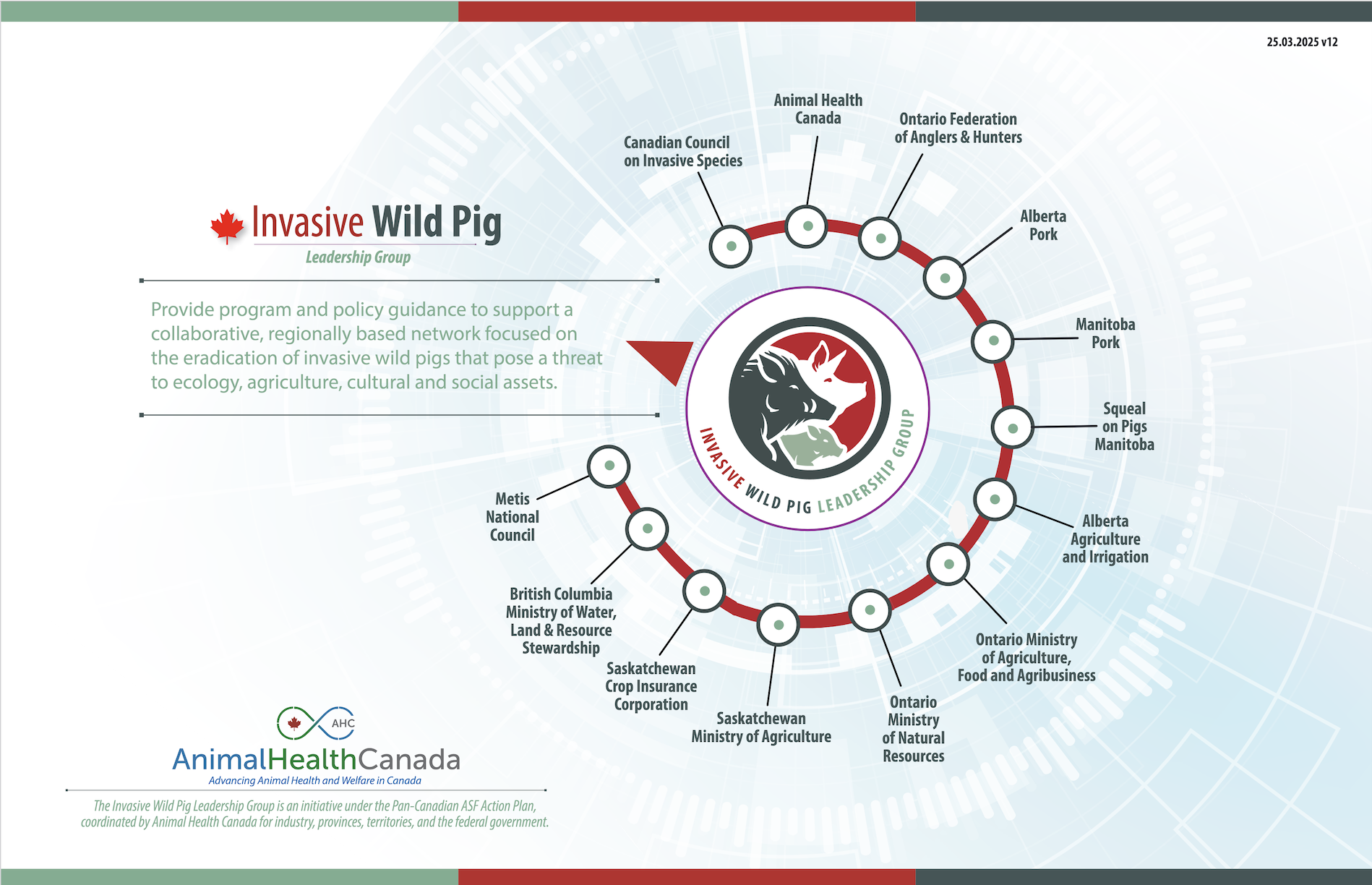
The report covers wild pigs of all types—escaped domestic pigs, Eurasian wild boar, and hybrids—and compiles data from 2021 to 2023. British Columbia, Alberta, Saskatchewan, Manitoba, and Ontario contributed information. Animal Health Canada coordinated the effort, and future editions will add more provinces and territories.
What the Data Shows
The report documents areas of established wild pigs, verified reports of uncontained animals in 2023, and on-site control activities. Wild pigs are not native to Canada, but populations now exist in several regions, especially the Prairies. Each province tailors its program to the scale of the problem.
British Columbia and Ontario report no self-sustaining populations. Programs there focus on prevention and responding quickly to escaped domestic pigs.
Alberta, Saskatchewan, and Manitoba face established populations of Eurasian wild boar and hybrids. Programs in these provinces aim to limit spread and remove animals from the landscape.
Provincial Snapshots
In British Columbia, the Wildlife Act makes it illegal to release or abandon pigs. Licensed hunters may harvest feral pigs, and conservation officers respond to incursions. A provincial working group coordinates action, with surveillance guiding management.
Alberta classifies wild boars at large as pests. Municipalities can restrict farming, and containment standards apply where farms remain. The Alberta Wild Boar Control Program partners with Alberta Pork and others, using monitoring, trapping, and disease surveillance.
Saskatchewan has removed more than 1,000 wild boars since 2017 through the Feral Wild Boar Control Program. Declared a regulated pest, wild boar are concentrated in a few wetland areas. A moratorium now prohibits new farms, and regulations require licensing, inspections, and fencing for existing ones.
In Manitoba, the “Squeal on Pigs” program launched in 2022, funded jointly by federal and provincial governments and managed by Manitoba Pork. It targets established groups near Spruce Woods Park and Peonan Point, relying on public reports to deploy surveillance and trapping.
Ontario banned hunting wild pigs and prohibited live Eurasian boar under the Invasive Species Act.
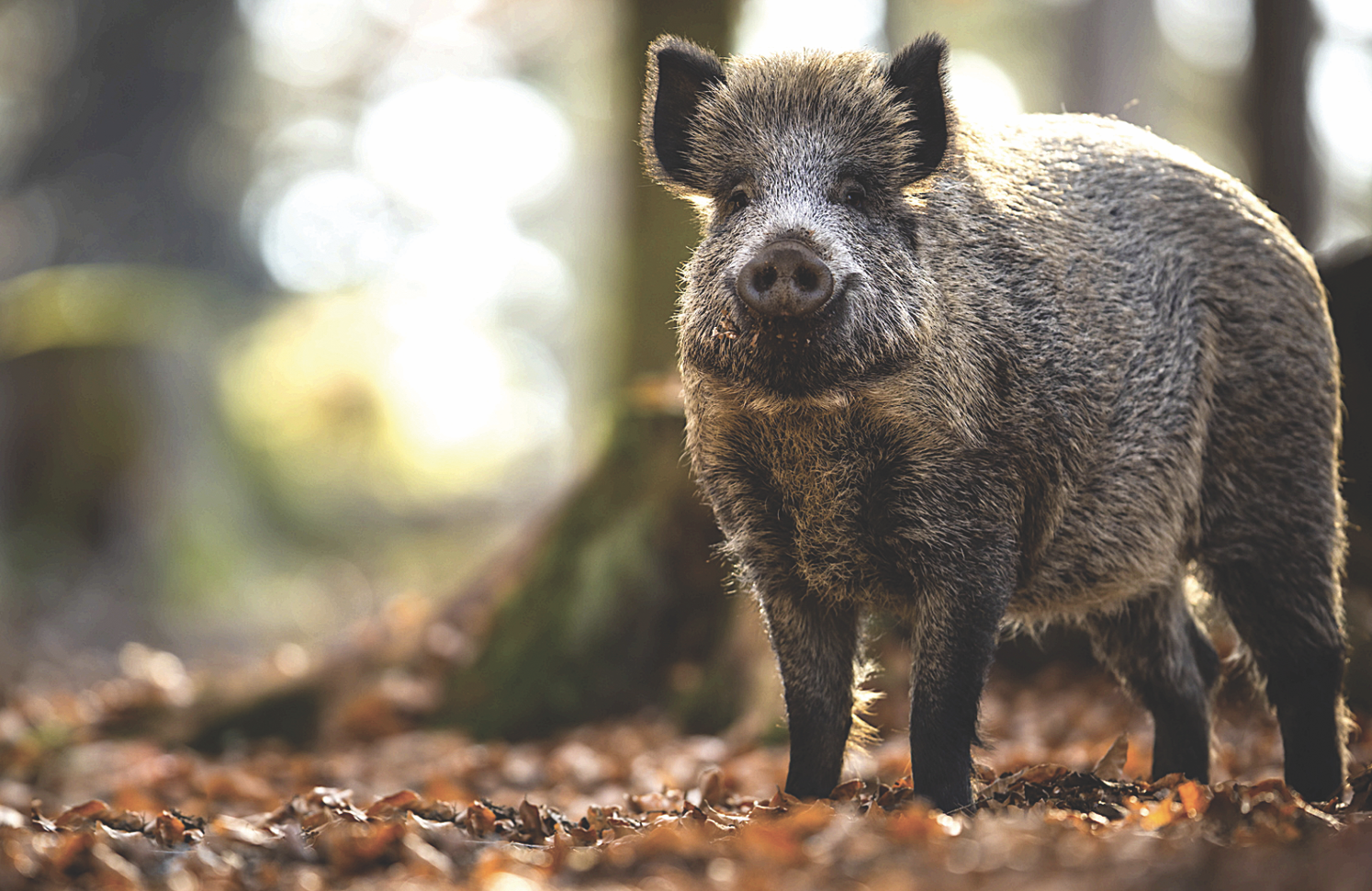
Since 2018, the province has tracked reports, deployed trail cameras, and partnered with hunters and conservation groups. Most sightings are escaped domestic pigs, and Ontario reports no established populations.
The report emphasizes that wild pigs are more than an ecological problem. They also pose a serious disease risk. African Swine Fever kills more than 95 percent of infected pigs and, while not a threat to humans, could devastate Canada’s $7-billion pork export industry if it arrived here. Though ASF is not present in Canada, outbreaks overseas and global movement of goods raise the danger.
Animal Health Canada frames prevention as part of Canada’s Pan-Canadian ASF Action Plan. If the virus entered wild pig populations, it could spread to domestic herds and shut down export markets overnight.
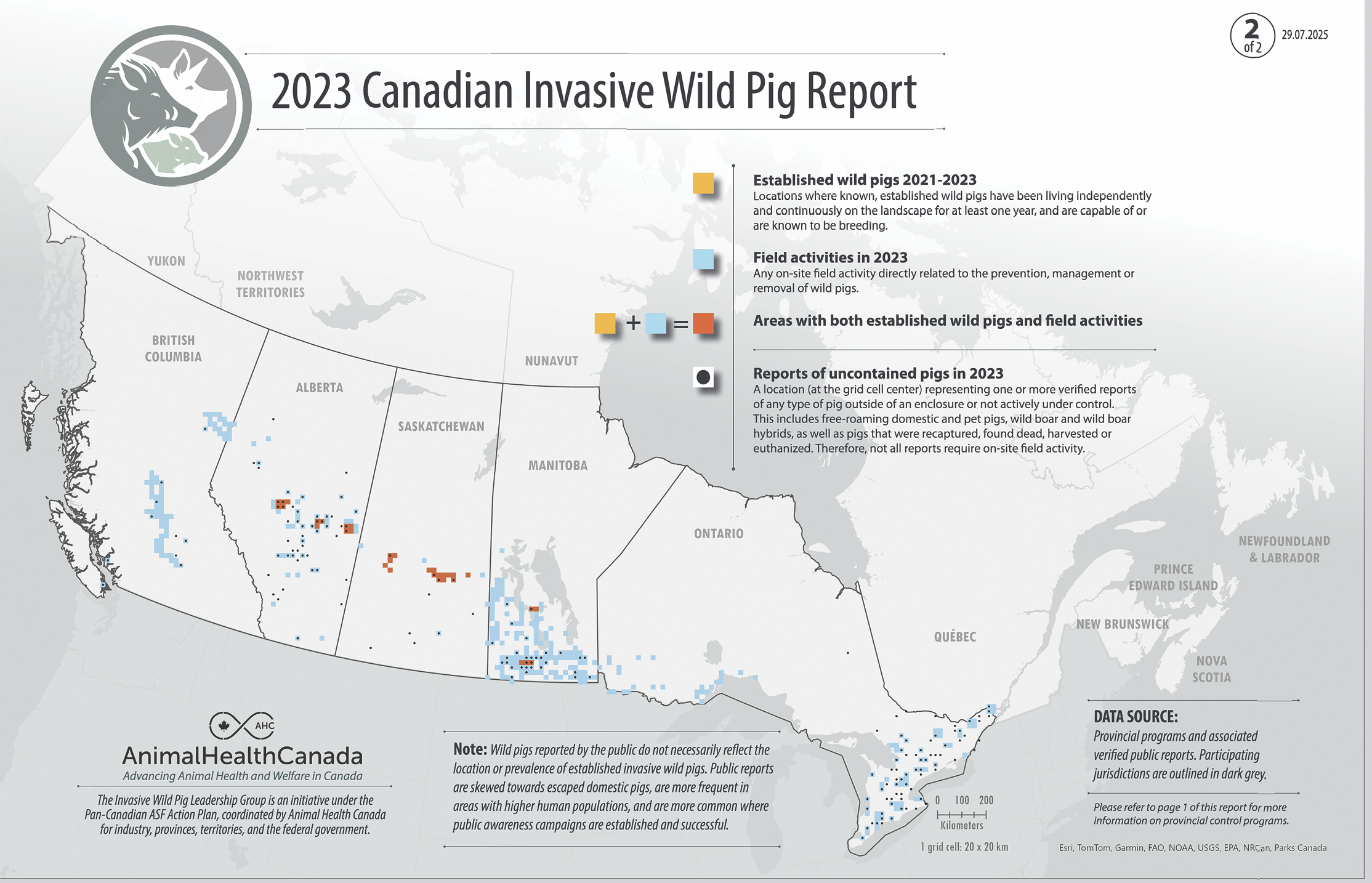
The report stresses the role of public reporting. Sightings trigger investigations and help programs deploy resources. Because pigs are difficult to track and avoid people, verified locations are more reliable than population counts.
Future reports will track changes in distribution and measure progress in prevention and removal. Animal Health Canada intends to expand participation and update maps regularly.
The 2023 report is part of Canada’s Invasive Wild Pig Strategy, supported through the Sustainable Canadian Agricultural Partnership. It represents collaboration between industry, federal, provincial, and territorial governments—an approach Animal Health Canada calls essential for animal health and welfare.
Wild pigs remain a relatively new but growing challenge. The report makes clear that prevention is far easier than eradication. Farmers, landowners, and the public now have a map and framework to guide action.
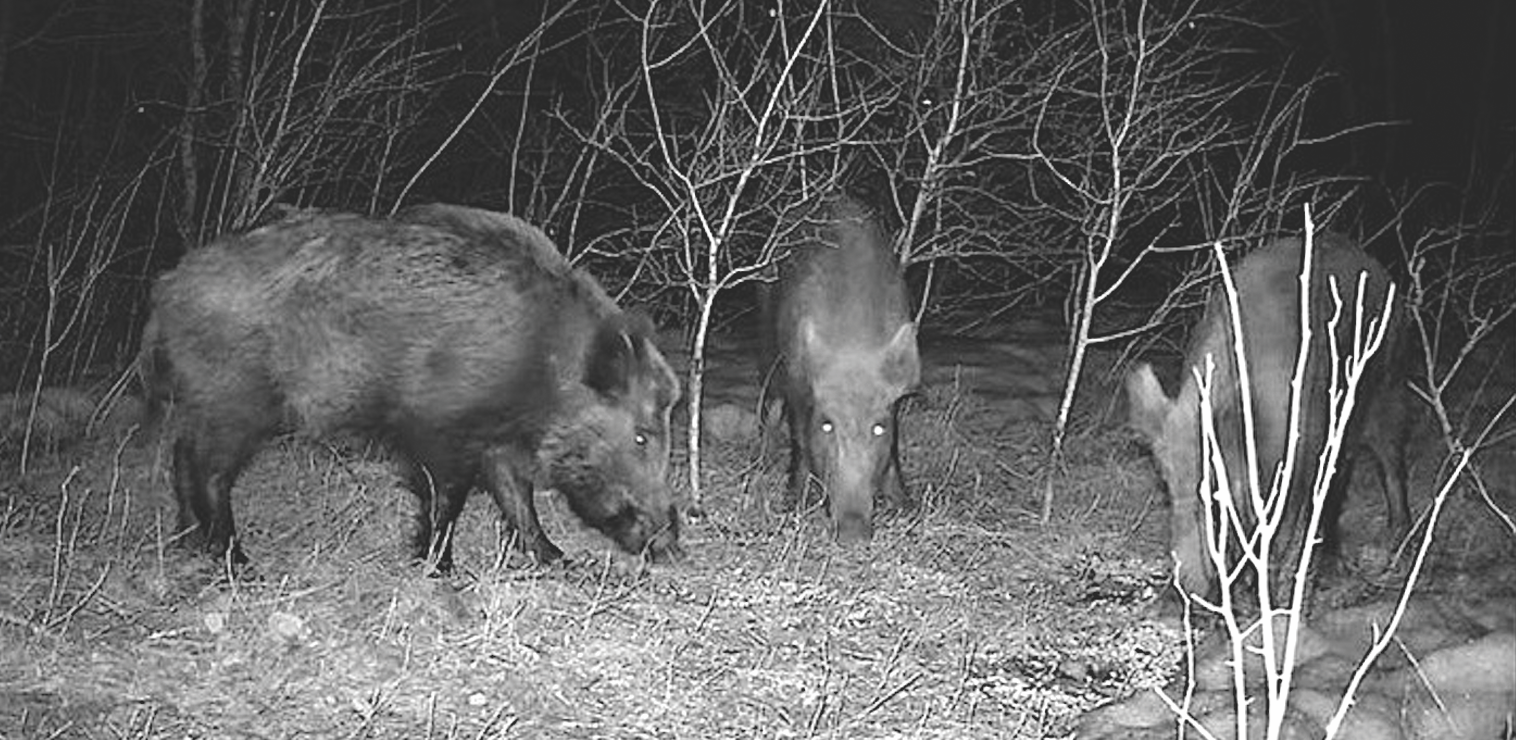
Dr. Rosengren summed it up: “This report highlights how provinces are coming together to track progress in preventing wild pig populations and managing and removing this invasive species from Canada.”
Contained within the complete report are four specific goals:
Goal 01 – Provide leadership and collaboration to eradicate invasive wild pigs in Canada and prevent their further introduction on the landscape.
Goal 02 – Build public awareness of impacts of invasive wild pigs and the need to report and verify all wild pig sightings in a timely manner.
Goal 03 – Leverage expertise and resources and coordinate stakeholders to support regional actions to eradicate and prevent the introduction of invasive wild pigs on the landscape.
Goal 04 – Measure and report performance indicators of invasive wild pig control efforts nationally.
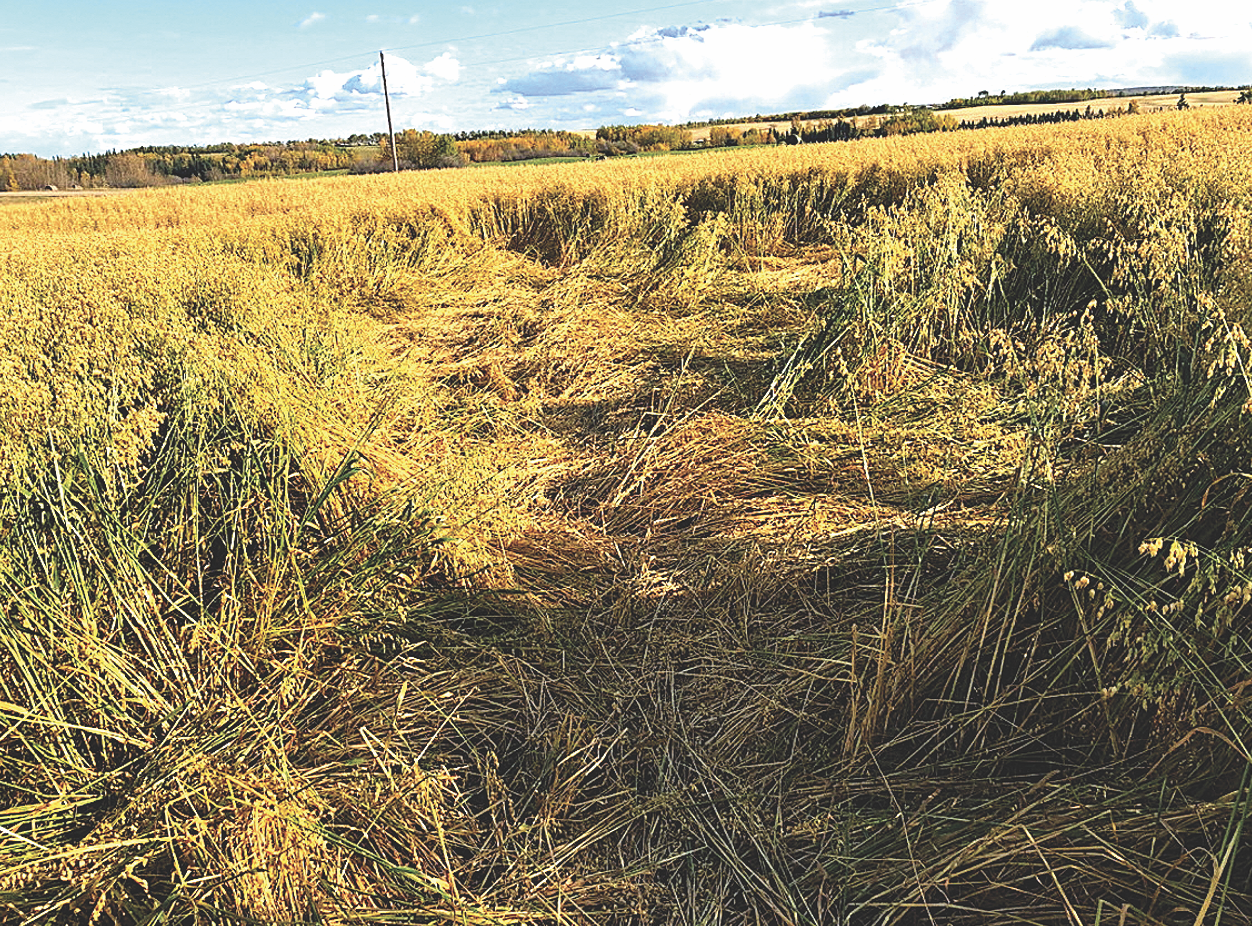
For producers, the stakes are high. Crop losses, habitat destruction, and the looming risk of African Swine Fever underline why governments, industry, and the public must work together. Canada has taken a first step with this report. The next step is turning maps and data into real, sustained action on the ground. Canada’s Wild Pig Strategy was written in consultation with partners representing the following organizations:
Canadian Pork Council; Canadian Food Inspection Agency; Animal Health Canada; Agriculture and Agri-Food Canada’ Canadian Wildlife Health Cooperative; Canadian Council on Invasive Species; Environment and Climate Change Canada; Public Health Agency of Canada; Provinces of Alberta, Saskatchewan, Manitoba, and Ontario; Canadian Cattle Association and Canada’s African Swine Fever Executive Management Board. •
— By Harry Siemens