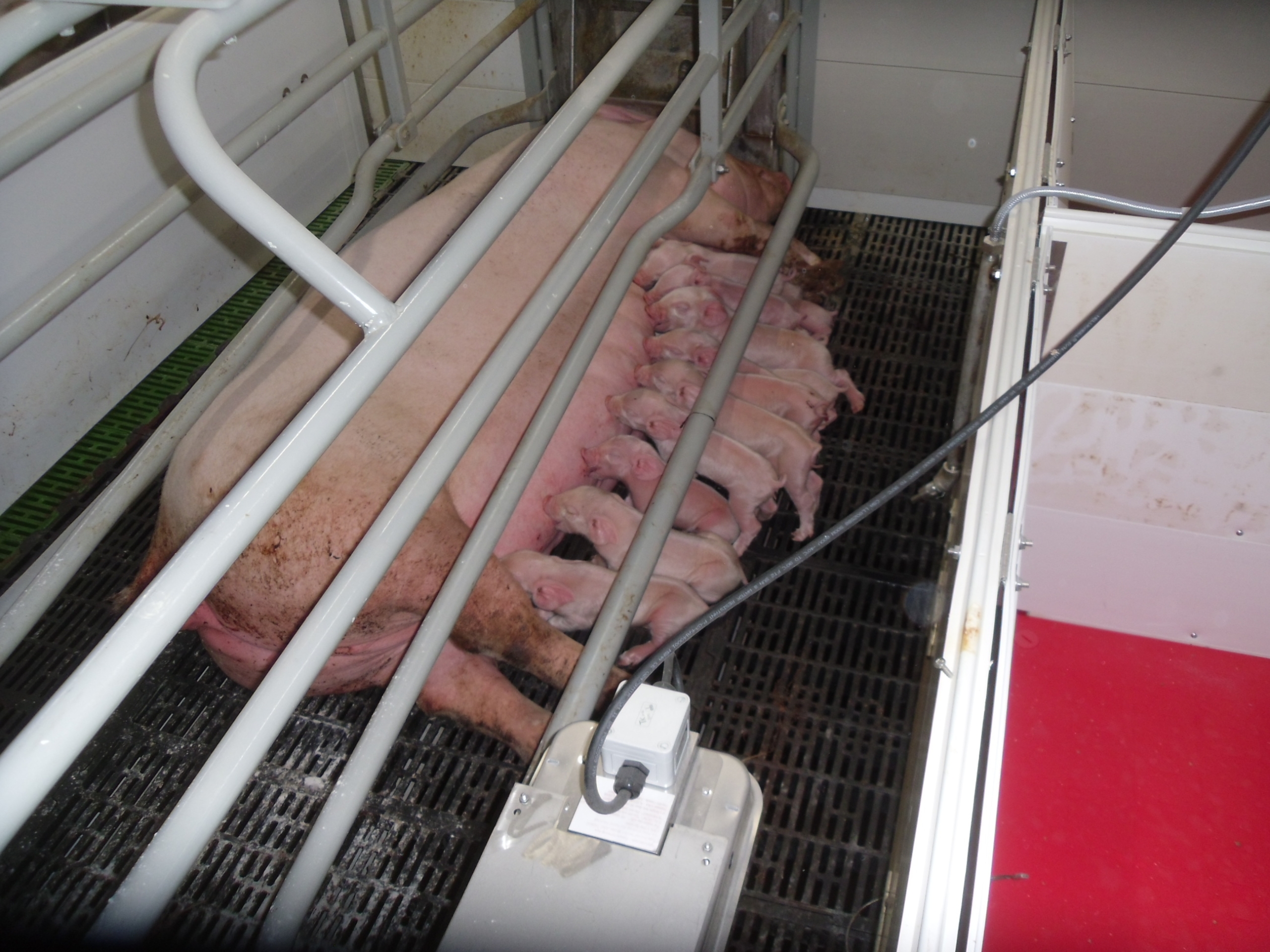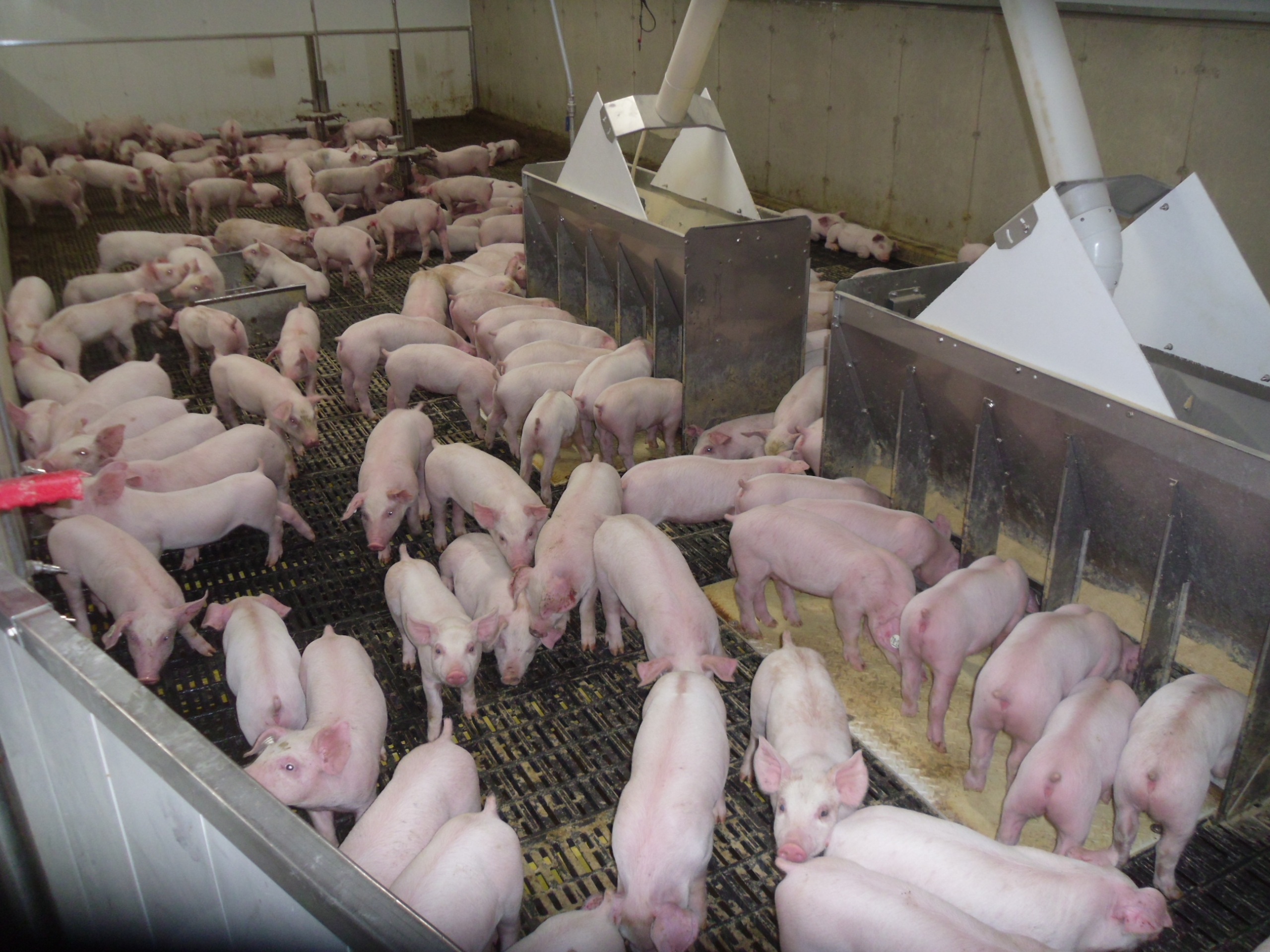
Opening day of Alberta Pork Congress was more than a bit special for the hog crew at Plainview Colony, located near Foremost, Alta.
Barn manager Peter Hofer was touring the exhibits on June 12 when he got the call: The first litter of pigs from his first new batch of gilts had just been born. There would be more to come.
The decision to depopulate and perform a major renovation was made after a series of disease challenges in the barn, said Hofer. It started about 10 years ago with an outbreak of actinobacillus pleuropneumoniae (APP), a bacterial disorder similar to PRRS (porcine reproductive and respiratory syndrome) and highly contagious. The farm struggled to control the initial outbreak and thought they had it under control, but it popped up again eight years ago and returned for a third time about three years ago.
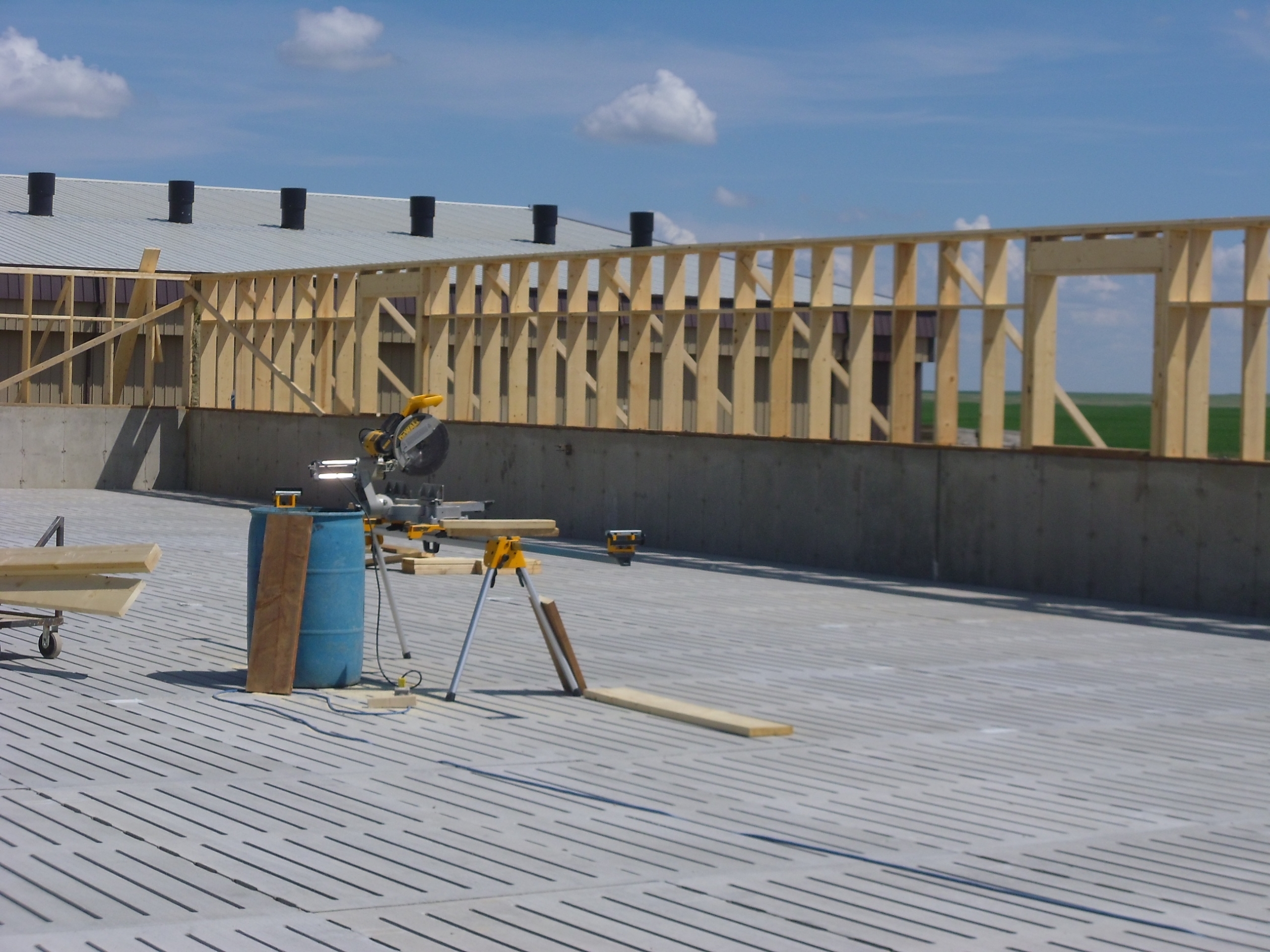
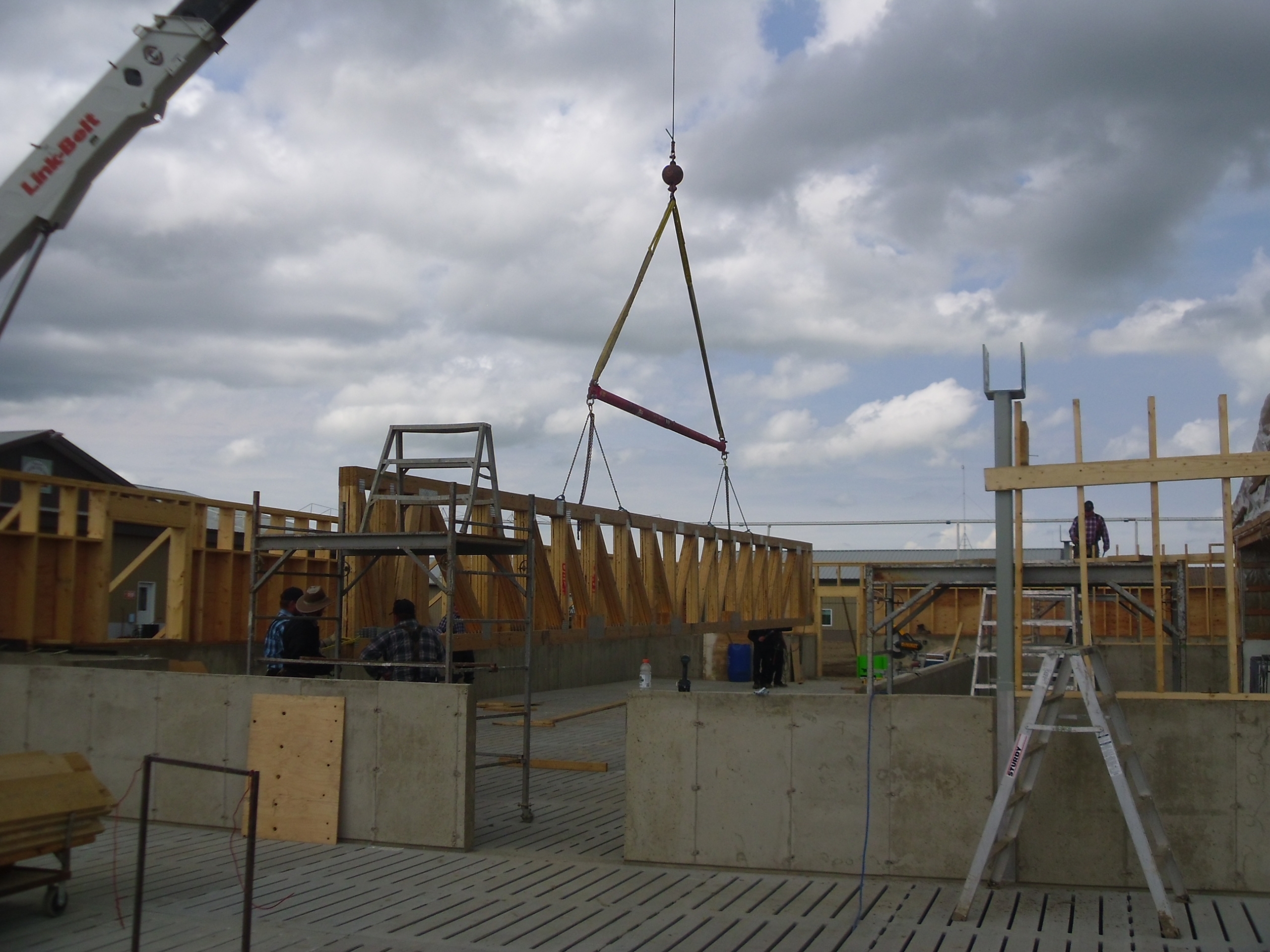
After some serious consideration, the colony decided to tear down the sow unit, renovate the rest of the barn, and then start over with a clean building and new breeding stock.
Breeding was stopped, with the last pigs shipped out late in the first week of 2023, said Hofer. The farm remained empty until the new barn was ready for its first pen of gilts, which arrived early in January. Overall, the farm did not breed any pigs for a period of 26 months.
A final intake of F1 females is scheduled for September, bringing the sow herd to its capacity of 520 head. From that point on, Plainview will maintain a closed herd and use artificial insemination rather than live cover, said Hofer.
Outside of the sow unit, varying degrees of renovation were performed in other parts of the barn, he said.
The switch to AI was made primarily to eliminate the bio-security risk associated with bringing new boars in from other farms, said Hofer. Additionally, it gives Plainview a broader set of options in selecting terminal sires and it changes the way chores are handled.
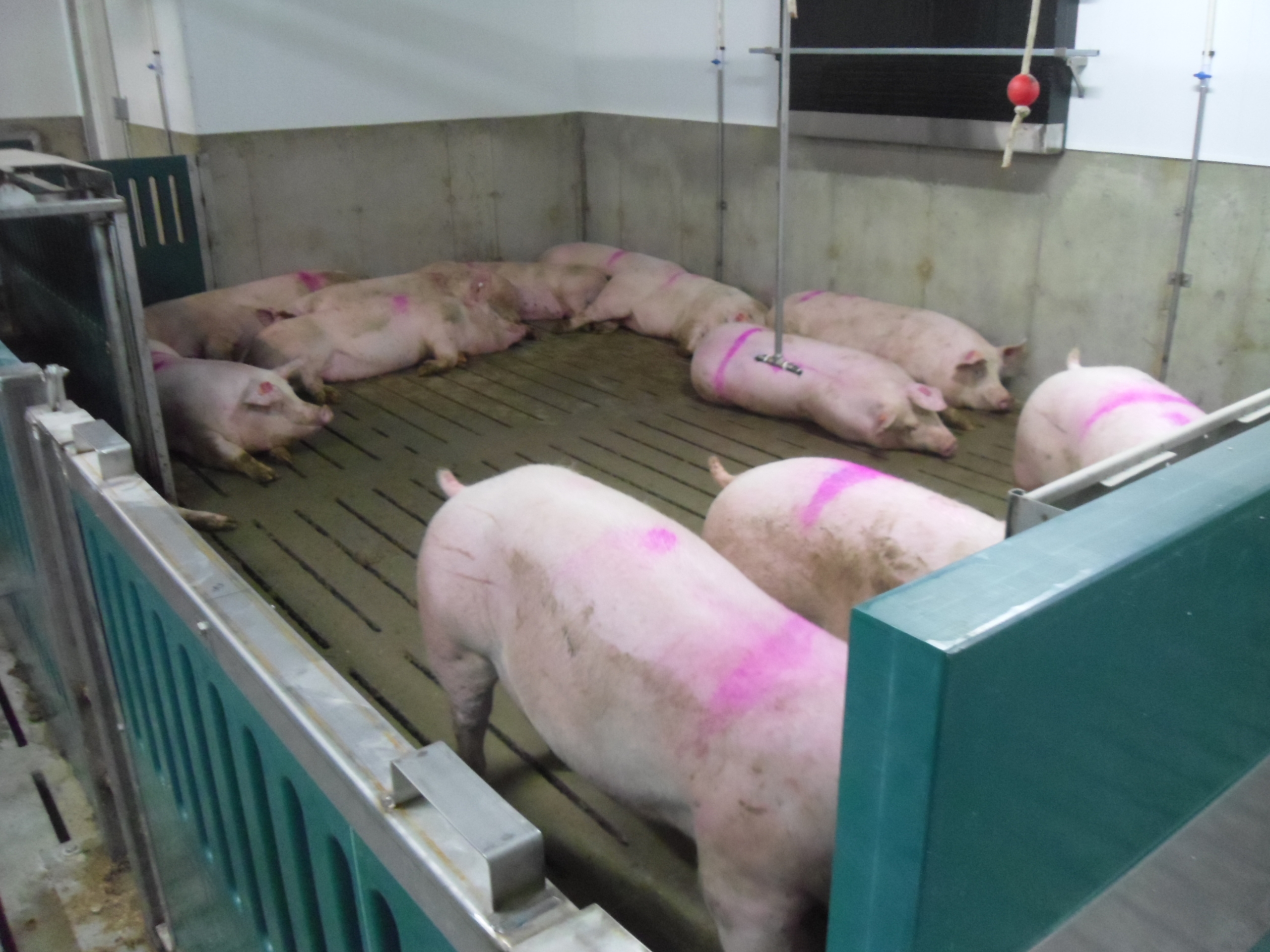
Parallel to the switch to AI, Plainview’s new barn is set up with loose housing for the sows, said Hofer. Overall, there is a much higher level of technology in the barn.
“We opted to go with static groups of one week’s worth of sows in one pen,” he said.
“The amount of work in gestation with the loose housing is not less than versus stalls, but it’s probably a bit more technical because of it being computerized. It’s obvious that it is a lot better for the animals.”
One of the clear advantages to show up so far is the comfort of the sows, especially on hot days, he said. Gestation stalls in the old barn were small. The sows could not get comfortable on hot days. Now, they have room to spread out and sprawl out on days when they need to beat the heat, said Hofer.
Whether the switch to AI will save any costs has yet to be seen, he said. Certainly, the colony was spared the costs of bringing in new boars, he said. At the same time, imported semen comes with a cost as well. Hofer believes that the day-to-day costs will even out over time. However, he said there is no way to measure the savings made in a system that dramatically improves bio-security by lowering a significant risk factor.
Plainview Colony was established in 1975 in the southeast corner of Alberta, directly north of Writing on Stone. •
— By Brenda Kossowan
Photos supplied from Plainview