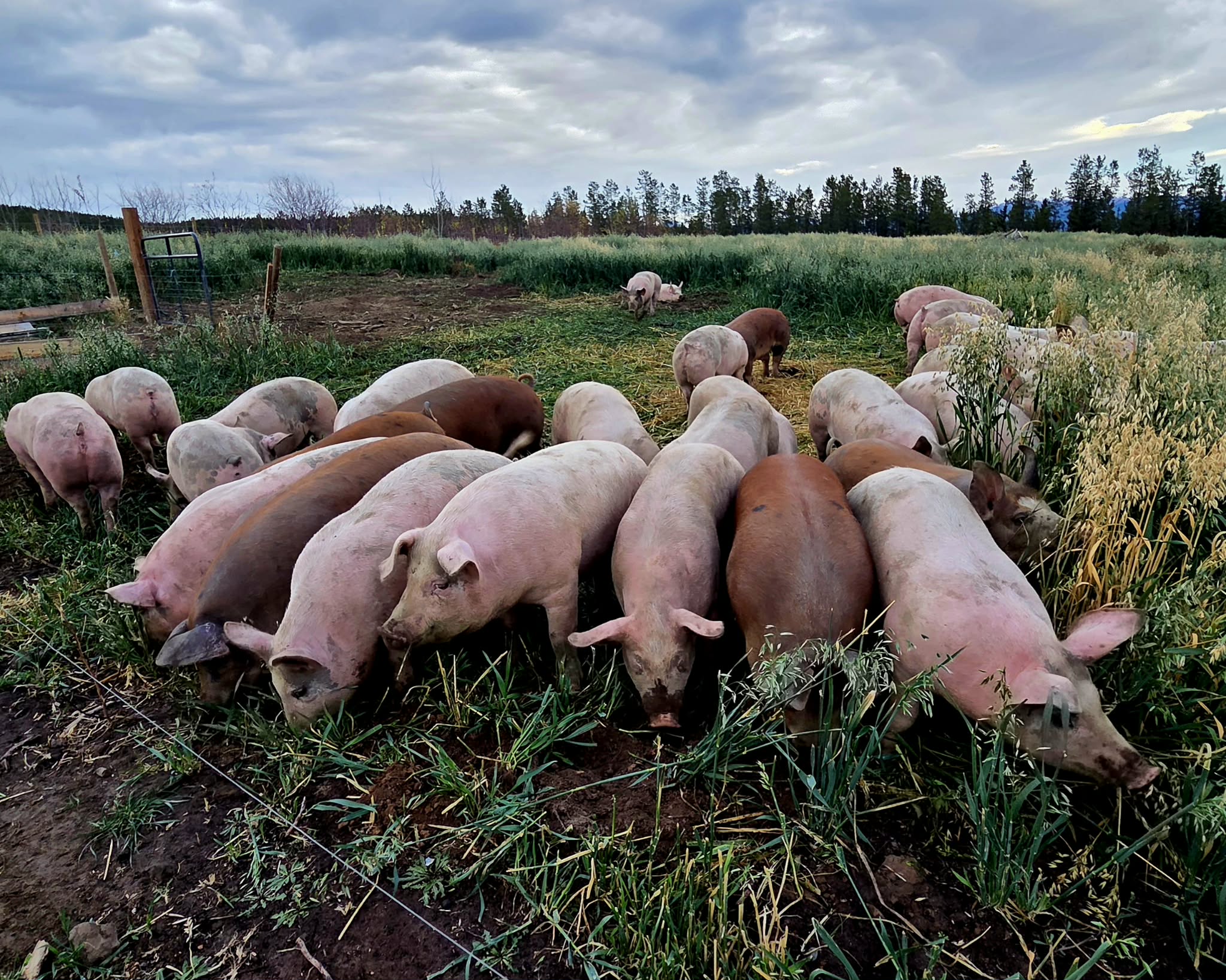
When one thinks about the Yukon the first thought is probably not about a place to raise pigs.
But then again those who do move north tend to be a rather self-sufficient lot so some are likely to find ways to ensure there is bacon for breakfast and ham for the holidays.
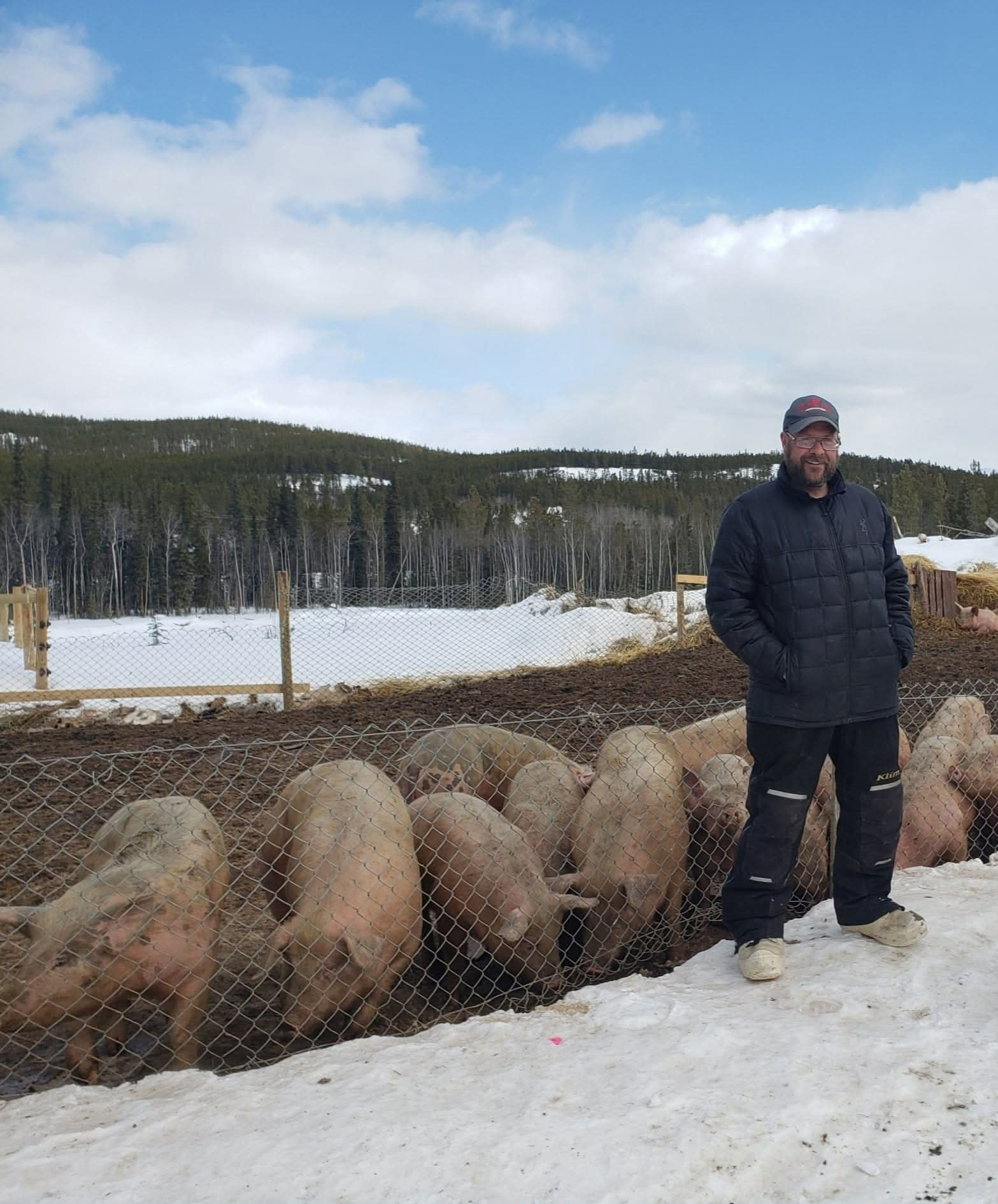
One of those enterprising individuals is Collin Remillard of Fox Ridge Farm who raises pigs – along with turkeys and broilers – just outside Whitehorse
Remillard has been at it for years now – he took the plunge into raising pigs in the north a decade ago – but it has not been easy.
“It’s a challenge,” he said, but then added “farmers can be stubborn.”
Remillard initially started farrowing sows, but that was something he said “was not really a good economic model,” adding he soon deemed it “too risky.”
Part of the issue with sows was accessing breeding stock.
“A.I. does work up here pretty good,” said Remillard, adding air service is a reliable way “to cargo up the semen.”
However, Remillard said it wasn’t easy to make sure everything lined up, noting a sow in heat and syncing that with a flight delivery of semen.
That has meant changes to how Remillard raises pigs.
“We’ve progressed,” he said, adding he has basically changed gears away from the effort involved with keeping and farrowing sows.”
So the sows were out, and Remillard turned to buying weanlings to finish, but even there, there are challenges, starting with accessing stock.
That stock actually originates on a Hutterite farm in the Grande Prairie area.
“It’s a better model for us to get them trailered up,” said Remillard. “They charge a fee to bring them up.
“If I had to go down there it would be five days – four days for sure.”
Over the years the process has evolved to now each spring Remillard has 165 weanlings weighing 30/40 pounds delivered.
Out of the load Remillard keeps 40-50 to finish and market himself.
The rest of the weanlings are sold on – most to Yukon residents who raise two or three animals for their own pork come fall.
Those buyers “come get them from my yard,” said Remillard.
While one might think the cold would be a challenge Remillard said he has “super-insulated shelters outside,” and with the weanlings arriving in June it works fine, although recently he has brought in 50 additional animals in October to stretch out deliveries to his established buyers, so those animals need the warmer shelters.
The pigs are only part of the ‘meat-oriented’ operation for Remillard, who also raises and markets 100 turkeys and 700 broiler chickens a year.
“I have one main customer (for the pigs)” he said. The rest of the stock going out to customers who want meat for the deep freeze.
Tum Tum’s Black Gilt Meats – a truly unique business name is the main customer.
“We came up with the name Tum Tum’s Black Gilt Meats in 2014 as we were helping our then teenage son, Graham (aka Tum Tum), who had just graduated from butcher school, set up a business to apply to operate the government owned mobile abattoir,” explained Simone Rudge who co-owns Tum Tum’s Black Gilt Meats LTD with Tom, and Graham Rudge.
Interestingly the Rudge’s also raise a few pigs farrowing their own sows.
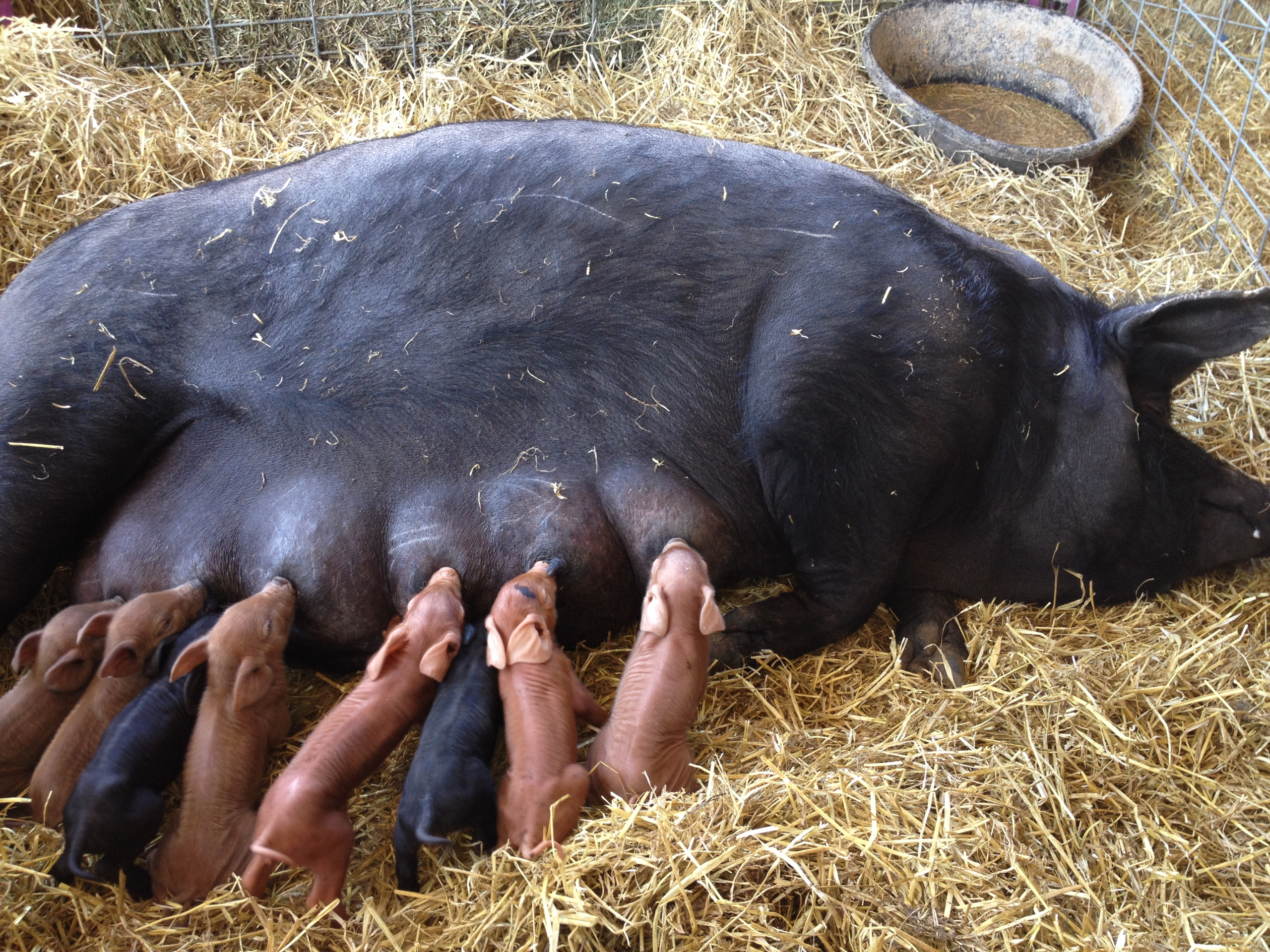
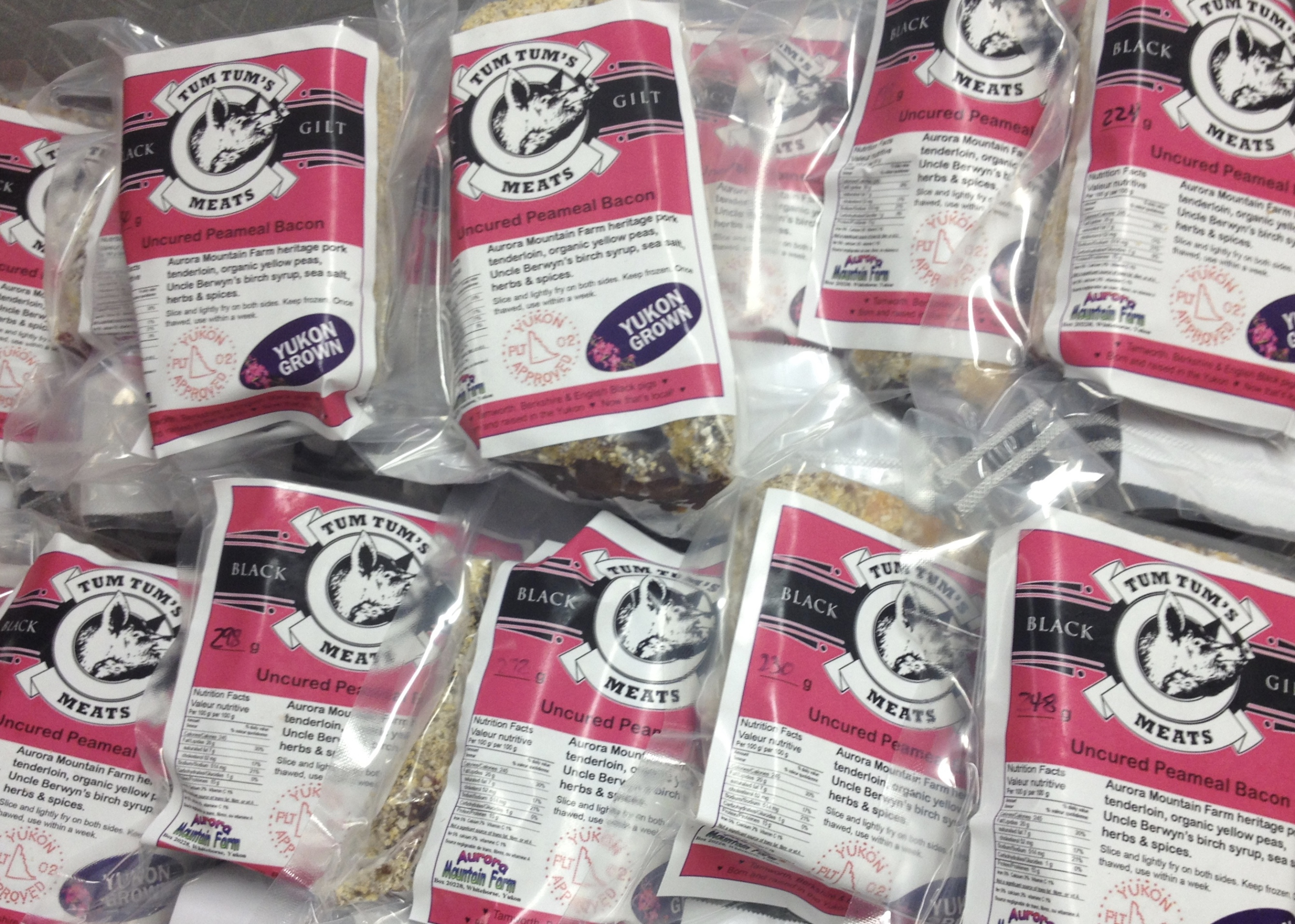
“We raise heritage pigs – English Black and Tamworth – so that is where the Black Gilt came from (in the business name),” said Simone Rudge.
They have only four sows, so import when they need new breeding stock.
Asked about the challenge of the Yukon Rudge noted one most producers do not have to worry about.
“Ravens are our biggest issue at farrowing,” she said. “We tarp the farrowing shed so ravens can’t steal piglets.”
The experience raising stock is an asset for processing meat, said Rudge.
“As livestock farmers ourselves, we understand the need for quality workmanship all the way along the meat value chain,” she explained. “We sold direct to consumers from the farm and at farmers markets but struggled to find a processor we could rely on.
“In 2019, we built our own butcher shop and retail front on commercial property about halfway between our farm and the city of Whitehorse.”
With cooler shelves at the butcher shop to stock, Tum Tum’s looks locally for suppliers.
“We source all our meat from Yukon farms,” said Rudge.
“Although the majority of our pork comes from Fox Ridge Farm, we also get pork from other farms, including our own. We are the only Yukon farm raising certified organic pigs.”
The shop is not just about pork though.
“Many meats are only available seasonally, especially poultry, and only a couple of Yukon farms raise game meat, so our collection varies depending on season,” offered Rudge. “At times, we have had pork, beef, bison, elk, yak, rabbit, lamb, goat, goose, chicken and turkey. We have a new farmer with emu ready for market as soon as an abattoir is able to process them.”
The butcher shop team, led by son Graham, creates more than a thousand different products.
“We use every part possible including skin, bones, fat and organs,” said Rudge. “We have fresh cuts like chops, ribs, & roasts, and recipes like ginger stir-fry, a huge collection of fresh sausages, plus liverwurst, boudin, blood pudding, smoked sticks, smokies, beer sticks, pepperoni, salami, meat pies, jerky, whole muscle dry-cure, carno bars, and meat crackers.
“Although feeding and housing livestock in the north is more expensive, our prices are not that different from what you would find in a similar shop further south. For some items, our prices are actually lower than what I have seen in local grocery stores. A package of bacon (10 thick slices) is about $11.”
Remillard noted Tum Tum’s is planning to do slaughtering in house, which he said “is going to work really well” in terms of marketing pork.
In terms of an abattoir Rudge said the government has a mobile abattoir but it had a limited season.
“Depending on the year, we could usually operate from mid-April to end of October,” she said. “Building our own, well insulated, off-grid, micro-abattoir with a covered animal handling area gives us the ability to process year round.
“Most farmers here plan on young animals in the spring ready to harvest in the fall. Fox Ridge Farm is one of the few with the ability to supply us year round.”
— continued on page 37
— continued from page 35
It might also seem a challenge to find feed in Yukon, but Remillard said that is not the case.
“I buy my feed locally. It’s grown here,” he said of the grain portion of the ration. Yukon Grain is the source.
“We have farmed in the Yukon since 1999,” explained Steve Mackenzie-Grieve with Yukon Grain, adding there is “only one other grain farm in the Yukon.”
They currently farm 400 acres.
“We grow wheat, oats, barley, peas, canola, camelina, potatoes, carrots, beets, cabbage, parsnips,” said Mackenzie-Grieve.
Remillard is only one of the producers buying feed, including camelina meal from Yukon Grain.
“We started growing camelina after seeing it in the Western Producer because it is an early crop, so we thought we would have success with it,” said Mackenzie-Grieve.
While not always easy raising pigs in the north, Remillard said he is making it work in Yukon.
“We’ve kind of got it dialed in now,” he said of the system he uses. “We’ve made some good decisions to make it worthwhile.” •
— By Calvin Daniels