
Regardless of what system pigs are raised under, proper nutrition is essential.
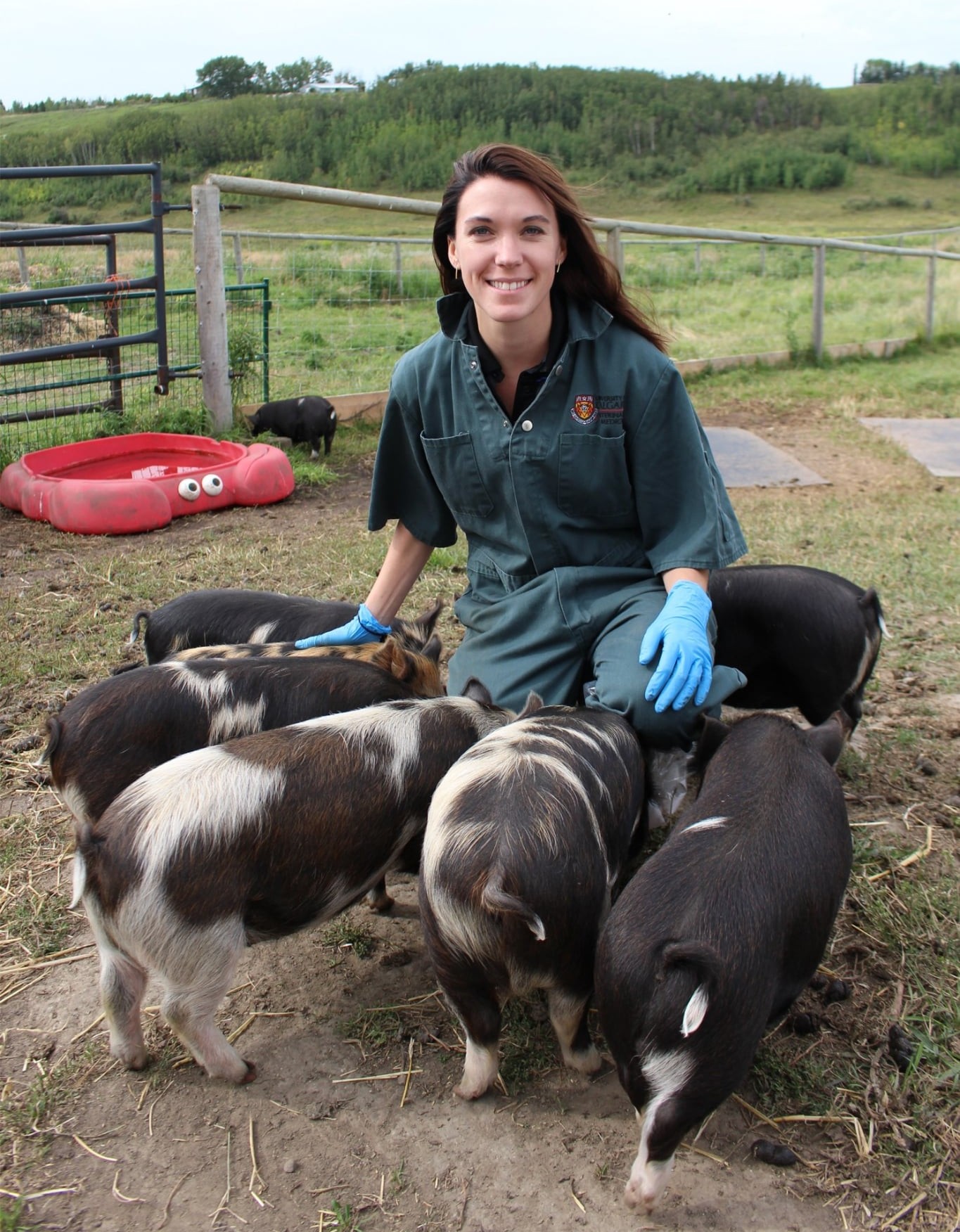
For those raising pasture pigs a webinar delving into nutrition was recently held featuring Calgary-based veterinarian Dr. Kelsey Gray.
Gray began by noting different species have different gut systems, and those systems determine what feed they use efficiently.
For example the horse gut process hay well, and as a ruminant cow does that even better.
By contrast the pig is monogastric so it does not extract energy from roughage like hay very well.
“Hogs don’t convert it as efficiently as cattle,” she said, adding grain “is easier to extract energy from” for a pig.
So while pigs will eat hay, or pasture grass, it is not the best feed source for them.
“Pigs do enjoy eating hay . . . but it’s a low source of energy,” said Gray.
Gray said typically pigs are fed a single ration feed and that feed source “needs to be balanced.”
In balancing a feed ration that is best for the pig, it starts with making sure the ingredients are good.
Gray likened it to baking a cake where “no cooking method can fix bad ingredients.”
In pig feed that means ensuring there is sufficient available energy, in balance with protein, amino acids, minerals, vitamins and other elements. To achieve the balanced diet feed analysis is critical.
Gray noted that if producers are buying a prepared ration the nutritional data is typically listed on the bag.
That said one ration is not a fit all solution for producers.
Producers need to assess the pig’s nutritional requirements based on their goals for growth, and the differing needs of a pig at various stages of its life, said Gray.
“Energy needs will change over a pig’s life,” she noted.
For example weanling pigs – in part because they consume less feed based on stomach size, and partly to enhance growth, require more protein – are in the low 20 per cent range.
At that stage of life the pig is essentially “setting up the framework for their bodies,” said Gray.
A growing hog eats more and needs less protein – typically 15/16 per cent.
A sow with a litter requires more energy as they are feeding young.
“They can eat as much as they want and are expending more energy than they consume,” said Gray.
In any feed scenario though the ration needs to be balanced, reiterated Gray.
However, the ‘recipe’ to achieve that balance can vary significantly.
For example when corn is used in a ration it does not provide a great deal of protein, said Gray.
By contrast field peas are “naturally high in protein compared to corn,” she said.
While there are options to ration preparation – milling at home as an example – Gray said purchasing prepared rations can reduce work involved while generally ensuring balanced feed. That however, does come with a higher cost, she added.
“It’s probably the most expensive . . . But it can make your life easier,” she said, adding a prepared feed is like that one buys for the pet dog – one feed does it in balance.
However, feed ultimately requires processing of some kind as “whole grain is an inefficient way to feed a pig,” said Gray.
Gray said while processors will often help in formulating rations – what to include in what proportions if a producer buys their premixes – there are online programs which will help with rations too.
Proper feeding is a key too, with things like clean feeders being important.
“Be careful of feed wastage,” added Gray, noting “it’s expensive” and can attract rodents.
The second element in feeding is access to water, something that needs to be accessible 24/7 said Gray.
Gray added while pigs on pasture will consume snow “I wouldn’t consider that a water source.”
When it comes to water, testing is a good idea if a producer suspects a heath issue which might be tied to water.
It’s a case where what a pig eats and drinks is very much a key element is good herd health, said Gray.
“Nutrition is obviously such an important part of overall health,” she said.
In that regard “if something is off and pigs are not growing properly” it may be time “to check feed and have it analyzed,” especially if it is a ration created at home said Gray. “If it’s a complete ration from a feed mill it’s probably not the problem.” •
— By Calvin Daniels