
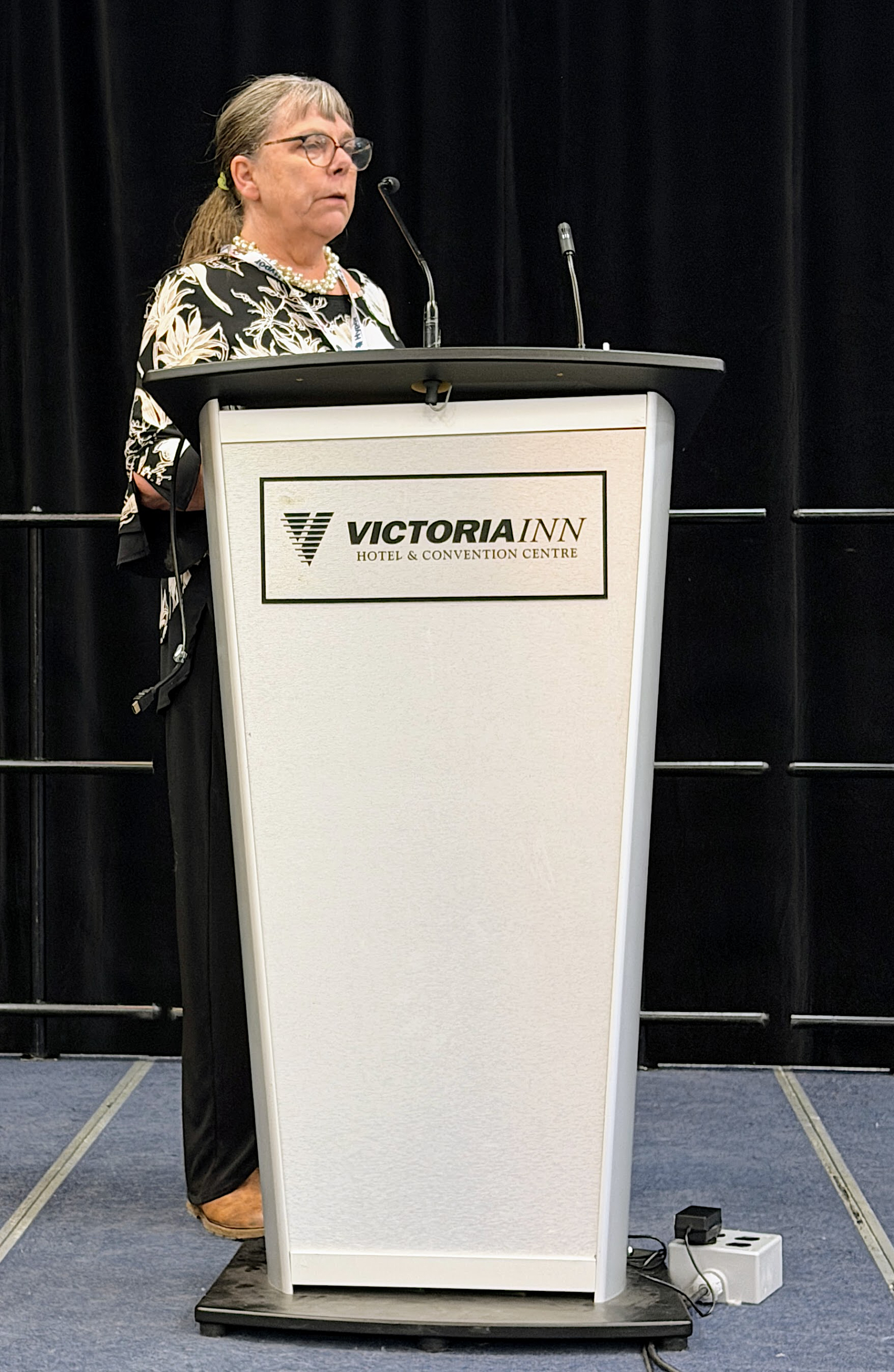
Dr. Jette Christensen of the Swine Health Information Network (SWSHIN) delivered a technical and timely presentation at the Manitoba Swine Seminar held February 4–5, 2026, outlining the progress and purpose of the Outbreak Support Network.
The project operates in two phases. Phase one began in December 2023 with the hiring of Betty Althaus and concluded in December 2025. The goal: build a practical framework to help swine veterinarians and producers respond quickly and correctly when reportable disease suspicions arise.
“We are trying to create a framework that helps systems and practitioners deal with and handle situations where there is a suspicion and where those suspicions must be reported,” Christensen said.
Rather than attempt to address every possible disease scenario, the team focused on three priority conditions: vesicular diseases that cause blisters in swine, foreign animal diseases such as foot-and-mouth disease (FMD), and Senecavirus A (SVA). The work also connected with parallel initiatives in poultry and cattle through collaboration with industry partners.
Blisters in pigs trigger immediate concern because several viral diseases produce similar lesions. Christensen explained that visible vesicles or erosions on the snout, feet or teats are automatically reportable to the Canadian Food Inspection Agency (CFIA) because producers and veterinarians cannot visually distinguish between diseases such as FMD, vesicular stomatitis virus, swine vesicular disease or Senecavirus A.
“When you see blisters, you cannot tell whether it is a reportable foreign animal disease or something less severe,” she said.
Canada remains free of foot-and-mouth disease and other listed foreign animal diseases. That disease-free status underpins pork, beef and dairy export access. A confirmed case would halt exports across multiple livestock sectors, not just swine.
FMD spreads rapidly across cloven-hoofed species and causes fever and blistering. Vesicular stomatitis virus affects multiple species and spreads through biting insects. Swine vesicular disease affects only pigs but presents identical clinical signs. Laboratory testing remains the only way to differentiate them.
Senecavirus A, first identified in North America decades ago but more widely recognized since 2015, complicates matters further. Christensen noted that cases have occurred in Canada, the United States, Brazil, and other countries. In Canada, SVA has been detected primarily at assembly yards, including in Ontario and Manitoba. While not a foreign animal disease, it disrupts export movements when blistered pigs trigger inspections and investigations.
In 2024, 19 vesicular investigations occurred nationally. In fall 2025, Manitoba confirmed its first case of SVA outside assembly facilities. Each investigation requires a coordinated response involving the producer, herd veterinarian, provincial officials and CFIA.
The response process follows a defined path. When blisters appear in a barn, the producer contacts the herd veterinarian immediately. If suspicion remains, CFIA must be notified. Movement restrictions may follow while samples are collected and sent to the National Centre for Foreign Animal Disease. Results determine next steps.
If foreign animal disease testing returns positive, CFIA activates its eradication plan. If testing confirms SVA, additional inspections and documentation accompany animal movements, particularly for slaughter. If all reportable diseases test negative, responsibility shifts back to the herd veterinarian to determine alternative causes.
Christensen emphasized that many non-viral factors can cause blister-like lesions. Trauma from fighting, chemical irritation, sunburn, frostbite, or abrasive flooring can all create lesions that resemble vesicular disease.
“Just because you see blisters does not mean exports close tomorrow,” she said. “There are many possible causes.”
The Outbreak Support Network provides practical tools to guide producers and veterinarians through these scenarios. Resources now appear on the swinehealth.ca website under the Outbreak Support section. The site includes visual references, differential diagnosis guidance, interactive flowcharts and printable checklists.
One checklist supports veterinary practitioners during farm investigations, outlining data collection and communication steps. Another supports producers, detailing preparation, bio-security protocols and documentation requirements. The platform also provides provincial contact information and preparedness guidance.
Christensen encouraged producers to review materials before a crisis emerges.
“The devil is in the details,” she said. “Preparation makes response manageable.”
The initiative reflects broader industry collaboration. Veterinary practitioners share clinical observations, assembly yard inspectors contribute field experience, and provincial boards coordinate communication. The objective remains clear: protect Canada’s disease-free status while minimizing unnecessary disruption.
During question period, Christensen addressed concerns about shipping animals without visible blisters. She acknowledged that SVA lesions can prove difficult to detect and may heal quickly. Once SVA is confirmed, producers may continue shipping animals for slaughter, but they must notify receiving plants in advance.
“Awareness and communication are key,” she said.
Christensen closed by crediting collaborators across Western Canada and thanking Manitoba Pork for its support of the initiative.
The message was clear: rapid reporting, a structured response, and shared knowledge protect both farms and markets. In a sector where export access defines economic stability, preparedness is not optional. It is essential. •
— By Harry Siemens