Animal Agriculture Faces New Pressure as Advocacy Groups Push Local Campaigns and
Labelling Debates Intensify

Animal agriculture continues to face new pressure as advocacy groups adopt new names, advance local campaigns, and shape debates around labelling, transparency, and production standards. Comments from Hannah Thompson-Weeman, president and CEO of the Animal Agriculture Alliance, highlight a shifting landscape where groups claim to speak for farmers while promoting policies such as California’s Proposition 12.
Thompson-Weeman noted a growing trend of new organizations positioning themselves as farmer-led while supporting legislative efforts that restrict production practices. She said these groups “try to take advantage of the trust people feel for farmers,” but often carry clear ties to national animal rights organizations, including groups openly opposed to modern animal agriculture. While a handful of producers may be involved, she cautioned that it is misleading to suggest these groups represent the majority of farmers or ranchers. Established agricultural organizations, such as Farm Bureau and commodity groups, continue to carry the mandate of speaking for producers.
Supporters of Prop 12 often argue that consumers will reject modern sow housing if shown how barns operate. According to Thompson-Weeman, this claim oversimplifies the process of consumer choice. She said that if consumers prefer open-pen systems or any other specific production method, “they can vote with their wallet.” Producers who use those systems already have the freedom to market to customers seeking those products. The concern arises when governments mandate one system for all producers, removing choice for both farmers and consumers and increasing costs for families already facing tight food budgets. She emphasized that if genuine consumer demand exists, the market will respond naturally without legislative pressure.
Thompson-Weeman also highlighted agriculture’s responsibility to continue building trust through transparency and communication. Producers, she said, must show how they raise their animals, explain why specific systems exist, and allow consumers to make informed choices. That approach supports choice rather than eliminating it through mandated rules designed by small interest groups.
Labelling issues have also moved to the forefront. In Canada, Health Canada and the Canadian Food Inspection Agency recently determined that cloned meat entering stores does not require special labels. While Thompson-Weeman had not yet reviewed the Canadian decision, she confirmed that similar conversations are active across the United States. Discussions continue around gene editing, including a gene-edited pig designed to resist a primary disease but not yet approved for sale.
Debates also touch on potential future uses of mRNA vaccines in livestock, although no one uses this technology currently in animal agriculture.
She described labelling as a delicate balance between transparency and information overload. Once governments begin requiring details based on production methods – such as vaccine type or genetic tools – the label could become extremely long and confusing. The challenge is to provide meaningful information without overwhelming consumers with technical details that do not affect food safety or nutritional value.
Thompson-Weeman outlined several trends emerging from recent animal rights conferences monitored by the Alliance. One of the strongest insights involves a renewed focus on local government. Activist groups increasingly push campaigns at the city council level because small, coordinated groups can influence decisions more easily than at the state or national level. She pointed to upcoming efforts to ban foie gras from menus in several cities in 2026 and encouraged agricultural leaders to strengthen relationships with municipal officials to counter these campaigns early.
Litigation also appears poised to grow significantly. With the current political climate less favourable to activist objectives, these groups intend to shift their strategy toward legal challenges. Thompson-Weeman expects courts to see an increase in filings targeting marketing claims, sustainability language, and animal-welfare statements. These lawsuits aim to pressure companies, raise costs, and create uncertainty throughout the supply chain.
Another emerging trend involves the use of artificial intelligence. Activist groups see AI as a tool to increase their reach, create polished content quickly, and amplify their messaging online. AI-generated materials can appear credible and spread widely, creating new challenges for producers who rely on accurate information and public trust. Thompson-Weeman believes agriculture must prepare for more sophisticated digital campaigns built with these tools.
The combined effect of these trends places new demands on livestock producers and agricultural organizations. Pressure now comes from local governments, advocacy groups under new banners, courtrooms, digital platforms, and public debates over labelling. The sector faces a landscape where information spreads quickly, allegations travel faster than facts, and legislative pushes can appear suddenly in unexpected places.
Thompson-Weeman’s observations point to a year ahead marked by rapid change, strategic activism, and high stakes for producers. Agriculture continues to rely on sound science, transparent communication, and a clear explanation of the systems used to raise animals safely and efficiently. As advocacy groups intensify their efforts, the industry’s commitment to openness and accurate information remains essential for protecting choice, preserving trust, and maintaining a stable food system. •
— By Harry Siemens
Pennsylvania Hog Producer Brent Hershey Says the Industry Must Face the Crate Debate Head-On
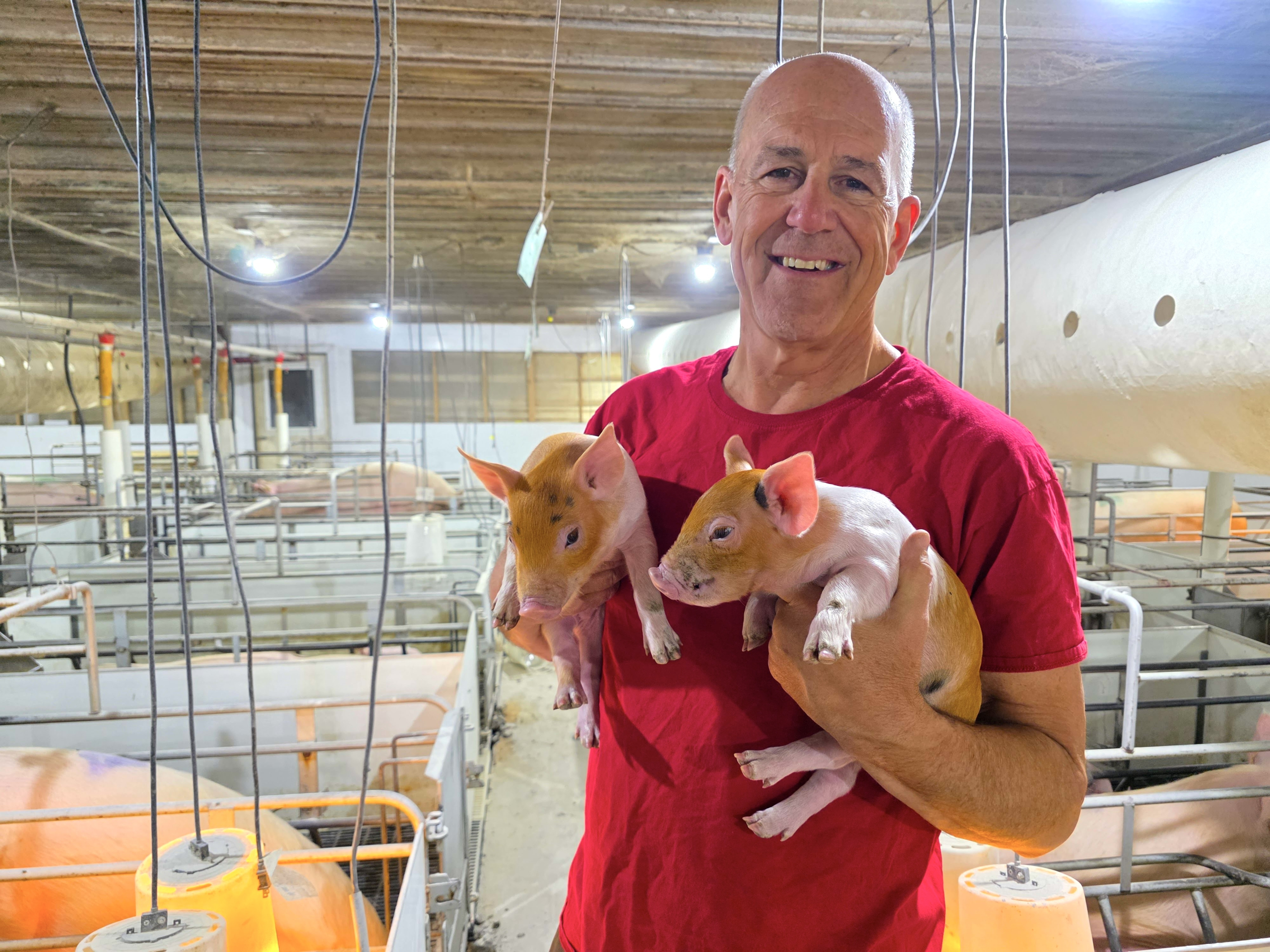
Pennsylvania hog producer Brent L. Hershey spent 40 years building and managing gestation-crate systems because industry experts told him this was the best way to house sows. He invested heavily, learned the system, and defended it for decades. Today, he supports the direction of California’s Proposition 12 because he believes the industry can no longer defend the old model.
Hershey says the issue begins with what people see when they walk into a gestation-crate barn. A sow lives in a space only slightly longer and wider than her body. She can stand and lie down, but cannot walk or turn around. When the public hears this, most say it is not acceptable. The industry built crates decades ago to stop sow fighting, allow individual feeding, and increase efficiency, but those benefits no longer outweigh public expectations for animal welfare.
Hershey says he defended crates for years because that was the system he knew. But when he stepped back and looked at it honestly, he no longer saw a way to justify it. He says no other livestock system locks an animal in a space where it cannot turn around. As states learned more about the issue, 12 have banned crates. California then restricted the sale of crate-produced pork. Hershey says critics blame California, but they ignore the reason voters acted. People understood how sows lived and rejected the system.
Hershey says Prop 12 will not create pork shortages. Only a few states require it, and the transition will take a decade or more. Crate barns will continue in some regions for years to come. He says the real issue is whether the industry can defend a system the public finds unreasonable. If someone invented gestation crates today, he says, regulators would reject them immediately.
Many producers worry about conversion costs, labour, and long-term economic pressure. Hershey sees those concerns but says the switch to Prop 12 costs less than expected. His farm converted 3,000 sows 2.5 years ago. His team cut out old equipment, reused most steel, and finished the work in about a month. Capacity dropped 35 percent, but sow performance improved.
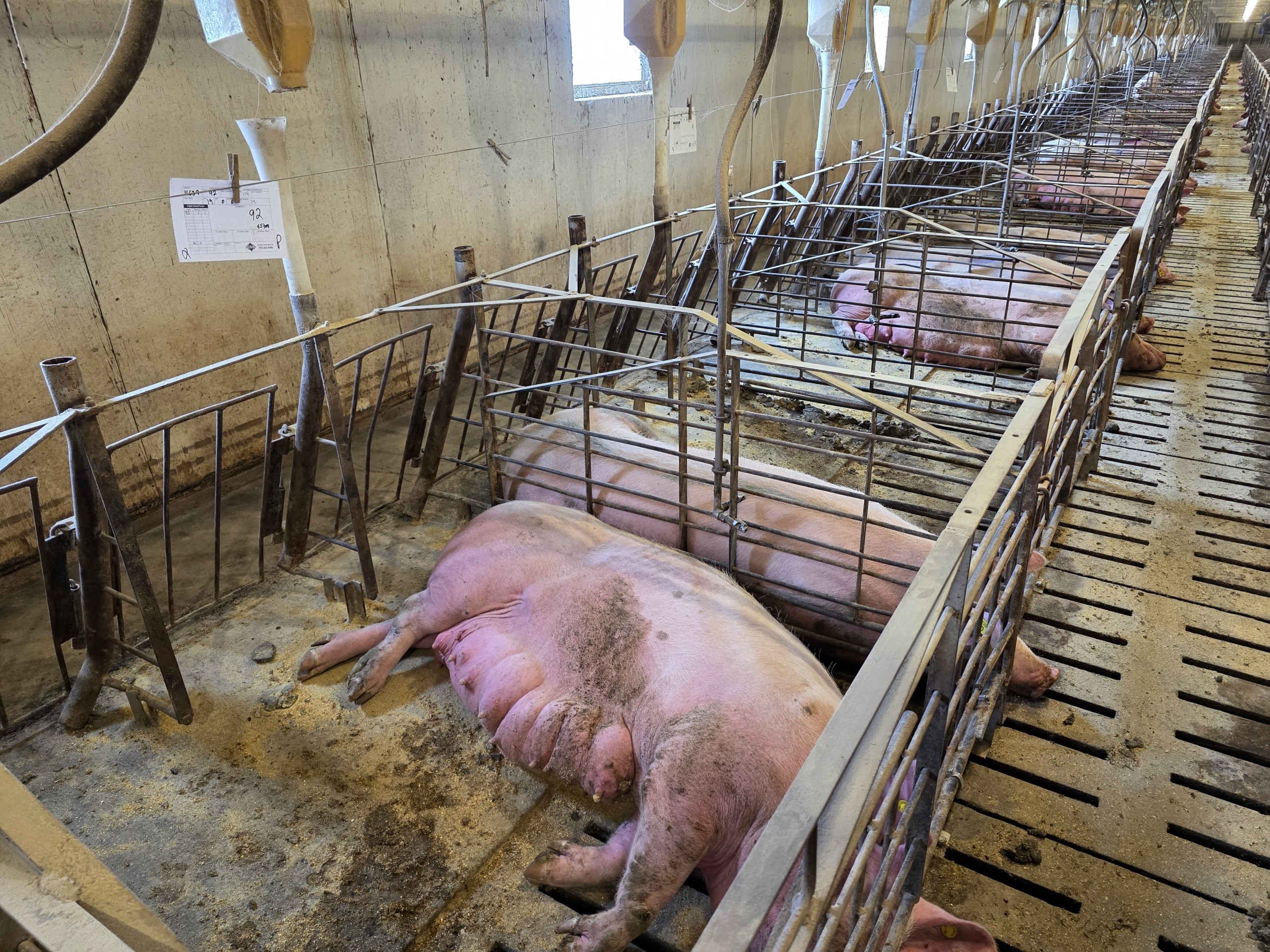
Hershey reports sow mortality at seven percent annualized and higher conception rates. Feed efficiency and labour stayed stable, and production increased. He says building changes increased costs by only one to two percent. He believes ongoing improvement could erase even that small rise.
He acknowledges anti-meat groups use Prop 12 as part of a larger agenda, but he says they do not represent the majority. Most supporters still want to eat pork. They want barns that make sense to them. He also warns that veterinarians are growing less willing to defend crate systems. New graduates, he says, consider crates unreasonable and will push the industry to change.
Hershey understands why producers in Canada and the United States worry about new codes of practice. He says every industry faces change, and that pork producers must prepare rather than resist. Proposition 12 did not appear overnight. The idea built momentum over 25 years. He says producers had time to see it coming.
Hershey says his own change of mind took time. He resisted Prop 12 early on because he disliked anyone telling him how to farm. But when he examined the issue, he realized the system failed a basic test of common sense. He removed every gestation crate from his barns. Today, he uses larger individual breeding pens and group housing for gestation and invites anyone to visit.
Hershey believes the pork industry must protect its credibility. He says producers must look ahead, understand market expectations, and face the issue honestly. In his view, the path forward requires openness and a willingness to rethink long-standing practices. •
— By Harry Siemens