Social media can at times be an overwhelming experience where determining fact from fiction can be exhausting.
It can however also be a useful tool allowing like-minded people to gather electronically to share a common interest – which can include rare breeds of swine, or how to raise pigs under pasture conditions.
“Social media is a convenient way to share and make people aware of the necessity of conserving biodiversity, providing information to a growing community that seeks self-sufficiency,” said Elwood Quinn, the longest serving Director of Heritage Livestock Canada, an organization dedicated to the conservation and awareness of purebred farm animal breeds that made up the history of Canadian agriculture.
“Our efforts include promoting heritage livestock breeds and assisting in the sharing of genetic material among farms with purebred pigs.”
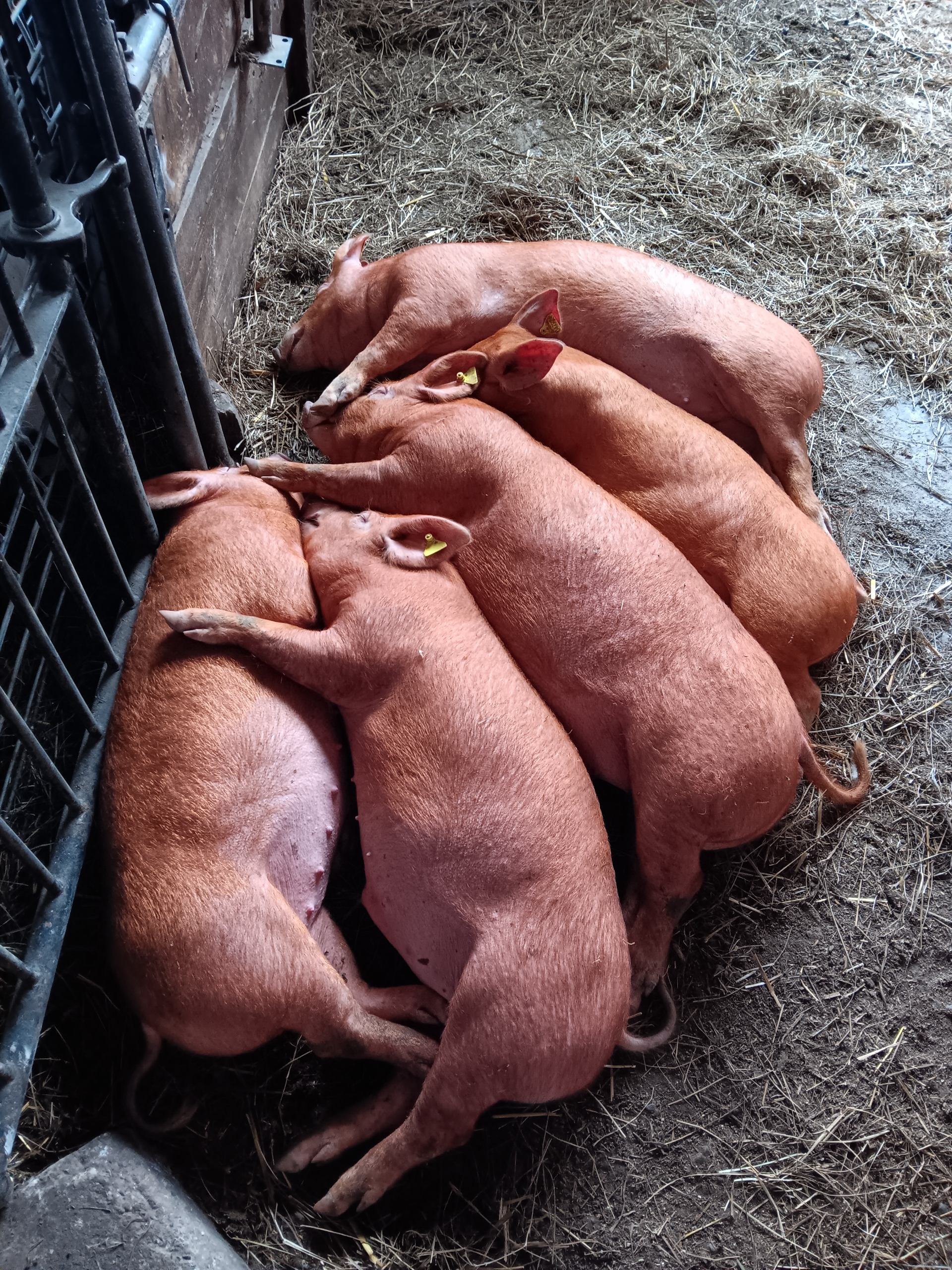
Elwood Quinn has on his QC Farm.
Quinn who operates La Ferme Quinn, ille Perrot, Quebec, immediately beside Montreal Island, an Island in the St. Lawrence River, said social media is a way to share what they are doing as an organization, such as working with the Government of Canada, Saskatoon, Saskatchewan collecting, storing, and sharing semen and embryos of purebred animals.
“We will continue to use social media in hopes of creating more awareness for the plight of our historic importance to agriculture, and the animal breeds that are part of that history,” he said.
Quinn is Director of Canadian Swine Breeders Association, and Canadian Livestock Records Corporation, with experience with pure-bred farm animals going back more then 65 years. Currently he is involved with four breeds of pigs, Hampshire, Berkshire, Tamworth and Lacombe.
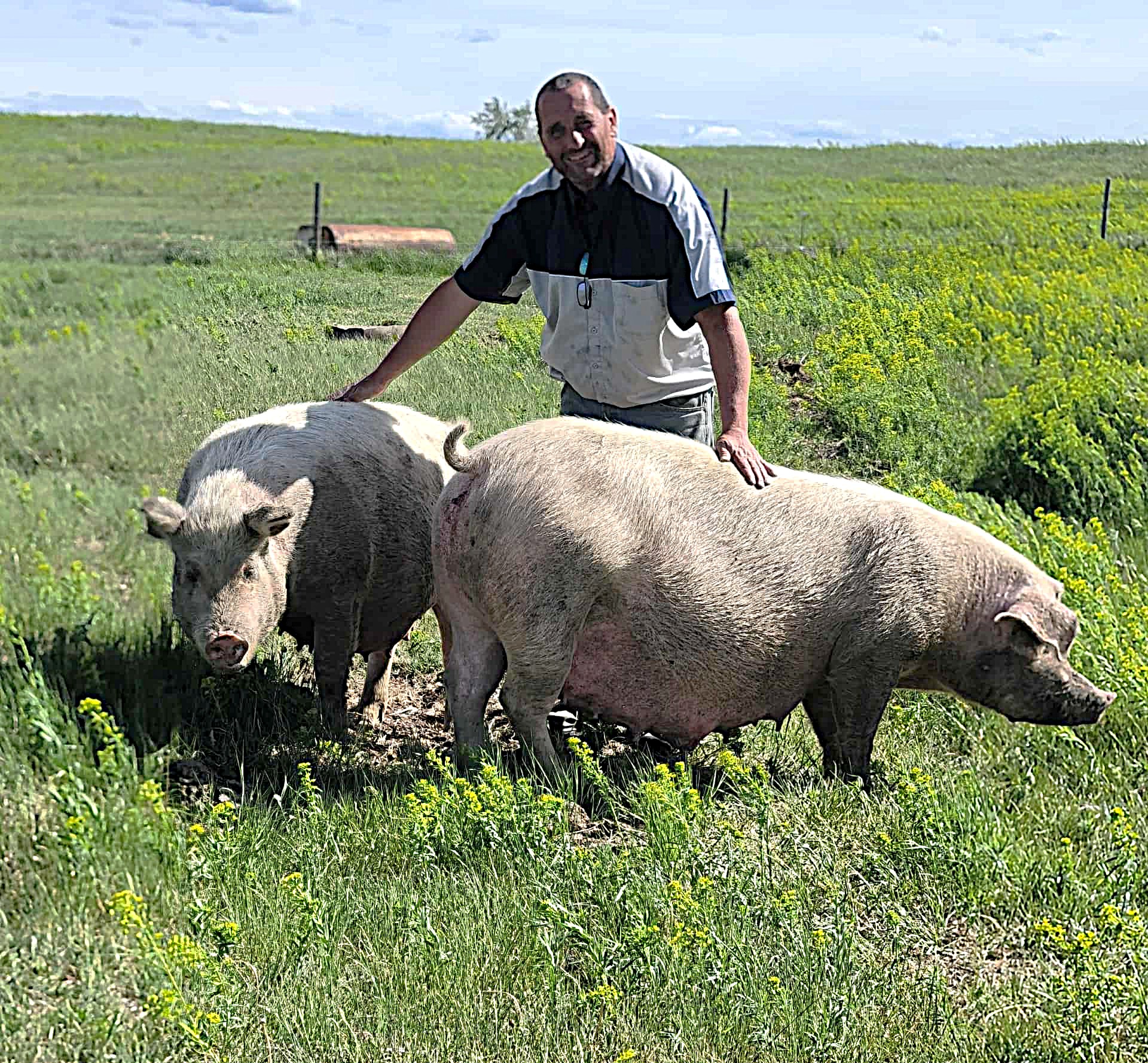
Morgan Horn is located in West Central Saskatchewan, just north of Lake Diefenbaker.
“At any given time, I have anywhere from five to 25 pigs depending upon my litters,” he explained. “My boar is half Hampshire and half Mulefoot. I have backed off to one sow and she is half Berkshire and half Large Black. I have a soft spot for black pigs and with the Mulefoot bloodline they have a nice thick winter coat making them very good for our weather in Saskatchewan all year around.”
While now rather experienced raising pigs, that was not always the case, sending Horn seeking help.
“Initially, I sought out social media pages as I was new to pigs 13 years ago and wanted to gain more knowledge,” he said.
“At the start, the local page was a good source of knowledge, but eventually turned into a buy and sell page.
“It is still a good way to connect with buyers and sellers and market your pigs in Saskatchewan.”
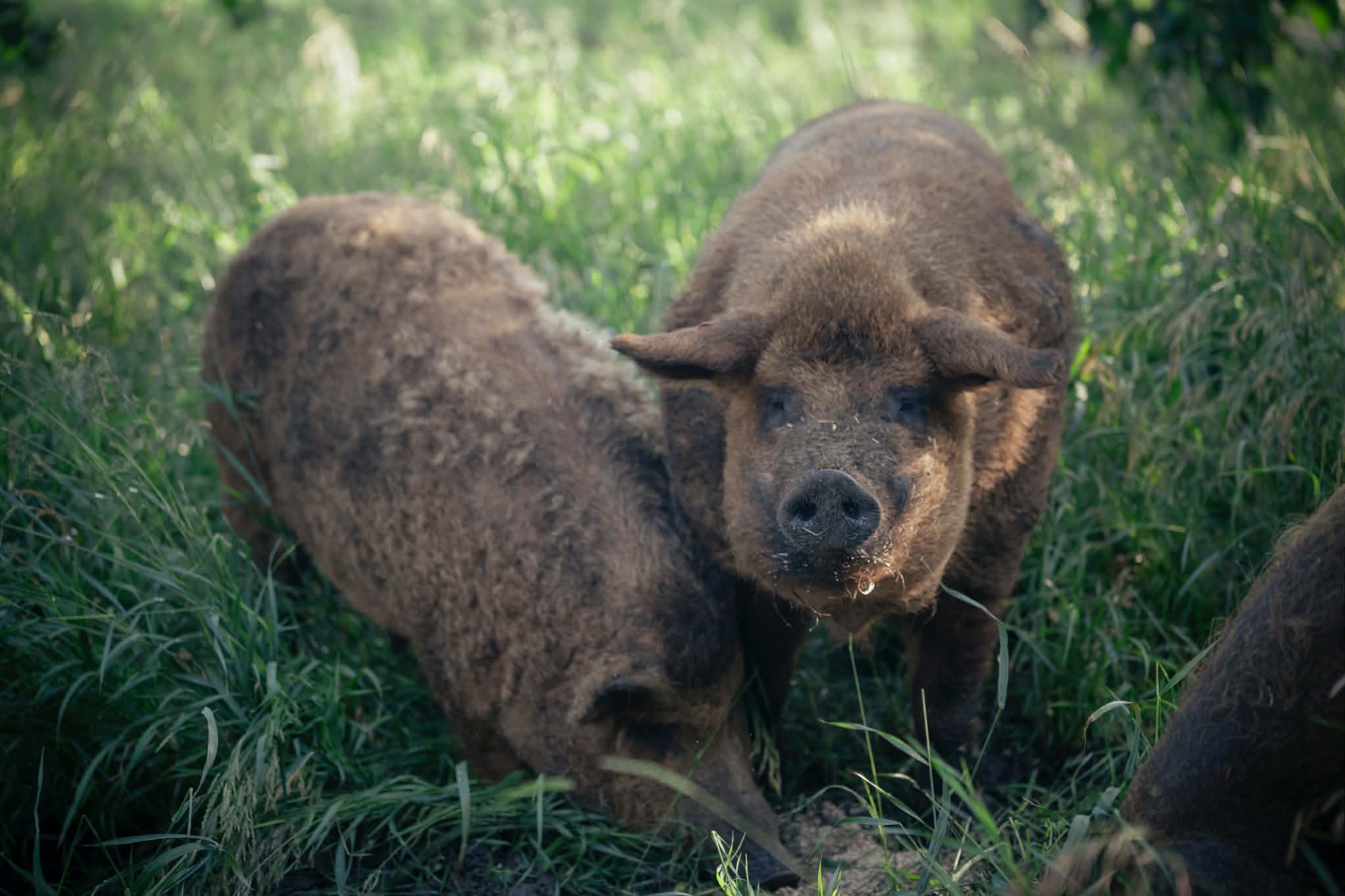
Christina Stender (EH Farms) operates just outside Strathmore, Alta., where she raises purebred, registered Red Mangalitsa pigs. Her herd size varies through the year, but typically she maintains 50-60 mangas including breeding stock, growers, and piglets.
“All of my breeding animals are registered, and preserving the heritage and quality of the Mangalitsa breed is a key part of my operation,” she said.
Like Horn, Stender turned to social media initially for knowledge.
“When I started raising Mangalitsas, I wanted to learn from people who understood rare and heritage breeds,” she explained. “Social media offered immediate access to real-world experience. People sharing everything from breeding advice, to feeding strategies, to pork quality.”
But, have the sites provided what Stender hoped for?
“Absolutely,” she responded. “Not only did it provide information, but it opened the door to an entire network I never expected, the culinary world.
“Through social media, I connected with foodies, chefs, cooks, homesteaders, dog-food companies, pastry chefs, butchers, journalists, and other producers who all value high-quality, ethically raised pork.”
They are connections which have been positive for business.
“Those relationships have helped my farm grow and have introduced my Mangalitsa pork to people who truly appreciate it,” said Stender.
It is the connectedness that has been the biggest benefit from social media, said Stender.
“The best aspect is how it brings together people from completely different corners of the food world,” she said. “One post can lead to a chef reaching out, a baker asking about lard, or a journalist of a magazine or a newspaper wanting to do a story on this amazing breed.
“I think social media creates connections that would never happen otherwise. It’s like having a global network that’s always open and always inspiring.
“It also gives me a chance to share what I do day-to-day on the farm, which helps people understand and value the work behind raising livestock and farm life.”
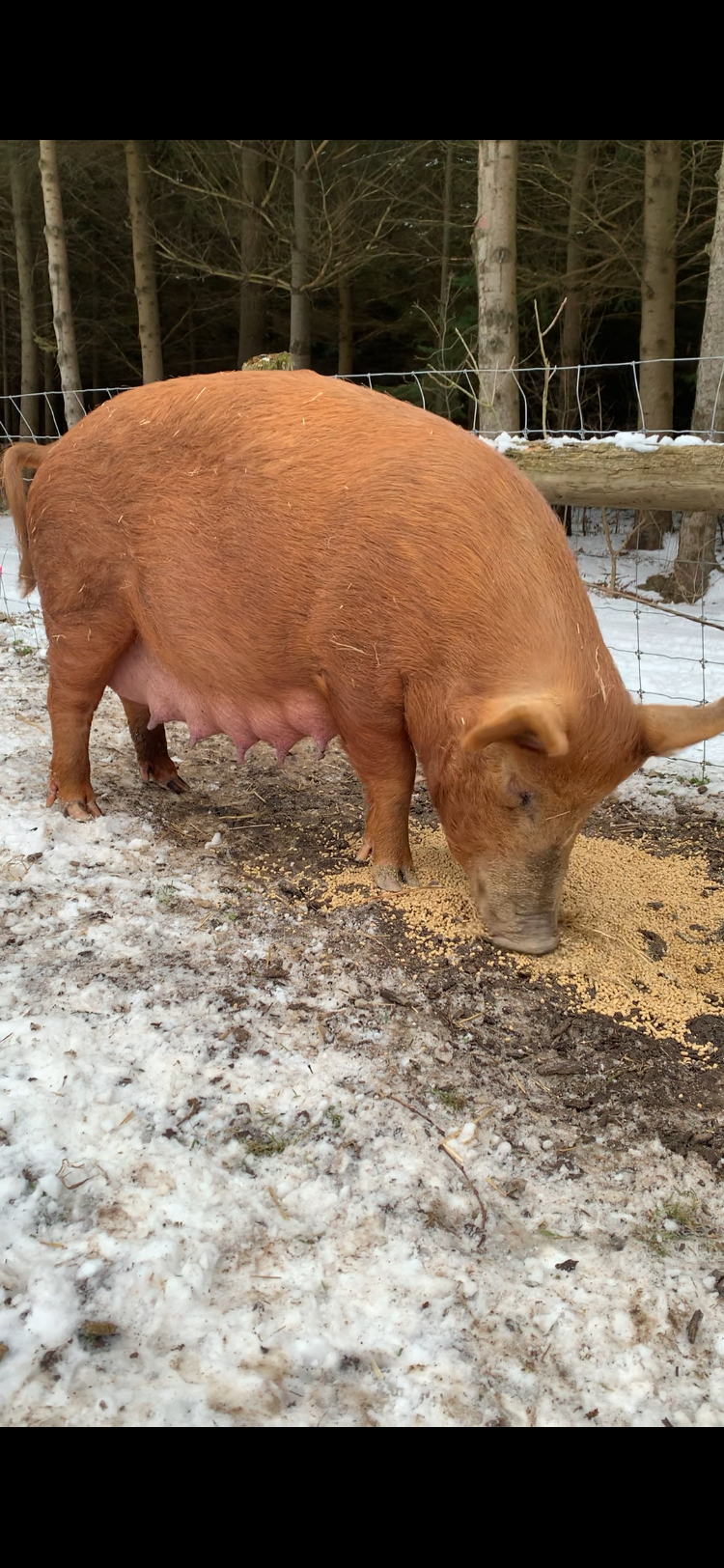
Jim Wright operates Paddy Green Acres near Ancaster Ont., where he has a herd of registered Tamworth pigs — currently 14 adult sows, two adult boars and a collection of younger boars and gilts.
Wright too was looking to make connections when he found social media.
“(I) was largely looking for a forum to connect with multiple breeders at once,” he said.
“I am often contacted by people across the country asking about breeding stock and I am happy to try and connect them to other breeders that are closer. Social media seems like the solution for that enhanced level of connectivity.”
Wright does add the success he hoped for has not quite been achieved.
“Not to the extent I had hoped for, as I think people are a bit hesitant to ask open questions on a public forum,” he related. “(But) it certainly allows questions and foster a community of learning.”
Vincent Bouvier, said social media can be an important marketing tool.
First of all the Group Sask Farm to Fork is not focused on pigs or pork. It is an avenue for producers and consumers to have direct contact as to what they have to offer or what a consumer is seeking,” said Bouvier who is located near Kincaid Sask. where the family runs cattle and pigs.
Bouvier explained they have “around 20 -50 pigs per year and run approximately 30 cattle as well as custom graze cattle to fill the capacity of my pastures. None of my animals are registered. I use Tamworth and Blue Butt genetics in a cross bred herd for my pig operation. My cattle are Angus and Speckle Park genetics in a commercial herd.”
As for the marketing group on social media he explained, “I started Sask Farm to fork group on Facebook because I believed there was a need for producers and consumers to have an avenue to communicate.”
And the page has been successful.
“I would say yes it has become a go to for many in the direct market for farm products,” said Bouvier. “This includes both producers and consumers. I’d say the best aspect of this social media page is the fact that we only allow farm to fork products. There are no cars or kittens or any other unwanted items allowed. Only farm to consumer products.”
That doesn’t mean it has always been a smooth process, offered Bouvier.
“As Admin of the group and being the creator of it I’d say it has been rewarding but at times it has also been frustrating,” he said. First of all it is a fare amount of work to keep the integrity of the group up to the level that it was created to be.
“At times it is frustrating as people feel it is a free for all. It’s not! It is free for all not a free for all.”
Like Bouvier, Stender said there are of course some challenges with social media too.
“The biggest challenge is sorting through the mix of opinions and advice,” she noted. “Not everything online applies to every breed or farm.
“And like any online community, there can be the occasional negative comment or misinformation.
“But overall, the relationships and opportunities that have come from social media far outweigh any drawbacks.” •
— By Calvin Daniels