Rare swine breeds in Canada are getting rarer, and that is troubling for the breeders who remain in terms of finding unrelated bloodlines.
“I would say across all the (rare) breeds they’re facing similar problems,” said Heritage Livestock Canada Chair Rebecca Lange.
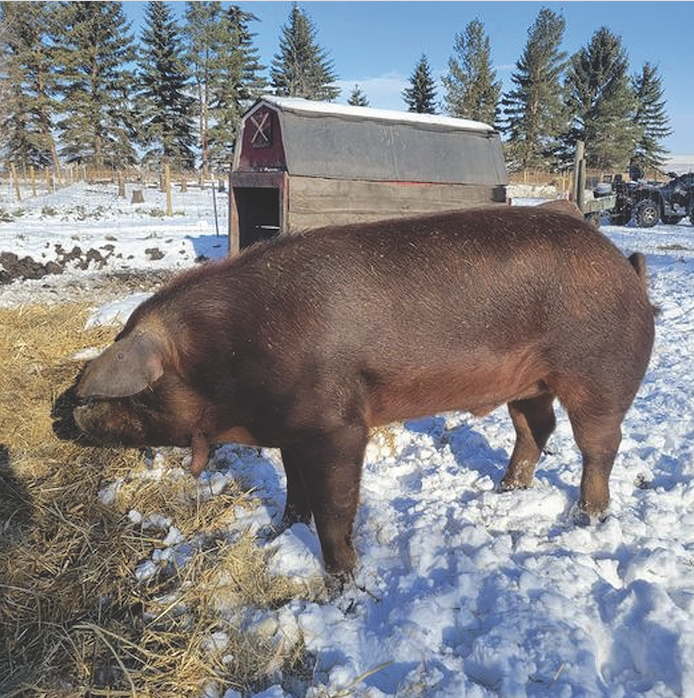
Rare breeds of particular interest to HLC include Lacombe, Berkshire, Tamworth, Large Black, Hampshire, and Red Wattle, all deemed heritage breeds in Canada.
One of the key mandates of HLC is to be a centre for the study and conservation of heritage breeds of farm livestock
Established years ago and renamed HLC in 2018, the organization has worked to save the last remaining Lacombe in Canada, maintained and added both swine and horse semen to its gene bank.
From the HLC website; its mandate is shaped by the breeds on Heritage Livestock Canada’s conservation list. The conservation list is comprised of registered purebreds of each species: Beef/Dairy Cattle, Sheep, Swine, Goats, Draft/Light Horses/Ponies and Donkeys.
Breeds must have continually been in Canada for 50 years at least to be placed on the list. Many of the breeds on our conservation list such as the Kerry, Fjord Horse, Cleveland Bay, White Park and Cotswold have a rich and lengthy history.
We also pay special attention to Canadian breeds: Lynch Lineback, Shaver Beefblend, Hays Converter, Canadienne, Chantecler, Ridley Bronze, Lacombe, Canadian Horse, Ojibwe (formerly Lac La Croix) Ponies and Newfoundland Ponies.
Some of the breeds listed with us are internationally rare and on the brink of extinction globally – the Tamworth pig being a prime example.
In terms of swine bloodlines, one alternative to finding a live animal to introduce a new bloodline is to use artificial insemination.
While it is an option, it’s not the easiest way to go, explained HLC Livestock Chair Elwood Quinn.
When contacted for this interview Quinn was actually preparing to AI a Tamworth sow using frozen semen imported from Ireland several years ago. He said the success rate is not what one might desire, and a straw of semen is not a low cost alternative, but it is an option to different bloodlines, some of them from lines long gone.
For example the Irish importation included straws for various breeds – Tamworth, Berkshire, and Large Black — and straws going to a number of producers at the time, explained Quinn.
In Quinn’s case it’s a tool he uses often – admitting three tanks with frozen semen being spotted his living room.
Compounding the problem is being able to ascertain if an animal is actually a purebred.
“A lot of people do not register,” said Lange, adding groups such as HLC encourage registering stock and have to ask the question why many do not. “We need to look at that more. Why don’t they see the importance of registration.”
Without the paper it’s impossible to ascertain bloodlines, or even if the animal is pure, she said.
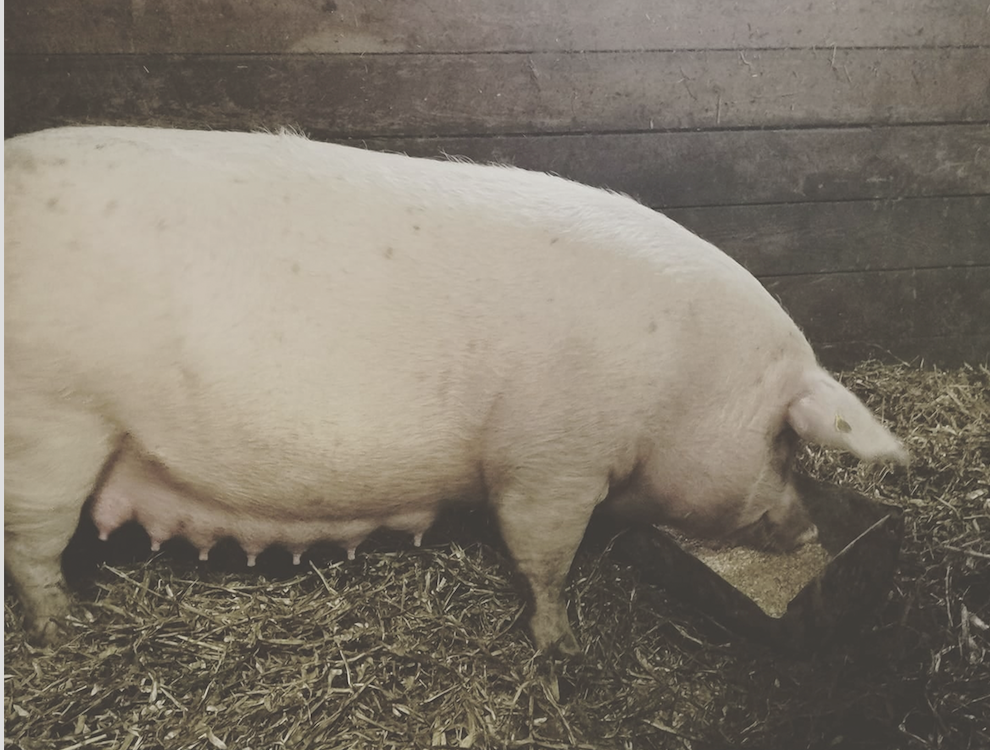
Of course Lange admits it’s a bit of the proverbial two-edged sword, noting as the number of breeders declines, so does the demand for breeding stock.
“Who wants to register if you can’t sell them,” she admitted.
Quinn said the number of registrations submitted each year has declined dramatically through the years. He pointed at Lacombe as an example.
Lacombe are sort of the ‘poster breed’ for heritage swine in this country. They are a composite breed developed beginning in 1947 – as their name suggests in Lacombe, Alberta. Originally a cross of Chester White, Danish Landrace and Berkshire, their development was a fairly rapid one, being introduced as a new breed in the 1950’s.
Quinn said now about 30 are registered across Canada in a year. “There used to be a 1,000 or more,” he said.
That said Lange said that is one area Canada could be more proactive in supporting the preservation of heritage livestock breeds including of course swine. She said registration costs could be covered relieving that financial requirement from breeders.
“They have it in Europe,” she said, adding while it “is not a vast amount of money” invested in support in Europe, “there is nothing here at all.”
Lange said costs associated with livestock are increasing, so any support would be a step in preservation efforts.
In that regard Lange said she certainly encourages culling inferior stock, and that can be difficult to measure when many rare breed pigs are sold as weanlings with hopes they become breeding stock.
“Ideally, we would not be looking at them at that age . . . We’d wait until they’re a bit larger. . . We’re still looking for people to only sell out their best,” she said.
The whole process is challenged somewhat by many buying rare breeds being novice producers.
“There’s a lot of inexperience in swine,” said Lange.
Quinn said it’s a challenge for new producers to find the affection for and dedication needed to maintain heritage breeds long term, adding some see it as a lifetime work, as in his own case, but that doesn’t mean the next generation will.
And that has Quinn concerned for the future of heritage breeds of livestock in Canada.
“I hate to admit it but I have my doubts we can keep purebred lines going in this country,” he said, adding some breeds may be lost within another generation. •
— By Calvin Daniels