Agriculture ministers from across Canada gathered in Winnipeg on September 9, 2025, for their annual meeting of the federal-provincial-territorial ministers. The message they wanted farmers to hear was simple: We are united, we hear you, and we will continue to support you in tough times. That sounds reassuring, but farmers will measure this gathering by what happens next.
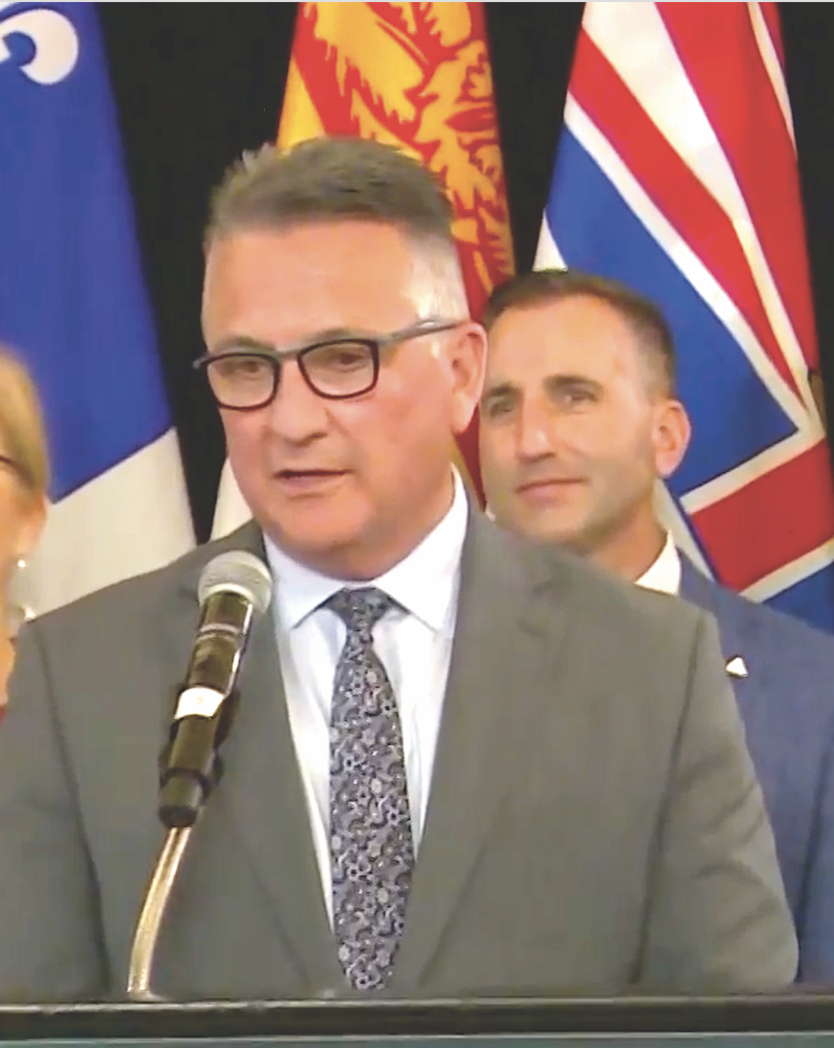
Federal Agriculture Minister Heath MacDonald set the tone. “When the door closes in this meeting room, partisan politics stays outside. We all care deeply about this industry, and I couldn’t be more proud to serve as Minister of Agriculture and Agri-Food Canada. I also couldn’t be more proud to have these ministers standing behind me,” he said. Manitoba’s Ron Kostyshyn, Saskatchewan’s Daryl Harrison, and Alberta’s R.J. Sigerson stood with him, projecting unity at a time of deep uncertainty.
MacDonald admitted tariffs dominated the agenda, with canola at the centre of Canada’s trade storm. “On Friday, our Prime Minister announced that the interest-free limit on canola advances under the advance payment program will increase to half a million dollars for the 2025–26 program years,” he said. “We know this won’t resolve all the issues, but it’s important support that some farmers will use.” Ottawa also pledged $5 billion through the Strategic Innovation Fund and $1 billion in regional tariff support. “These programs aren’t the end solution, but they show farmers we have their backs.”
Still, programs cannot replace markets. “It’s not easy with the uncertainty created by tariffs and the geopolitical trade environment we find ourselves in,” MacDonald admitted. “But when farmers are successful, all of us up here are successful.”
Kostyshyn, who hosted the meeting, leaned on his experience as a producer. “This was a room where we sat together as one team to work out the importance of agriculture across Canada, regardless of province or territory,” he said. “As a farmer for 40 years, I know the challenges producers go through, and I want to commit that all of us value the risks they take every day.”
Both ministers highlighted progress on regulatory reform. MacDonald said the Canadian Food Inspection Agency and Pest Management Regulatory Agency are starting to move faster. “We need quicker science-based decisions and time for farmers to adapt to new alternatives at a fair cost,” he said. For many, that was the most tangible sign of movement.
Infrastructure and logistics also came up. Canada’s vast geography presents a constant challenge in moving grain, livestock, and inputs. A new CanBuild office may help, but MacDonald tied it back to competitiveness. “We need a stable regulatory environment and an even playing field with our trading partners,” he said.
Business risk management programs remain under review. Kostyshyn called for stronger tools beyond weather disasters. “We need programs that deal not only with environmental issues but also with trade disruptions and rising costs,” he said. “Simplifying AgriStability is key. At the end of the day, communication with farmers and industry will guide how we adapt.”
Trade and diversification dominated media questions. MacDonald pointed to recent travels to Asia. “I went to Indonesia, Singapore, and Manila, and they recognize Canada as a food safety and food security country,” he said. “They see us as a trading partner they can trust. We need to continue building those partnerships while strengthening what we produce here at home.”
Reporters pressed him on canola, asking whether tariffs could lead to new crops piling up. “It’s a very fragile situation,” MacDonald admitted. “Having Premier Scott Moe in China right now meeting with officials is important. The number one goal is to get that market open.” He also pointed to bio-fuels as a longer-term outlet. “If we can domesticate some of that product here in Canada, it will help farmers. It’s not the full answer, but it’s a step forward.”
Asked if Canada’s regulatory system leaves farmers at a disadvantage, MacDonald answered candidly. “In some cases, yes. Timing and speed of decisions matter. If we can’t access products we’ve used for decades, we need affordable alternatives, and we need them quickly.”
Despite frustrations, both ministers circled back to farmers as the foundation of the economy. “Farmers are generational. They don’t just feed Canadians—they feed the world,” MacDonald said. Kostyshyn agreed: “Our communiqué reflects a strong spirit of collaboration and commitment. Together we’ll build a better model, with added value and more opportunity for our producers.”
As the meeting wrapped up, Nova Scotia’s Greg Morrow was named next year’s chair. MacDonald closed with continuity. “Politicians come and go, but farmers are generational,” he said. “We’re doing everything possible to make them successful, sustainable, and able to pass on the same opportunities their forefathers had.”
Farmers listening will ask one question: Will these commitments lead to real change? Governments can cushion blows and promise support, but survival depends on more than words. They need markets open, costs controlled, and rules that let them compete. Until those things happen, no communiqué will ease the pressure on the yard or the balance sheet.
In the end, MacDonald’s line stays with me: “When farmers are successful, all of us are successful.” That’s not just a sound bite—it’s Canada’s future. The sooner governments prove it with action, the better for every farmer, and for every Canadian who depends on them. •
— By Harry Siemens