Porcine Epidemic Diarrhea, known as PED, remains one of the greatest threats to hog production in North America. Since first entering the United States in 2013 and then Manitoba in 2014, this viral gastrointestinal disease has put pressure on every level of the pork sector. For Manitoba producers, veterinarians, and farm staff, the past decade has been a constant test of their ability to adapt, collaborate, and maintain strict bio-security
PED strikes hardest at the youngest animals. Newborn piglets face extreme diarrhea, dehydration, and high mortality. Older pigs also exhibit symptoms, including loss of appetite, unwellness, and diarrhea, but they typically recover. For producers, the heartbreak of piglet losses underscores the need to keep the virus off the farm at all costs.
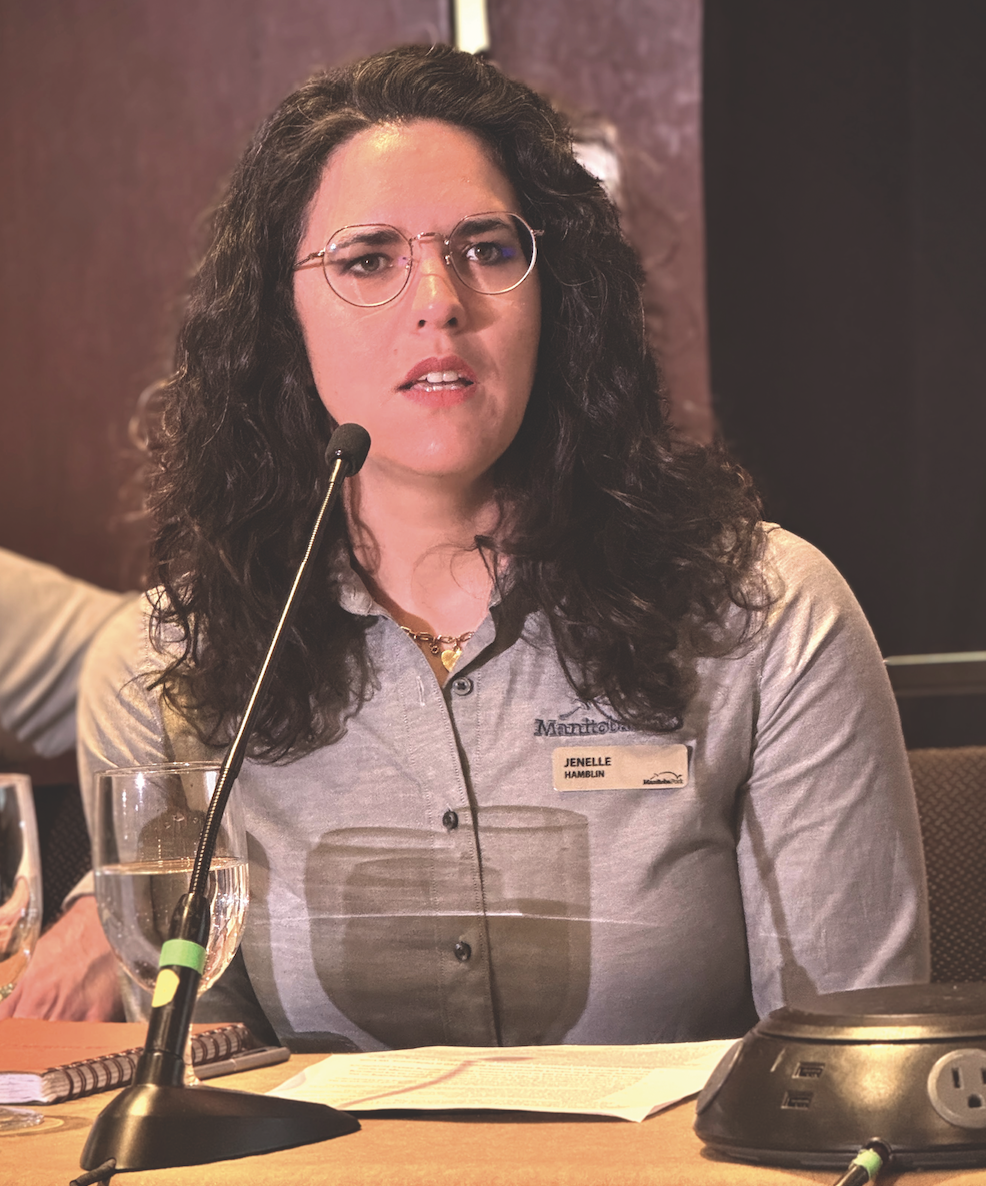
Janelle Hamblin, Director of Swine Health with Manitoba Pork, credits the industry’s PED elimination plan and the diligence of those who work in barns every day for turning the tide. “In 2023, 2024, and 2025, we’ve been back to single-digit numbers since the large outbreak in 2022,” she said. “In 2024, we had one case confirmed late in the year, and fully contained. In 2025, we had two cases confirmed—one already through elimination protocol and presumptive negative, and the second currently working its way through elimination as well.”
She stresses that the decline is no accident. “I really think that success comes from enhanced bio-security, awareness, and changes made on farms to prevent the disease in the first place. I can’t speak highly enough of the work veterinarians, producers, and farm staff are doing every single day to practice those high levels of bio-security”
Bio-security has evolved into more than just a buzzword. It defines the daily reality of swine production in Manitoba. Hamblin reminds producers that protecting against PED also shields barns from a wide range of other threats. “Bio-security doesn’t only pick and choose PED,” she said. “You’re protecting your farm against a whole spectrum of disease.”
That level of vigilance grew from experience. Manitoba recorded fewer than 10 cases between 2014 and 2016. But in 2017, PED cases spiked to 80, followed by 82 more in 2019. The worst outbreak came in 2021 and 2022 with more than 120 cases, rattling the sector and forcing new decisions. “In February of 2022, our board said we need to figure out how we want to move forward as an industry,” Hamblin recalls. “We brought together veterinarians, producers from impacted and non-impacted regions, processors, and our CVO. Everyone had a seat at the table to shape the path forward.”
The result was the Manitoba PED Elimination Plan. “We looked at different management strategies in Canada and the U.S. and decided elimination was our best bet,” said Hamblin. “From there, we created an action plan that defined both prevention and intervention.”
Prevention includes heightened bio-security and increased surveillance, both at the farm level and at high-traffic facilities. It also emphasizes building a culture of bio-security—embedding the “why” into every practice so that staff, veterinarians, and owners all understand the purpose behind the protocols. “If we can explain the why behind what we’re doing, we get greater uptake,” Hamblin said.
When a case arises, intervention takes effect. Farms apply a “rapid and aggressive response.” Animals stay on-site under strict bio-containment for at least four weeks. The herd veterinarian guides the elimination process, adapting to the infrastructure and production flow of each barn.
Surrounding farms receive notifications so they can heighten their bio-security and reduce the risk of area spread. Manitoba Pork’s Coordinated Disease Response Network updates the province on disease status and communicates risk levels to the public.
The elimination plan also includes a detailed manual – over a hundred pages of resources – for producers and veterinarians. It outlines outcomes and guides how farms can transition from infection to elimination. “Each premise might have a different path, but the outcomes are well defined,” Hamblin explains.
The industry has already seen results. PED cases have fallen sharply since 2022. In addition, veterinarians report a quieter year overall on the swine health front. “We’ve seen regular or lower incidences of other diseases,” Hamblin noted. That improvement suggests that the culture of bio-security created to tackle PED is also paying dividends across the board.
Manitoba’s example has not gone unnoticed. “We’ve had a lot of outreach from other jurisdictions, particularly in the United States,” Hamblin said. “They want to know how we developed the plan, the steps we’ve taken, and how to replicate elsewhere.”
For her, the credit belongs to those on the ground. “The importance of bio-security and the success we’ve seen is really attributed to the work being done at the farm level every day. The other key is industry buy-in. When everyone agrees on a plan and commits to it, you get results. That’s what we’re seeing.”
The story of PED in Manitoba highlights the resilience and determination of its hog sector. From devastating outbreaks to single-digit case numbers, the turnaround demonstrates what happens when producers, veterinarians, processors, and staff put aside individual interests and commit to the collective good. “Doing the hard work pays off,” Hamblin said. “And Manitoba’s producers are proving it.” •
— By Harry Siemens