Reflecting on Manitoba Pork’s 60-year history, one can’t help but think back to the early 1970s, when the industry looked very different—smaller farms, simpler systems, and a less integrated market. Over the decades, people have watched the evolution of the pork sector firsthand: change, progression, and, yes, hardship have all played a role in shaping the Manitoba hog industry into what it is today.
Producers came and went. Some left the industry and occasionally returned—but not often. Board and staff members have changed, too, yet the organization has remained steady, focused, and remarkably effective in running its affairs on behalf of producers. From crisis management to expansion strategies, Manitoba Pork has earned its reputation as a well-run, producer-driven organization.
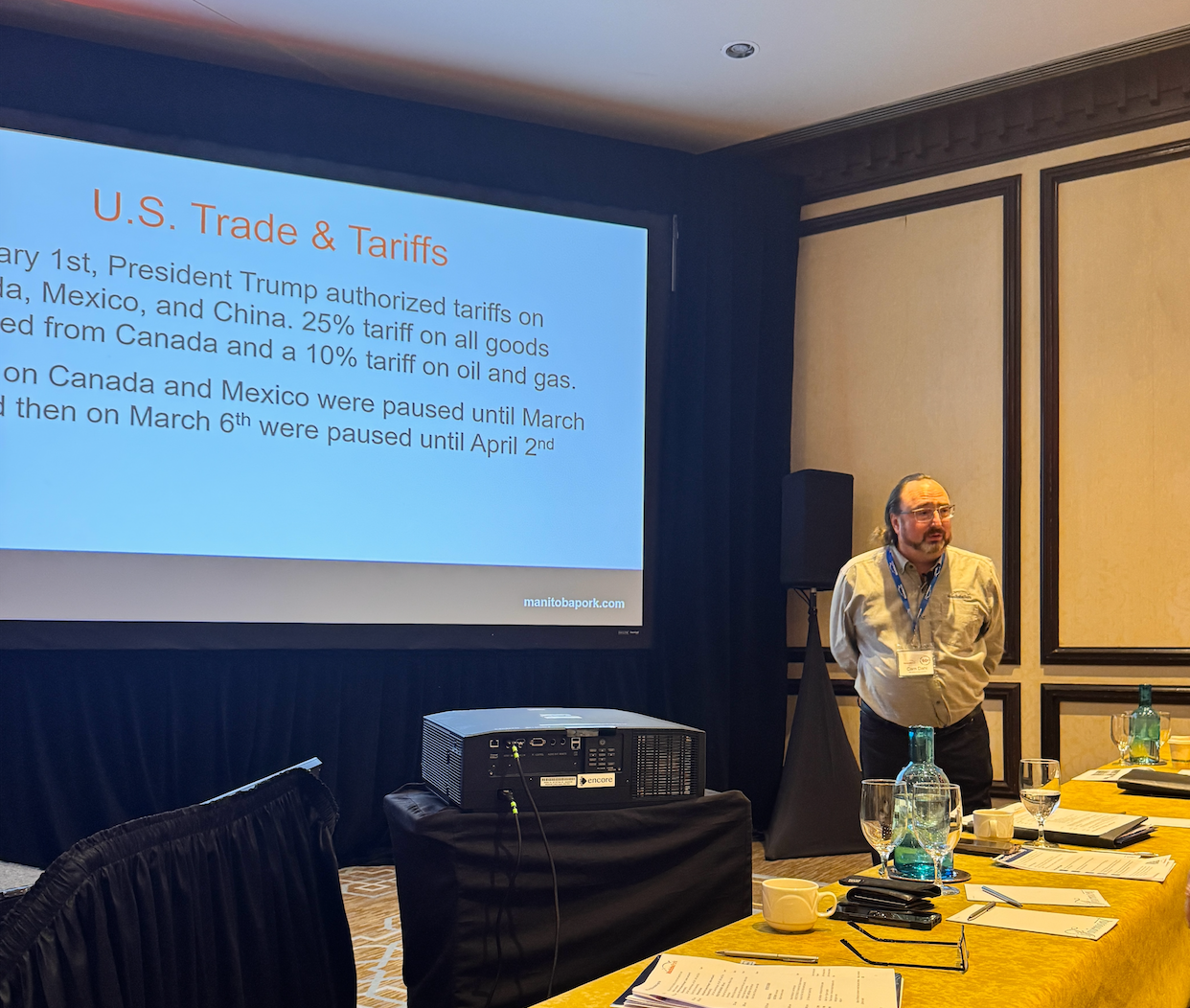
At the recent AGM, Manitoba Pork celebrated its 60th anniversary as a milestone and a moment to reflect and plan forward. General Manager Cam Dahl identified three critical turning points in the Council’s history.
The first one is the transition from single-desk selling to an open-market model. That was one of the fundamental turning points. It gave producers more control over pricing and marketing and signalled a broader shift toward modernization and competitiveness in the industry.
Second, the processing capacity in Manitoba expanded, most notably the Maple Leaf plant in Brandon and HyLife in Neepawa. “That fundamentally changed the industry and created Manitoba as a center of pork production in Canada.”
Third, the rise of disease pressure and the industry’s aggressive approach to bio-security. With major threats like PED, PRRS, and ASF looming, Manitoba Pork and its producers recognized the critical need for coordinated disease prevention and management. That shift transformed how producers designed barns, moved pigs, and trained workers.
Now, another big conversation is on the table: the producer levy.
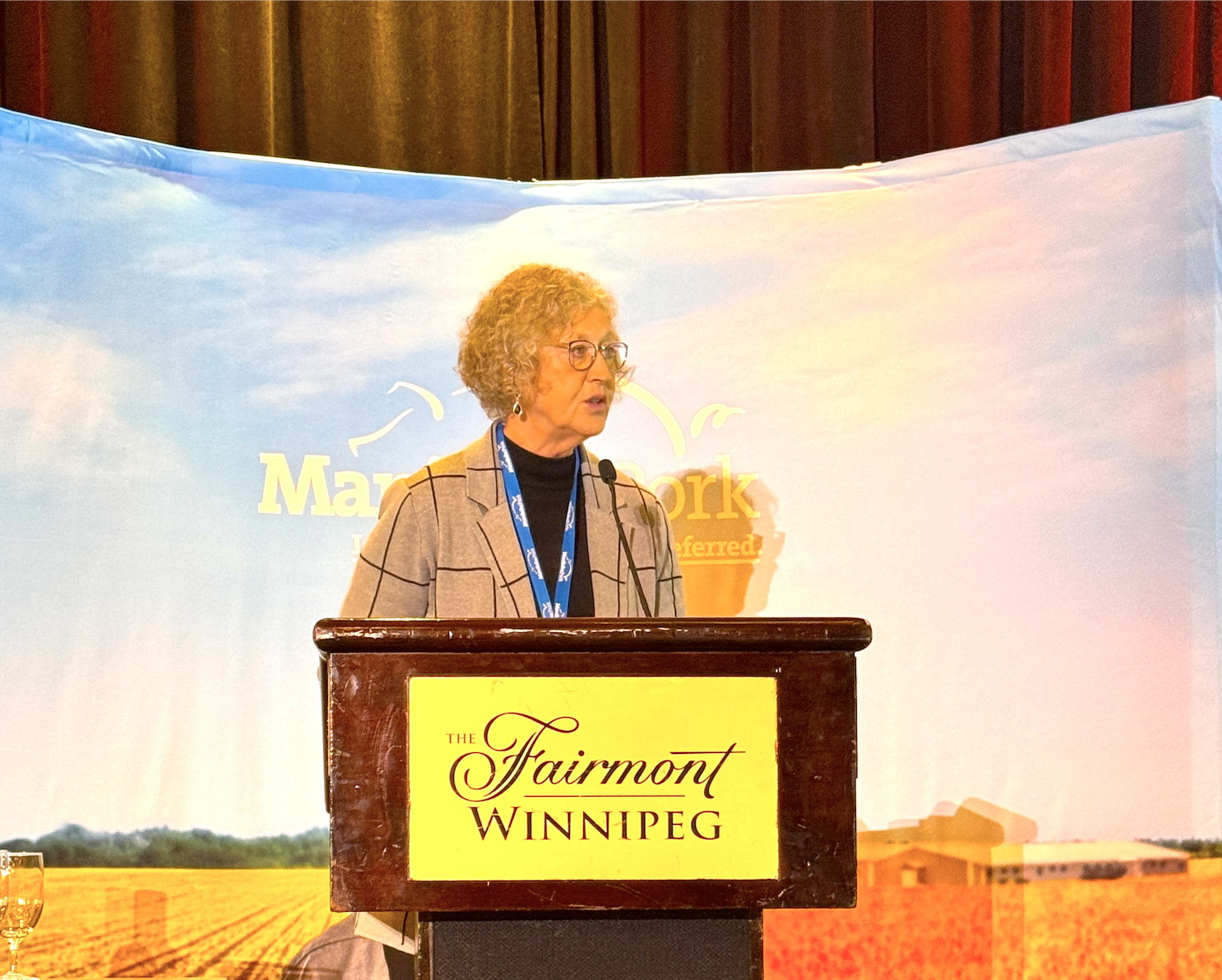
As Marg Rempel noted during the AGM, “somewhere along the line,” a levy increase may become necessary. Dahl agrees. “That’s a conversation we’ll have with producers over the next year. And we’ll bring the topic back to our AGM next year.”
Dahl pointed out that 1997, the levy was $1 per market hog. It’s much lower today, and Manitoba has the country’s lowest levy. Meanwhile, inflation has climbed more than 10 percent in the last five years. Costs for staffing, research, bio-security, advocacy, and market development continue to rise.
“If we’re going to keep doing all the things that Manitoba Pork does, we’re going to have to have that conversation,” Dahl said.
So what do producers get for their levy dollars?
Dahl quickly lays it out clearly: “It’s a valid question.”
MPC represents producers in trade discussions, such as the recent tariff issues. They are also involved in the Code of Practice consultations. Producers also receive support in handling disease pressures and regulatory hurdles around expansion. They also receive environmental stewardship work, public trust campaigns, and protection of their license to farm.
In other words, the levy isn’t just about today—it’s about being ready for tomorrow.
“You don’t want to panic when something arises without warning,” said Dahl. “You want to be able to attack it.”
He pointed to the U.S. tariff situation as a case in point. “We’ve built relationships with our counterparts in the U.S. over time,” he said. “You can’t build that up overnight. But when issues like tariffs arise, we have those connections in place. That pays off.”
The industry stands strong as Manitoba Pork marks six decades of service to producers. Manitoba Pork’s story is one of grit, growth, and grounded leadership, from the transition to open markets and the rise of world-class processing plants to the discipline around bio-security and the conversations ahead about funding.
The journey has been remarkable for those who’ve witnessed it—from the small barns of the ‘70s to the sophisticated operations of today. Looking forward, that spirit of practical progress will guide Manitoba Pork through the next 60 years. •
— By Harry Siemens