
Photo courtesy of: Sharpstone Conservation, and Matthew Steer (Director)
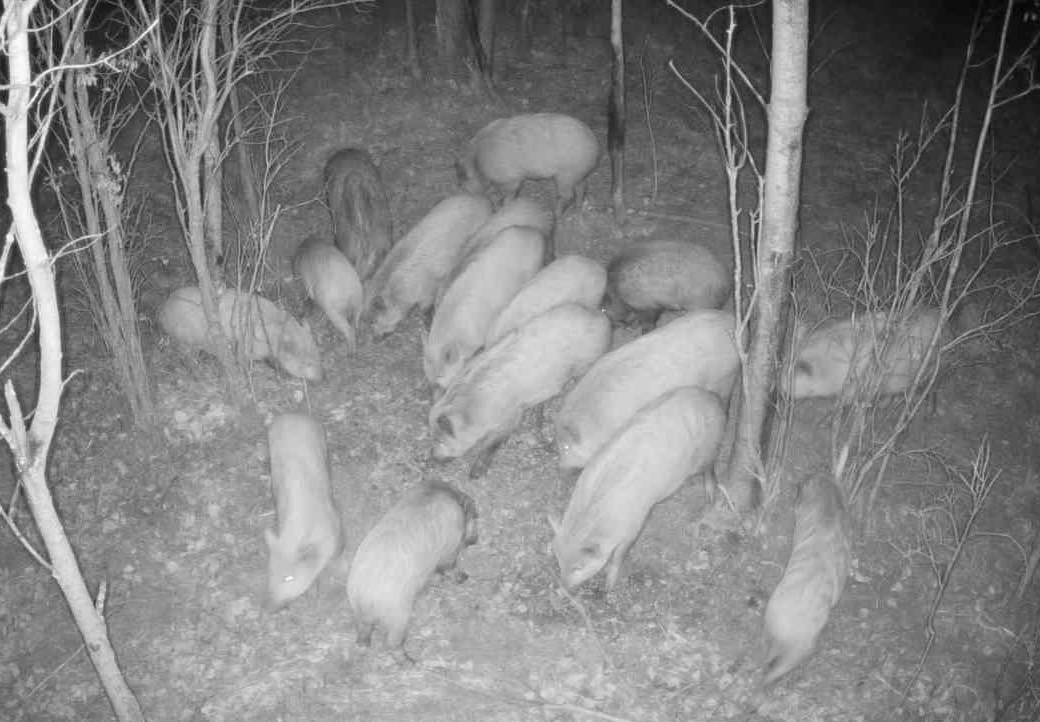
Researchers hope thermal imaging drones that detect animals from above will be one more tool in monitoring and eradicating wild pigs in Alberta.
Mathieu Pruvot, assistant professor at the University of Calgary’s Faculty of Veterinary Medicine said a recently launched thermal drone project will help study the movement and numbers of wild pigs in the province.
In January a GPS tracking collar was placed on a single sow and released back into the wild.
By following the wild pig via the tracking collar, researchers monitored the movement and behaviour of the pig. But what researchers couldn’t tell from the tracking collar was if the pig was on her own, or with a group. By using the tracking device on a pig combined with a thermal drone, researchers and trappers can now see if the collared pig, or spy pig, is on her own or with a larger group.
“We are just testing it out. I think it’s going to be very effective for us because it didn’t take us very long to locate that collared pig,” said Pruvot after testing the thermal drones at the end of February.
This winter, research staff, hired trappers and Pruvot’s graduate students were certified and trained to fly the drones. Within minutes of launching the thermal drone the group found the spy pig and watched her on the computer screen. From the computer screen they saw the collared pig was on her own. Days earlier a group of pigs she had been with were tracked with the help of the GPS collared pig, killed and removed.
“At this point she was by herself but she had already helped us identify groups that had been removed,” he said.
The researchers and trappers, hired by Alberta Pork, will now follow her and other collared pigs’ movements several times a week to help monitor and eradicate the invasive animals that threaten the domestic pig population and threaten the environment with their destructive behaviour.
The collared pig followed in the drone practice was located in Woodlands County, north east of Edmonton, but the thermal drone research project will also focus on Lac Ste. Anne and Two Hills counties, the areas in the province with the largest wild pig populations.
“It has been so difficult to control this population that we’re really exploring all the tools that we can get. What this project is really doing is trying to identify what tools will help us control the wild pig population. It is too early to say if that’s going to be successful. In some cases it might help and in other cases it may not add much to what the trappers are already doing.”
Trapper and hunter Tirel Gowans of Sharpstone Conservation and his partners were hired by Alberta Pork last July to help eliminate the invasive wild boar population. The military veterans were already experienced drone pilots and said drones have become an important tool for locating and eliminating wild pigs.
“The drones give you a bird’s eye view. You are obviously looking for wild boar, but you can see the habitat where they reside. Based on that intelligence you can determine your next play, where are you going to put the bait, where are you going to put a camera,” said Gowans.
“We have had a lot of success. The first three wild boar we killed after we identified them with a drone,” said Gowans.
“We put the drone up and saw the pigs and came up with an idea of where we would do the bait site and get them to have a pattern. That drone dictated our whole operation that was eventually successful in capturing and eradicating the boar.”
Pruvot said wild pigs have very distinct patterns on how they move in the landscape and if cameras are not set up exactly at the right place the pigs can easily be missed.
Number of wild boar removed by the wild boar control program each year in Alberta.
- 2018 – 18
- 2019 – 32
- 2020 – 14
- 2021 – 130*
*(this is the year the Alberta Pork
contracted professional trappers started) - 2022 – 79
- 2023 – 58
- 2024 – 144**
**(this year Alberta Pork doubled the number of contracted professional trappers from 2 to 4) - 2025 – 44 (as of March 3)
“We’re really trying to explore what is going to be the best monitoring method to keep a hand on the pulse of that population and try to figure out if the control program is being effective. We need to identify this combination of methods to help us assess the effectiveness of the control program.”
The thermal drone project is part of a joint monitoring of the wild pig population in conjunction with Alberta Agriculture and Alberta Pork the Alberta Invasive Species Council.
Hannah Mckenzie, Wild Boar Program Specialist with Alberta Agriculture and Irrigation said they have no clear idea of how many wild boar are in the province. By using drones to identify wild boar from the air, in combination with reported sightings and killed pigs, they hope to slowly eliminate wild boar from the province, similar to Alberta’s rat control program.
“We do feel like getting rid of them and eradicating them is possible,” said Mckenzie, pointing out that Alberta’s wild boar problem is not at the same level as areas of the southern US where it is now endemic.
Photos courtesy of: Sharpstone Conservation, and Matthew Steer (Director)
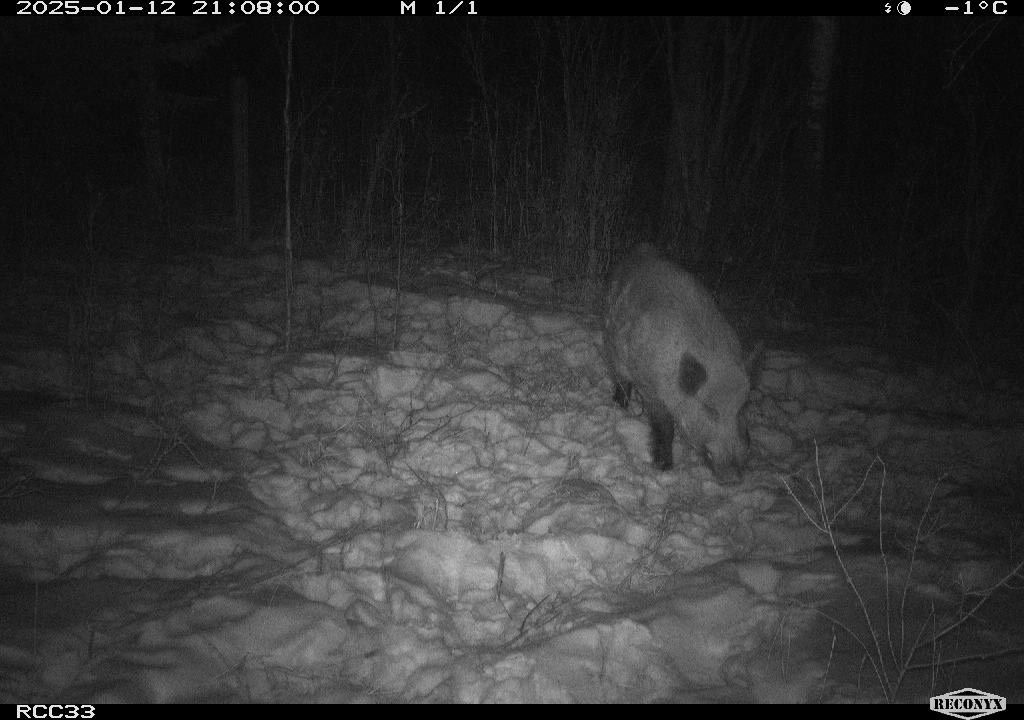
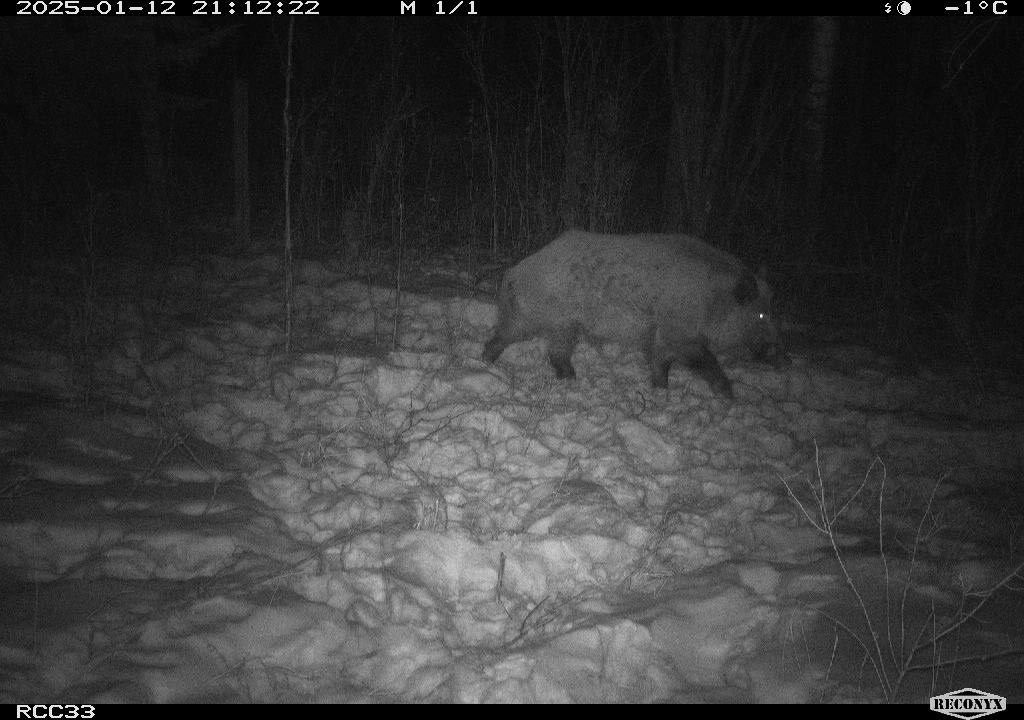
“I think drones are going to be really critical because they can just support in so many different ways in early detection. That early detection can help with the control efforts because it can help our trappers understand how they’re moving and where the best place to put the traps is. Without the thermal it is like looking for a needle in the haystack. Having the thermal capacity is key,” she said.
Unlike regular cameras, the thermal drones pick up heat from mammals on the ground making it easy to identify wild boars, or any other mammals from the air. Gowans said drones have become an inexpensive way to monitor wild boar. Their company can fly over a quarter section and see if there are any wild boar in the area. If there are no boars, they quickly move to the next area.
“The scouting phase gets much quicker.”
Elimination of the pigs is important to help reduce any disease risk to agriculture, human health or other kinds of wildlife habitat damage. All the animals captured are sent to Alberta Agriculture’s lab for postmortems. Tissue samples are sent to the University of Calgary to test for pork disease. All the captured pigs have tested negative for any pig diseases.
“I think we can get ahead of it. I don’t think next year we will be able to declare we’re free of wild boar. Like the rat program it did take quite a number of years to get there and I think it’s probably going to be like that for us as well,” Mckenzie said. •
— By Mary MacArthur