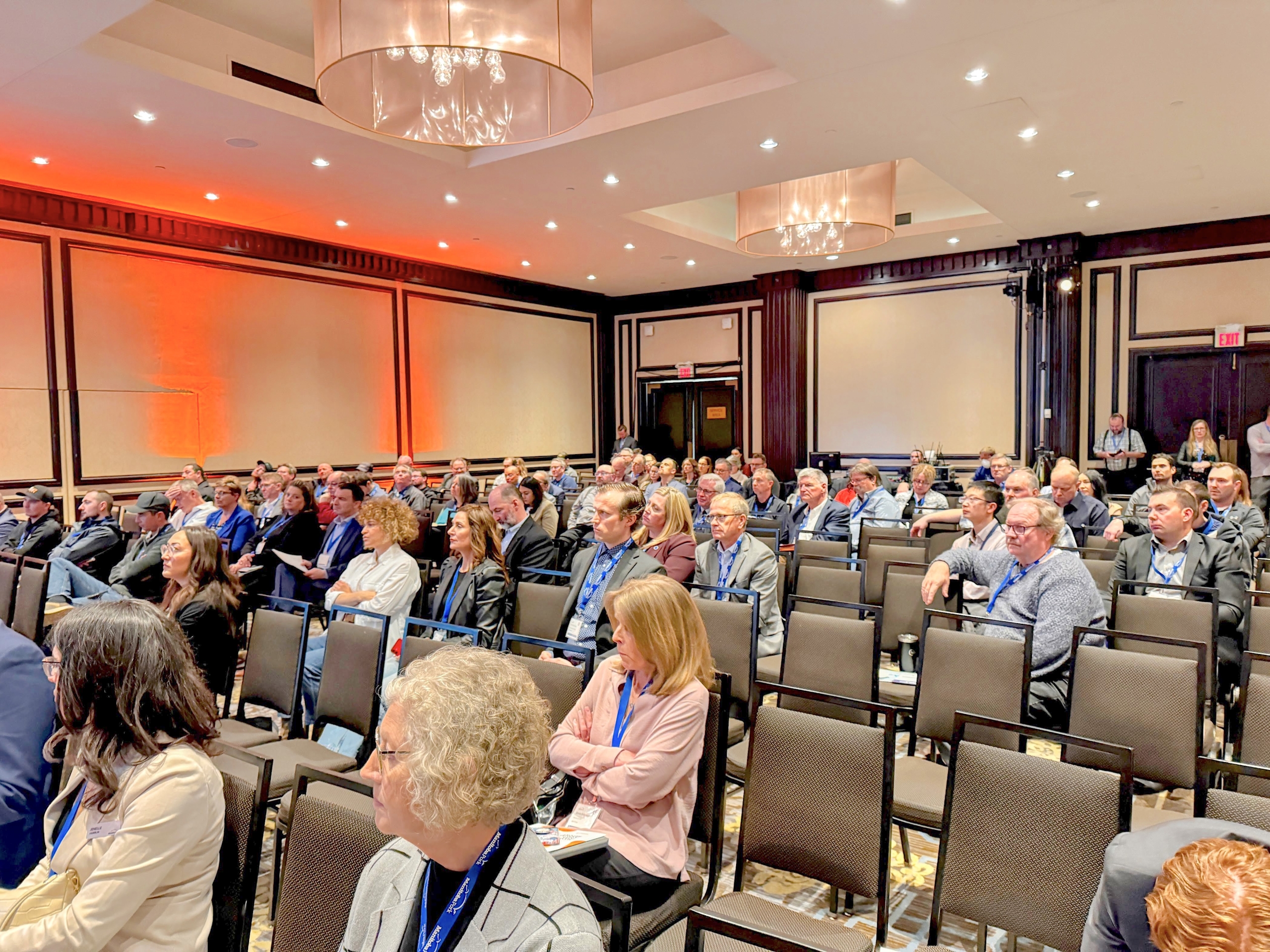
General manager Cam Dahl provided insights into the hog industry’s challenges and opportunities during the Manitoba Pork Annual General Meeting on April 11, 2024.
“In 2023, we saw a continuation of the challenges hog farmers faced in 2022. Feed prices remained high, and domestic demand for pork slumped following the pandemic,” Dahl noted. “Market uncertainty, which always comes with a cost, was created by the war in Ukraine, African Swine Fever (ASF), and unpredictable demand signals coming out of China, the world’s largest consumer of pork. Fortunately, 2024 looks like a year of transition to a more positive environment.”
Dahl highlighted the reasons for optimism in the coming year.
“While still at historical highs, feed prices have come off the record-setting levels that producers faced in the last two years. Higher world production of key inputs like corn and soybeans should continue to drive prices down as 2024 progresses,” he explained.
While things are looking better, uncertainty is still with us as the war in Ukraine continues, as does the ongoing drought in the North American Great Plains. World demand remains uncertain, mainly due to global economic uncertainty. Risk awareness and management will remain critical components of profitability in 2024.
Reflecting on the past year’s challenges, Dahl discussed the end of the longest porcine epidemic diarrhea (PED) outbreak in Manitoba.
“From the start of the outbreak in 2021, we had 129 premises infected with the virus.”
The fiscal cost to the industry is approaching $100 million. The human cost to producers and barn workers who fought the disease in their barns is not measurable.
One clear message from the Future of PED Working Group is that collaboration across the province is critical to controlling this disease.
“I want to thank the members of the Working Group who worked diligently to develop the elimination plan, which is being recognized both within Canada and internationally,” said Dahl.
He also emphasized the importance of bio-security in mitigating disease risks. Disease risk is best mitigated through rigorous adherence to bio-security protocols, whether from production diseases like PED or more threatening foreign animal diseases like ASF.
“In 2023, in conjunction with the Canadian Pork Council, Manitoba Pork began offering bio-security evaluations for producers. Plugging potential bio-security holes is one of the most important risk reduction efforts producers can undertake to prepare for 2024 and beyond,” Dahl explained.
2023 was an election year in Manitoba, and Manitoba Pork took this opportunity to increase outreach to candidates from all political parties. A vital component of this outreach focused on the economic impact of the hog sector in Manitoba. Independent research found that the hog sector creates over 22,000 jobs in Manitoba, annually contributes over $2.3 billion to the provincial GDP, and accounts for over 55 per cent of Manitoba’s agriculture and agri-food manufacturing jobs, Dahl highlighted.
Manitoba Pork continues to invest in sharing the story of modern hog farming with the public and political leaders—the ‘Good for ME, Good for MB’s campaign delivers the message about the pork industry’s contribution to Manitoba’s economy, environmental solid record, responsible animal care practices, and how the industry is building communities across the province, Dahl explained.
These messages come from real people involved in the industry, including farmers, veterinarians, municipal leaders, and environmental managers.
“I encourage individual farmers to get involved in these efforts through the Pork Proud Ambassador program, launched in 2023 and will grow in 2024.”
After two difficult years, with ongoing uncertainty still facing producers, Dahl expressed his optimism for the future.
“One might have expected pessimism to be the predominant sentiment within the industry, but the optimism strikes me as shown by farmers and the confidence that Manitoba’s hog sector will continue to grow.”
Most are looking for ways to grow the sector here in Manitoba, both in production and processing.
“This attitude goes a long way in explaining the resiliency the value chain has shown and why pork production has become such a pivotal role in our communities and our province,” he concluded. •
— By Harry Siemens