
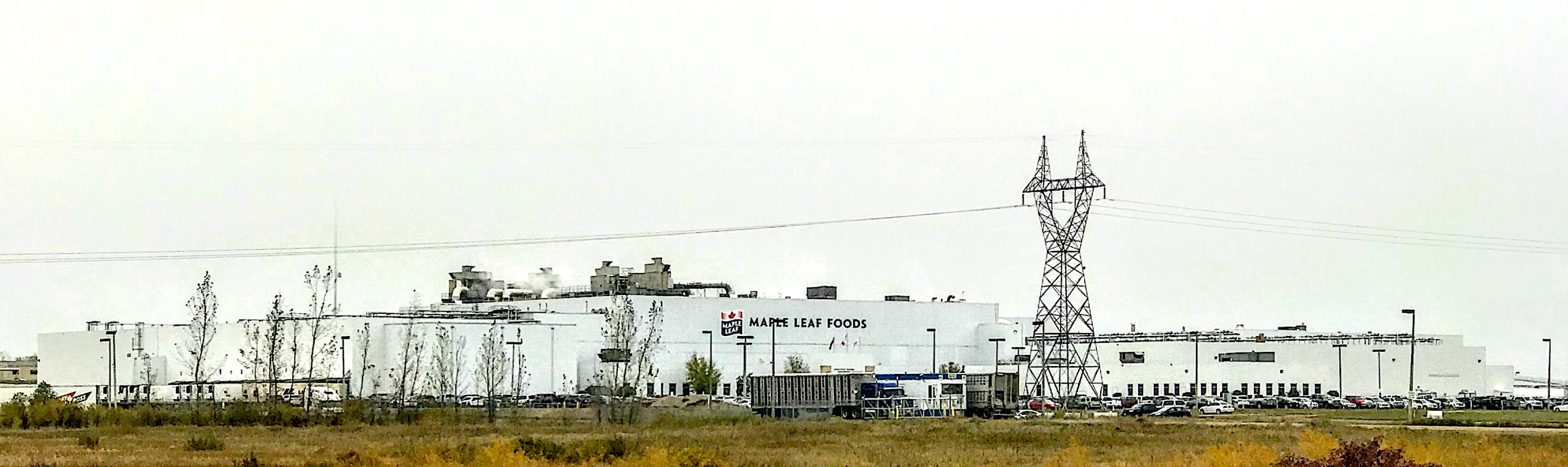
Bill Alford the general manager of H@ms Marketing of Winnipeg, MB texted this good news on January 20, to the HB WhatsApp group.
“Good news for Canadian pork processors. China has re-listed Maple Leaf (Brandon), Thunder Creek, Sofina and Conestoga.”
“Yes, Chinese authorities have lifted the suspensions on the remaining five pork plants that were initially suspended over COVID starting in the summer of 2020. So it essentially brings us back to 100 per cent access for pork. It’s great news for the Canadian pork industry,” said Trevor Sears the president and CEO of Canada Pork.
Canada Pork is the domestic and global market intelligence and promotional organization for the Canadian pork industry. Established in 1991 by the Canadian Meat Council (pork processors and meat trading companies) and the Canadian Pork Council (7000 commercial hog producers).
On August 19, 2020 Maple Leaf Foods in Brandon, MB temporarily suspended the exports of pork products to China after dozens of workers at the company’s plant and one at the Lethbridge, Alta., plant tested positive for COVID-19. The company did so because of a Chinese protocol that requires any plant reporting a COVID-19-positive case to suspend exports to China temporarily.
In a release, Michael McCain, Maple Leaf’s president and CEO said that the company respects China’s new import protocols for Canadian products and is working cooperatively with Canadian and Chinese authorities to resume exports quickly.
A media report that same day said the Canadian Food Inspection Agency said there is currently no scientific evidence that food or food packaging is a likely source or route of virus transmission.
Alford said, “To get into China with a lot of the pork cuts or credits as they call them, the offals feet and heads and that sort of thing is a primary market.”
Without going to China, it handicaps a lot of plants. For example, Maple Leaf is a big plant where that product went into rendering or just to a landfill to clear the floor.
“So that’s a big deal for a plant that size, the volume and being able to at least get something back for it. It’s not just a cost.”
Alford said the most significant point is processing plants; the de-listed Canadian ones can compete on a level playing field with other plants. As a result, they are getting more value out of that hog.
Alford confirmed it with both Thunder Creek and Maple Leaf on the evening of January 19. “And they’re aware, so obviously, it’s real.” •
— By Harry Siemens