
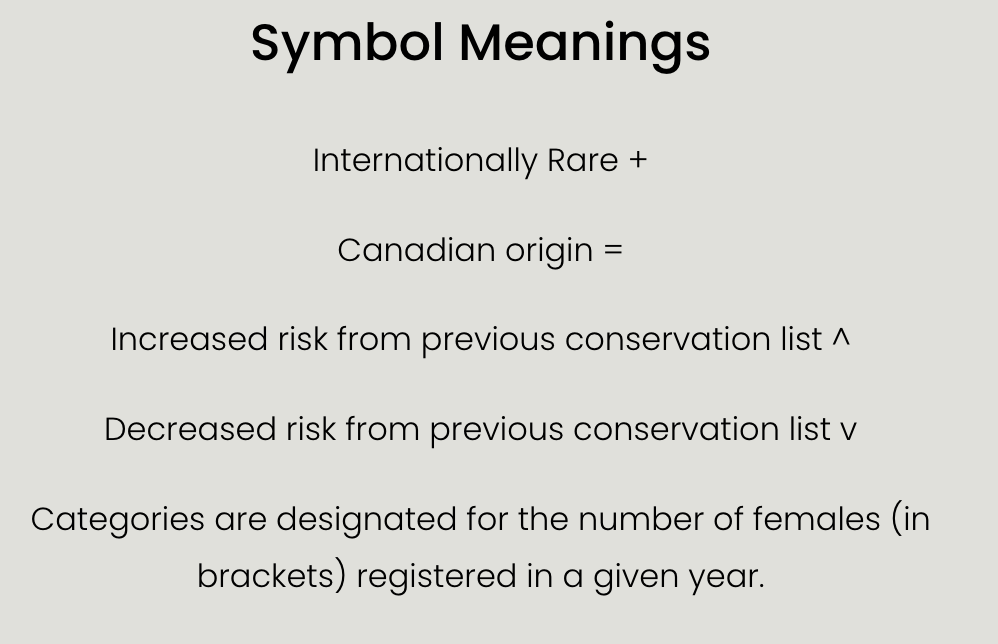
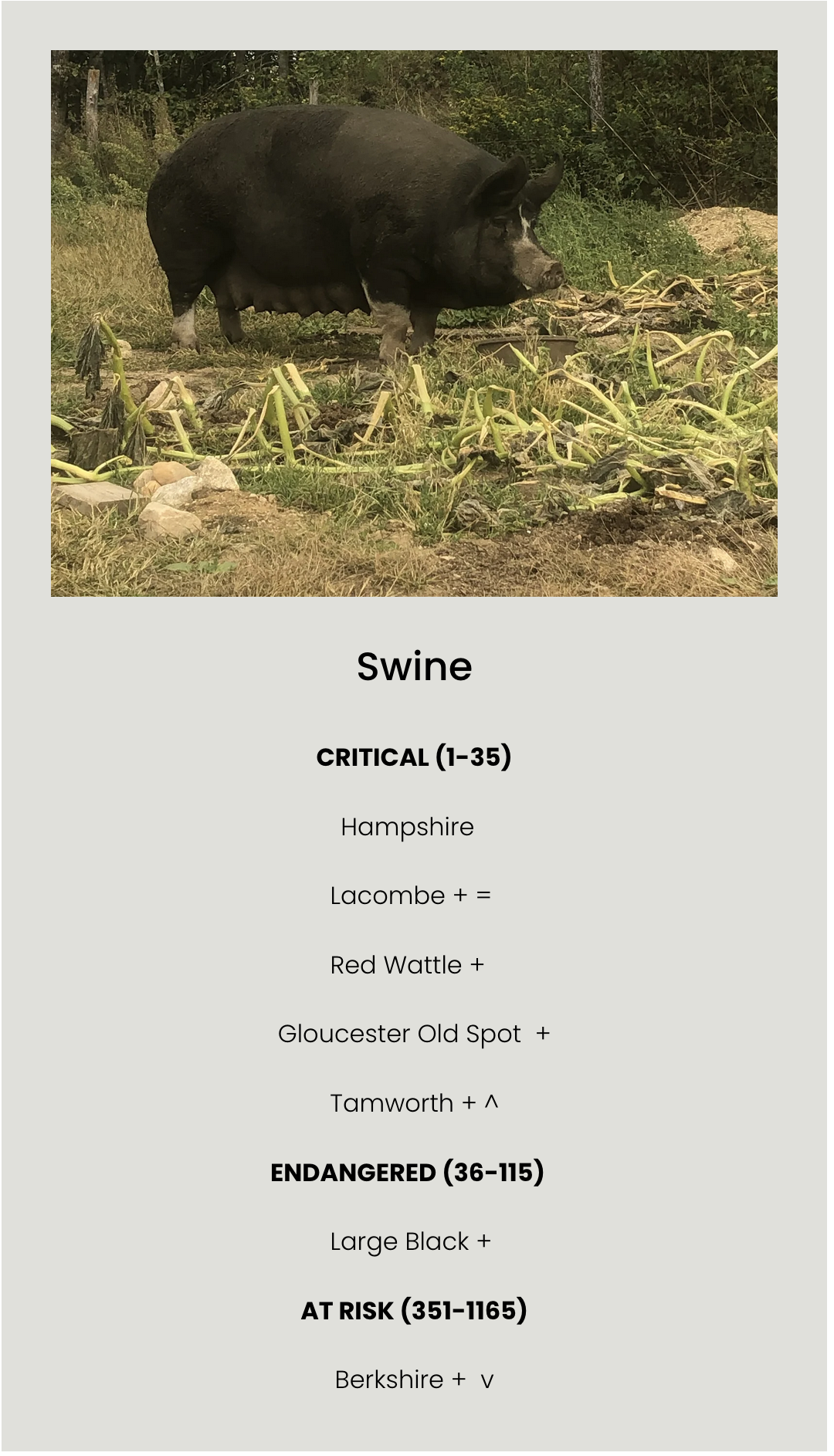
Heritage Livestock Canada is tracking swine breeds, as a result of the figures collected through its conservation list, and the news is not good in terms of preserving some foundational breeds in Canada.
The list designates categories, the category of most concern being critical, explained HLC Chair Rebecca Lange.
“Based upon the number of females registered in a given year, the numbers provided by the Canadian Livestock Records Corporation for swine were stark, with many of the breeds having zero registrations,” she told Prairie Hog Country.
“That being said, we do understand there are years where people don’t register, so it is necessary to look beyond figures, which are concerning and ensure the breed population matches those.”
For this to happen, HLC completes a census for each breed: Lacombe, Berkshire, Red Wattle, Tamworth, Large Black and Hampshire.
“The census is completed by reaching out to breeders and physically utilizing the CLRC site to confirm the number of sows, gilts and boars within a breed,” said Lange, who has a farm at San Clara, MB.
And the data is distressing if you care about rare swine breeds in Canada.
“From the feedback were are receiving and gathering, Lacombe, Berkshire, Red Wattle and Hampshire — unless something changes — could disappear in Canada, in terms of a registered population,” said Lange.
Registering the stock really is critical.
“Without those registration papers, there is no proof of purity,” offered Lange.
Within the breed spectrum some are in better conditions numbers wise, with others more distressing.
“Tamworth and Large Black are of concern, but more ‘stable’ than the other breeds,” said Lange. “Tamworth at the current time have a good core group of breeders, who are willing to work together. HLC is assisting, with the loan of our dry shipper to move Tamworth semen from Ontario to BC.”
By contrast “Berkshire are in serious decline,” she said.
“With breeds such as the Lacombe, there has been a low population for a period of time, which we would prefer not to see, but it is not new to us in terms of having that knowledge.
“Likewise Hampshire have been on the brink of ‘extinction’ for far longer than Lacombe.”
In some breeds it is one breeder who is keeping the breed on the Canadian scene.
“Red Wattle declined a number of years ago, without the efforts of one breeder, in all likelihood the breed would be gone from Canada,” said Lange.
Among the current numbers though Berkshire are something of an outlier.
“Berkshire though had registrations, which were well above all other heritage breeds in fairly recent years, but their registered population is now in line with Lacombe, which is a stark loss in terms of those opting to register Berks,” said Lange.
“There are records of shows in 1911, with entries of 49 Berkshire alone, these are an important breed historically in Canada. Right now, you couldn’t even gather enough Berks to make that show!”
Lange said there are certainly realities which have likely impacted Berkshire registration numbers.
As an example, “the end of access to the Japanese market certainly had an effect on Berks, as did the rise of newer ‘heritage’ breeds to Canada, such as the KuneKune and Mangalitza,” suggested Lange.
“There is possibly also a sense that there are plenty of Berkshire around, so there is no need to register and some simply choose not to. As breeders who are inclined to register and breed to a standard, stop registering for personal or age-related reasons, the breed shrinks in terms of the registered population. This causes a knock-on effect of the belief that all Berkshire are related, which also stops breeders from continuing with their herds.”
A linked issue is bloodline diversity.
“We have had feedback in terms of as previously mentioned, a lack of genetic diversity within the breed,” said Lange. “Essentially, most of the registered population in Canada is now descending from one herd.
“Others stopped registering as they couldn’t find unrelated Berkshire locally. Some take registered animals but then use those purely for their butcher market and opt never to register again.
“We know of one herd in the East which has been dispersed, but all the lines are essentially lost as no one has continued to register those animals.
“Then, there is the obvious cost, even though registration is low cost in Canada, other expenses related to pigs are rising, so breeders opt not to spend that extra on papers.”
To change the trend for Berkshires – and all rare breeds — breeders have to step up.
“The biggest hurdle to seeing a rebound is finding enough breeders who are invested in the long term to register their Berkshire,” said Lange. “This goes for all heritage swine breeds.
“The greatest difference to all these breeds would be through their registration. There is a balance and whilst we do advocate for registration, we also understand at HLC that not all piglets should be registered and not every litter.
“We don’t want registrations of every single animal, without paying attention to breed character and standard, otherwise, even in the event of an increased population, you are still losing the breed.
“However, when numbers become so very low though, every single animal does make a difference.”
It wouldn’t hurt to have some public support for rare breeds either.
“Government support for heritage swine breeds would make a huge difference,” said Lange. “The most dedicated breeders continue with breeds because of their passion for the breed.
“However, most I think would appreciate recognition and support for their efforts.”
As it stands though HLC will continue to advocate for rare breeds.
“In terms of HLC, this effort is a long term one,” said Lange.
“There are no quick fixes to the loss of heritage swine breeds. We plan to complete each census, hold a conference call with Lacombe breeders, put together educational materials surrounding husbandry, housing, farrowing, AI using frozen semen and the process of registration.
“Ultimately, we then plan to import frozen semen from the UK.” •
— By Calvin Daniels
Charts taken from Heritage Livestock Canada