Preserving rare breed genetics would be enhanced by the collection of semen for future use.
But that process has hurdles to overcome in Canada.
At the moment, Heritage Livestock Canada (HLC) works with AnGRC (Animal Genetics Resource Centre) based in Saskatoon, Saskatchewan and has collected a few heritage breed boars to create a gene bank in the event of a disaster,” explained Britney Jacob with HLC.
The semen is split – 50 per cent goes to back to the breeder for on-farm use only, and the other 50 per cent stays in the cryo-bank. They will collect boars for frozen semen and also have the ability to salvage testes from a deceased animal.
But HLC would like to identify additional avenues to semen collection.
“Right now, we are exploring other options for collecting semen from heritage breed boars within our country for future distribution, as well as planning ahead for the possibility of importing new genetics into Canada — via frozen semen and/or live swine,” said Jacob, raising pigs since 2020.
It is personal involvement in rare breeds that drew Jacob to become involved in the current work.
“My husband and I operate a farrow to finish pork operation based out of Saddle Hills County, Alta., where we sell direct-to-consumer heritage breed finished pork products as well as weaner piglets,” Jacob told Prairie Hog Country. “Artificial insemination was always something I have been interested in, as the ability to play around with genetics in my herd was always enticing, but I got really motivated to pursue it when we had a boar failure one year.”
That was a draw for Jacob to the HLC effort.
“I recently became a member of Heritage Livestock Canada’s livestock committee to help them with their swine initiatives, and my focus this year is on the initiative specifically on semen collection and domestic sales,” she said.
“I have first hand experience with how small our genetic pool is for swine breeds in Canada and the health and fertility issues it causes. If we want our heritage breeds to continue, we desperately need to expand the lines available in this country – these breeds have critically low numbers, severe lack of registrations and having consecutive bad years due to genetic issues popping up is a detriment that breeders can only withstand for so long.
“Sadly, it is quite difficult to remedy this issue – our country has fallen behind in the sense that is has made getting new genetics in hand.”
The current efforts has HLC seeking a collection unit willing to collect rare breeds, said Jacob.
“In the past couple of years, I have contacted every swine genetics company within Canada,” she said. “I am still working on trying to find a private veterinarian or vet practice somewhere in the country that will help our efforts.”
So far the effort has not been near as successful as hoped for.
“Unfortunately, the response has been a bit discouraging,” offered Jacob. “These large genetics companies have a streamlined, finessed process with their own boars and their own genetics. As they have a more advanced setup and strict health protocols and health testing, quarantine facilities, and a working relationship with CFIA vets, it is much easier for them to be able to bring in new genetics – either via frozen semen or live swine.
“Understandably, they are not willing to put that whole system at risk for the smaller guys – for fear of jeopardizing their bio-security.”
Jacob said there are actually multiple hurdles to what they are trying to accomplish, and it starts in-part with the small scale of rare breed operations.
“Most, if not all, owners of heritage breed swine within Canada are smaller producers,” she said.
“For one, we don’t have the numbers or the financial backing to develop our own quarantine facilities, so we are somewhat reliant on swine-specific facilities like those operated by genetics companies – and they have not been open to working with us.
“Many of the smaller producers also aren’t following the testing requirements that would be needed.”
Then there is a certain lack of transparency in terms of what exists in Canada, suggested Jacob.
“It is difficult to get a straight answer out of CFIA about which other quarantine facilities exist, where they are located or what vets are even able to do this,” she said, adding you need qualified support people.
“As everyone knows, livestock vets are getting harder to find – let alone one willing to work with pigs on even the most basic level – finding one able to do something more advanced like boar semen collection and preservation, is a big ask.
“It’s difficult to find information on how this process is done – and what the steps are for breeders to take – leaving breeders feeling overwhelmed.
“Likely, if collecting heritage breed swine is anything like it is for bulls, collecting for domestic sales rather than just owner-use semen, is going to have a much more expensive and lengthy process – and then they must learn how to properly use that frozen semen, which may prove to be a big challenge for individual breeders to figure out on their own.”
And, bio-security is a concern for all.
“Lastly, it appears the process for becoming a quarantine facility for swine has only become harder the last few years – with rules such as no swine or cattle on the property or within three-kilometres of the property,” said Jacob. “You also need to get re-certified to be a quarantine facility each time you do an import.
“A few people I’ve chatted with have sadly gotten out of it as it is no longer a viable thing for them to do.
“On top of that, you need to find a broker willing to get that import at the border or be willing to be your own broker.”
Being able to import really is critical for rare swine producers.
“We need new blood in Canada, which is why importing is a very real step that needs to be done – as I mentioned above, we are working with low numbers here,” said Jacob.
“In theory, we can collect off the few boars we have here but if that semen is going back into closely related herds, it’s better than nothing and helps preserve what we currently have, but that is not exactly ideal.”
So is there a role for tax dollar investment to secure the viability of rare breeds?
Jacob said there is some support, but more would mean more work could be done more quickly.
“HLC is the organization I volunteer with, who operates on a small amount of tax dollar investment,” she said. “I think an organization like this one is important to help provide educational materials to breeders, help connect us together so we aren’t trying to figure all of this out on our own and can compile resources, and help to tangibly facilitate initiatives like semen collections, semen storage, shipping etc.
“As organizations like this are working with very limited funds, the process can be slow, as they must be very certain that they are using those funds in the most useful and correct way to benefit as many heritage breeders as possible. They are also focusing on all types of livestock – not just swine.
“But an organization like HLC or even CSBA (Canadian Swine Breeders Association), provides a more compelling story and bigger voice to those parties who need to hear it – veterinarians, CFIA and government departments; as such, I think they play a vital role in securing viability of the heritage breeds.”
So where does the AI effort go moving forward?
“Our focus for 2026 will likely be surrounding education – things like how to register your pigs, how to improve herd health and how to properly use frozen semen,” said Jacob.
“There’s little point doing an import or shipping anything out until those steps are completed; if we are putting our limited funds towards this frozen semen, we need to ensure we are using it properly and that it has a high chance of working.”
Ultimately, being well-educated is a key.
“Simply just getting the word out there about these breeds to help them re-develop a name for themselves will also be important – some people who may be interested in raising pigs may have never even heard of them or considered using them in their programs or they may not know where to acquire them- that’s an easy thing we can work towards fixing,” said Jacob.
As for the AI work, that continues too.
“To end, we will also focus on firmly establishing the steps needed to collect boars in our country, and gathering solid, committed interest from breeders so that we can facilitate an import of heritage breed semen in the future,” said Jacob.
“We need to increase our numbers and our registrations to reduce the inbreeding of swine, so us smaller breeders need to come forward and work together on all of these various initiatives so we can all benefit and ensure the continued viability of these beautiful and unique heritage breeds.” •
— By Calvin Daniels
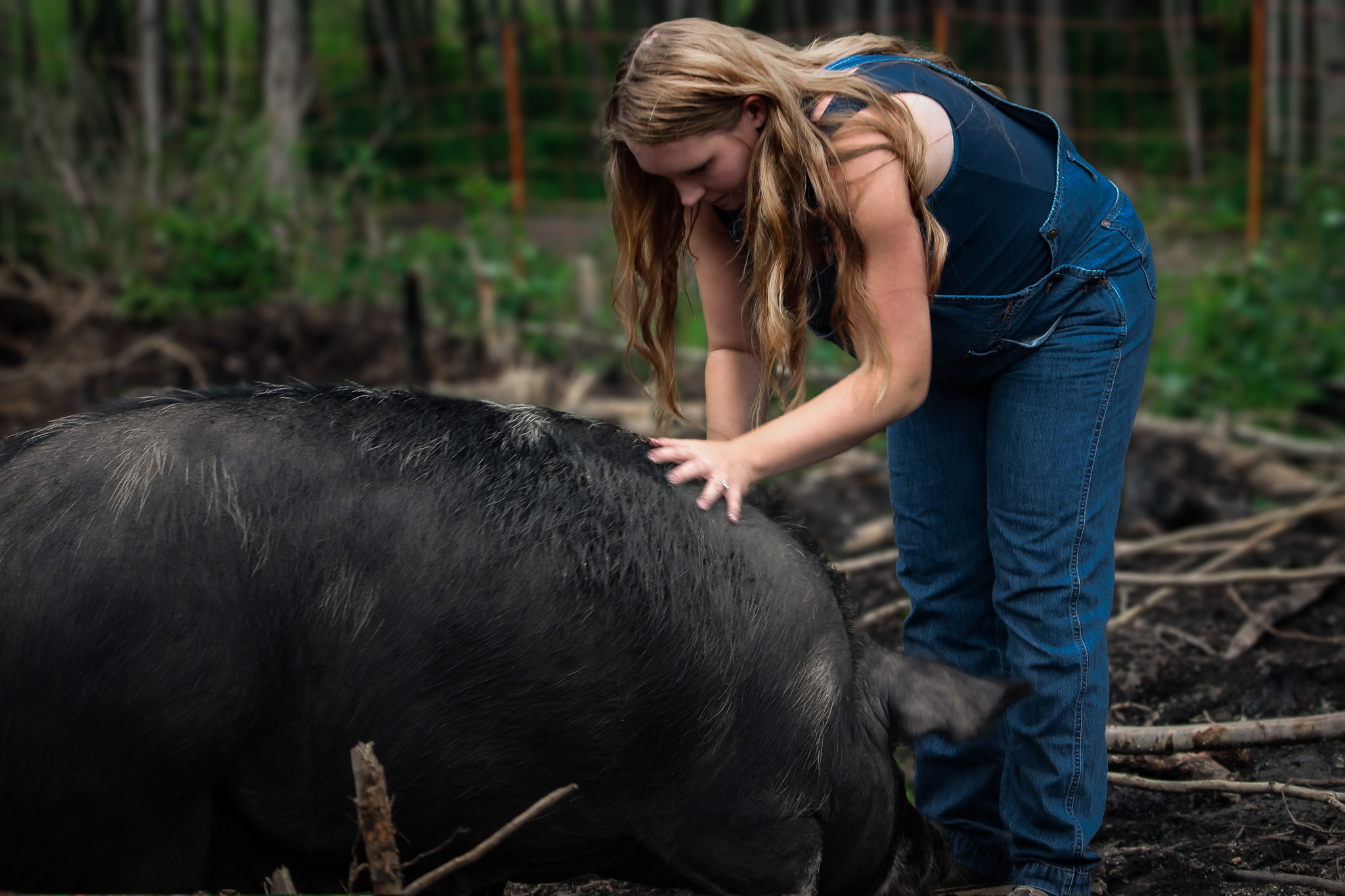
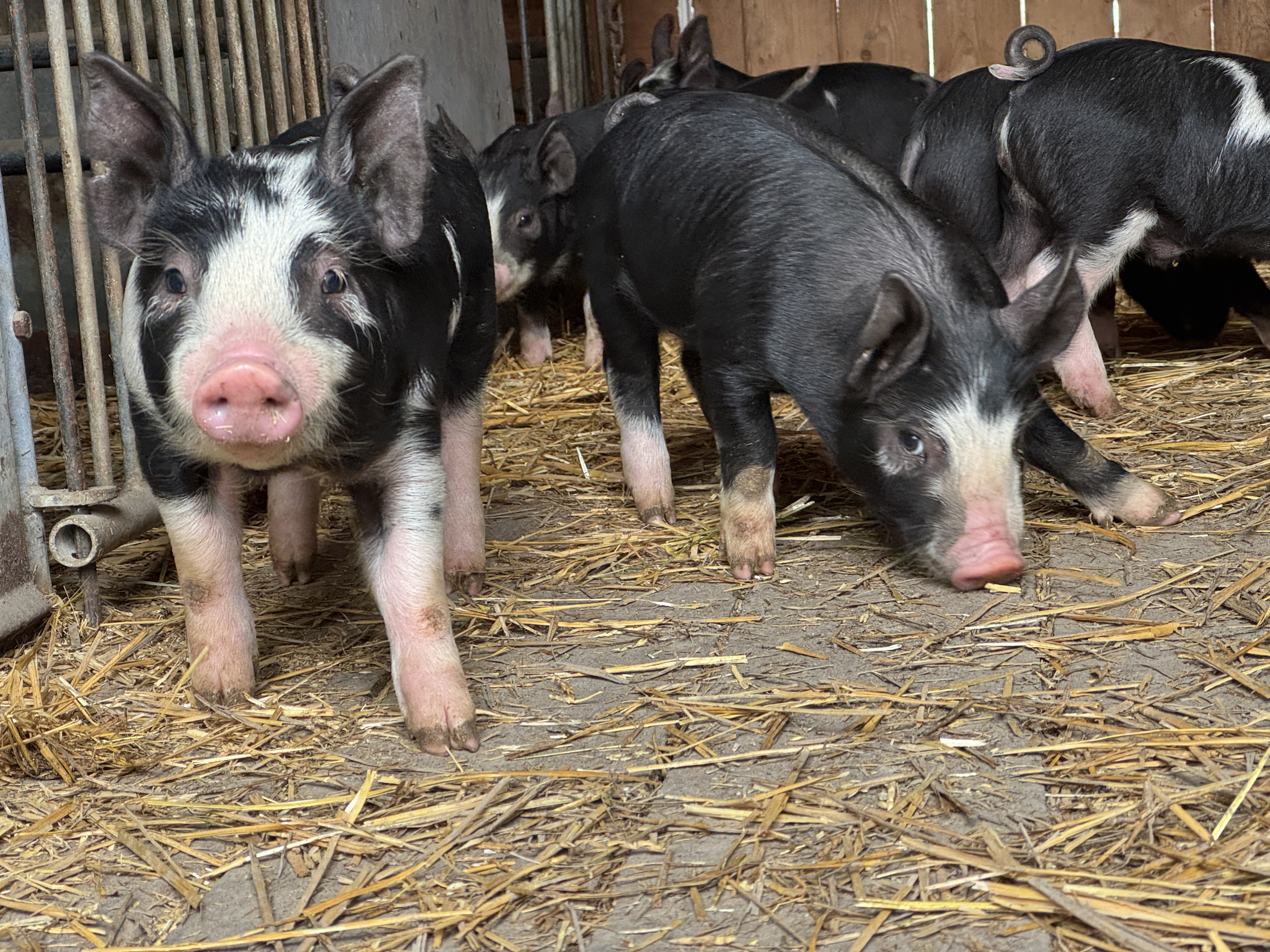
Photos supplied by Britney Jacob