
Strong prices and changes to loose sow housing rules have hog farmers giving the nod to hog barn renovations, said manufacturers during the Alberta Pork Congress.
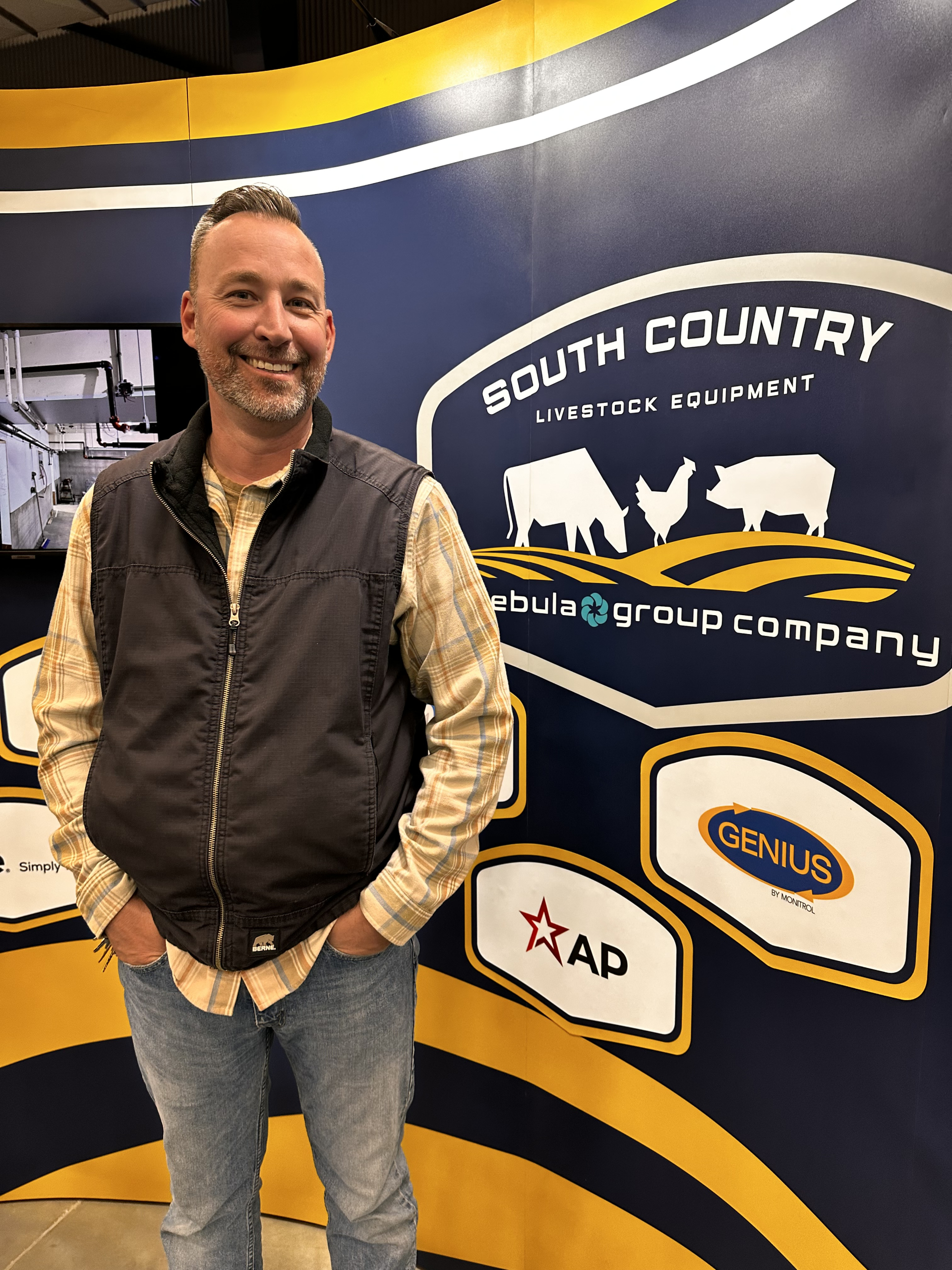
While few producers are building new barns, producers still in the business are willing to spend money to upgrade and update the barns, said Ryan Santrau of South Country Livestock Equipment, of Lethbridge, AB..
“Prices have been good for the last two and a half years and there is a deadline where people have to convert to loose sow housing in 2029. There is a lot of optimism, but also if you are staying in the hog business you have to update the loose housing.”
Santrau said they have added a lot of electronic sow feeding systems in the past two years to help reduce labour in the barns. Other producers have just upgraded the gestation barns to meet the new loose sow housing rules.
“There is a pile of work that is happening and more will be coming in the next couple years while the price is good,” said Santrau.
One of the determining factors to barn renovations is the age of the barn. Barns built in the 1980s are coming to the end of their life and are not likely to be renovated. Producers with barns built during this time will operate them until they can not. At that time, producers will make the choice to level the barns and rebuild, or exit the hog business, he said.
Barns built in the mid-1990s and later are more likely to be renovated. Those barns may get minor changes to allow the barns to continue functioning, or get a major renovation if they have a belief in the industry.
“We’re working with a colony that gutted three-quarters of the barn, poured all new pit floors, pit walls and completely renovated 90 percent of the barn. It is not super common. They depopulated three or four years ago and decided to go back in and went in hard.”
Rob Lawrence, of Fetura Cloud, said when producers approach their company, they have already decided they want to make changes to the barn, especially to the electronics and software systems.
“Where we shine is that everybody has a hardware product, but I think our software is superior to all of them. Many companies are owned by multinationals. Our CEO is also a programmer and head of technology. We can all build things, but our customer gets access to his brains. If they want to change something they just ask him,” said Lawrence.
Renovations are an easier decision now with strong prices, said Lawrence.
The farms that are investing in barns want to stay in the business long term. It is not a business that is easy to enter and exit.
“Colonies are not in and out. Often times when barns shut down it is a people thing because they are short of workers,” he said.
Adding electronic equipment to help ease the labour shortages is a way to lengthen a producer’s stay in the business.
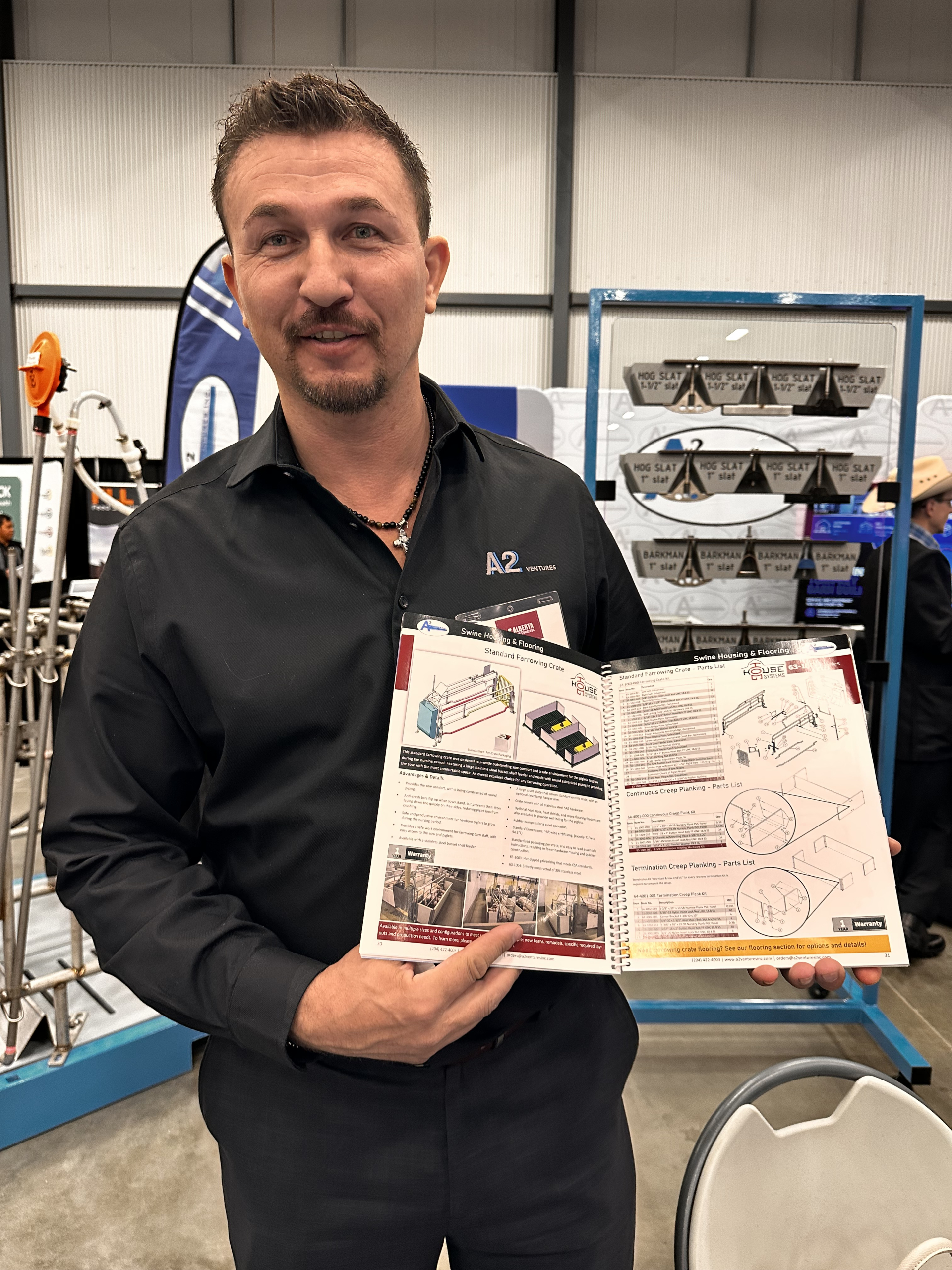
Andreas Stripling of A2 Ventures said they have customers that want complete barn renovations and others that just want to add doors to sow crates.
“If the customer wants to use the old crates or doors from old crates, but the rest are new we can design it,” said Stripling, of Dufresne, Manitoba.
Part of the key to Stripling’s success is the IKEA catalogue-like design. Just like the Swedish furniture maker, assembly instructions are included for all their renovated products.
“We try to make assembly as easy as possible.”
Stripling said he began his career after immigrating from Germany in 2006 doing odd jobs in hog barns and gradually moved to complete renovations for 34 Maple Leaf barns. Through the process, he realized communication is key for all the barn renovations. With English is not a first language for him, or many barn workers, he has tried to include serial numbers on all the products and detailed diagrams to make renovations easier.
“A lot of immigrants work inside the barn. It is hard for us because we barely speak English and they barely speak English. We need to put on serial numbers so it is easier to communicate.” •
— Mary MacArthur