If you are in agriculture and hear the word Herefords you are likely to think about the very popular beef breed.
But, there are Hereford pigs as well.
“Herefords are a medium-size hog that is unique to the United States. The developers had specific goals for type, color pattern, conformation and other qualities in mind when they created the breed. It was developed during the 1920s from Duroc, Chester White, and Poland China bloodlines,” details the livestockconservancy.org website.
“That same year the National Hereford Hog Record (now the National Hereford Hog Association) was formed to promote the new breed. Interestingly, the cattlemen of the Polled Hereford Cattle Registry were so taken with this new breed of swine and its color that they sponsored this new group. Within the first decade of its history, the association attracted 450 members. Most of those interested in the Hereford breed lived in Illinois, Iowa, and Indiana.”
While numbers declined through the 1960s, there are still dedicated breeders including Burnt River Ranch located in Saddle Hills County, about an hour north of Grande Prairie, Alta.
Britney Jacob explained Herefords are part of a rather diverse farm operation.
“We have a small farrow to finish swine operation and also sell weaners, a few jersey dairy cows and beef cows, ducks, about 40 laying hens, meat chickens; and Haflinger and Haflinger x horses,” she said. “We also use Šarplaninac dogs as livestock guardians.
“We have found that our diverse variety of animals are all correlated in some way. The pigs and chickens grow extremely well on the excess milk from the dairy cows, and we are able to feed our family and many others with very nutritious food grown here on our farm. The horses are broke to ride and drive; and we use them to check fence and do other chores around the farm like hauling firewood in the winter time.
“And lastly, the dogs have an important job of keeping all the livestock safe from predators. Our farm backs right onto a river which is a major wildlife corridor and it means our predator pressure can be fairly high.”
It’s a diverse mix for a couple which did not exactly have deeply shared farm roots.
“I (Britney) grew up on a commercial cattle farm, but my husband (Cole) was not from a farm. Luckily we both shared the same passion for farming,” she said.
The farm website (www.burntriverranch.com) notes; “Homesteading is our passion. “We follow the traditional farming practices handed down to us from our grandparents, while also implementing new ideas and technologies …
“Our mission is to provide our local community with ethically-raised products from our farm; free-range eggs and, grass-fed pork & poultry.
“We also enjoy educating the public about what we are doing with our YouTube channel and other social media pages.”
“We bought our bare land in 2018 and have been busy building it since then.”
As for the Herefords Jacob said it wasn’t exactly planned to get into the breed.
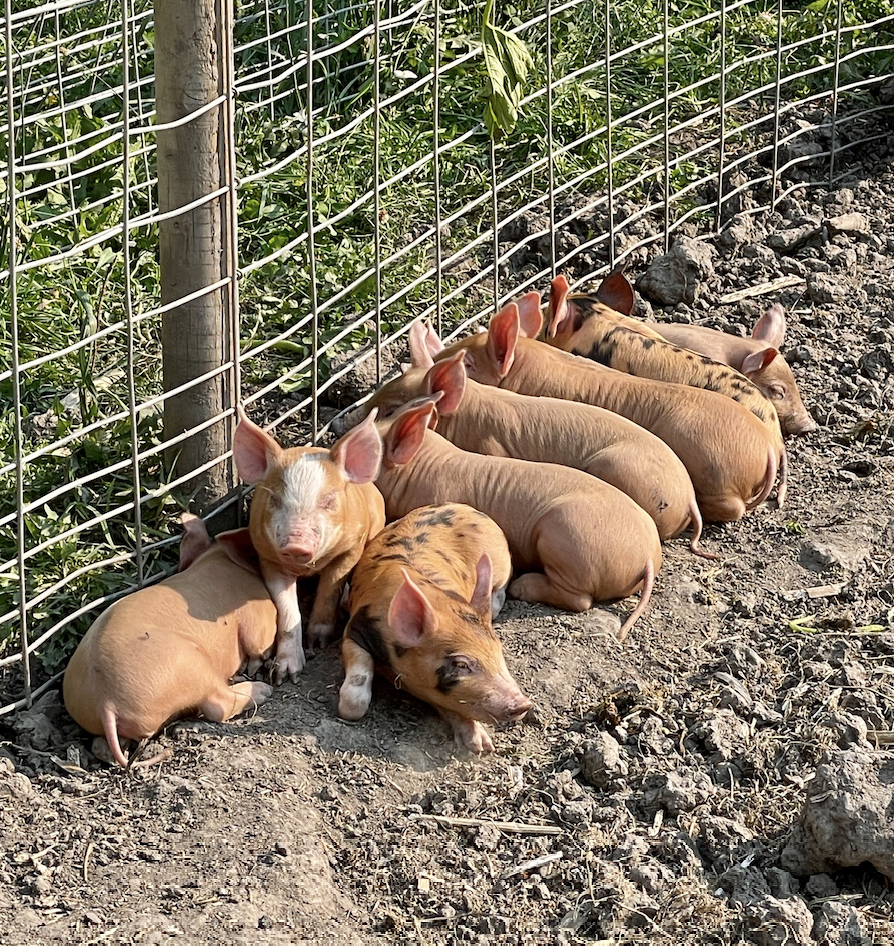
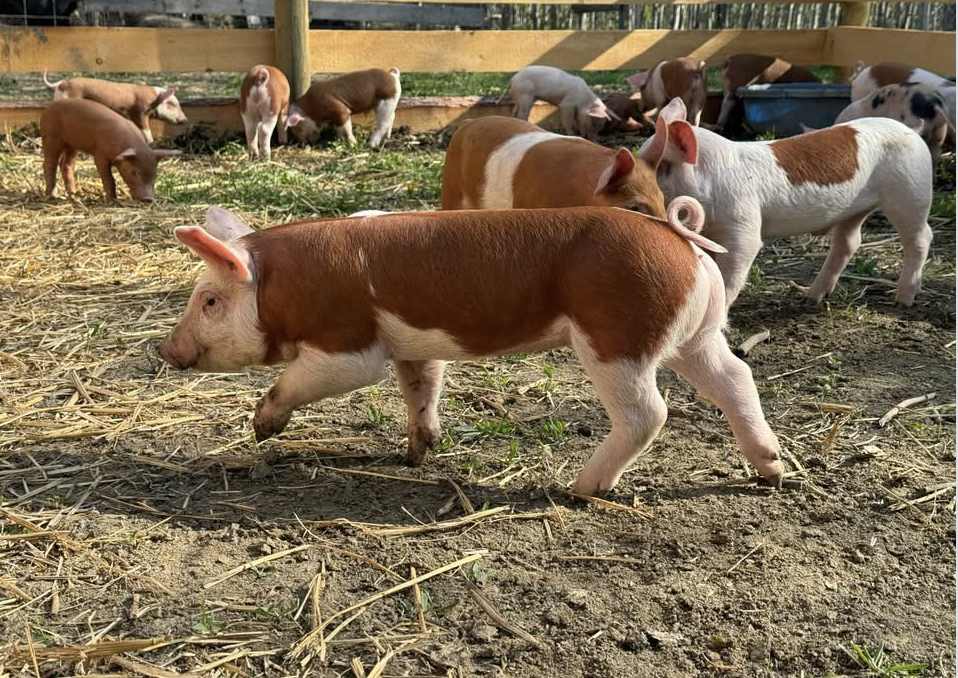
“We never intended to get this far into pigs when we first started our farm but they have grown to be our main farming venture,” she said. “Now I can’t imagine us not having them.
“We raise mostly Herefords and Hereford x Berkshire though some of our sows have Hampshire in them.
“We keep 12 sows and a couple boars.”
While maybe not the most widely known breed, Jacob said initially it wasn’t Herefords from the outset of adding pigs to the farm operation.
“They were not our first pigs but we soon got them,” she said. “We started with local stock that we could find which was Berkshire x Hampshire and other Berkshire crosses.
“The Herefords caught our eye with their striking appearance and nice-looking conformation. The rest is history!”
Jacob said they have found Herefords fit what they are doing on their farm.
“Herefords are efficient growers, with excellent carcass quality,” she said. “They are a lean pig but still provide a flavourful meat. They cross very well with other breeds as well.
“Generally, they also have nice temperaments and are hardy in our cold climate. Plus; they are just such a nice pig to look at.”
So, what is about Herefords that makes them a fit in their operation?
“They are very adapted to extreme climates and do well in our outdoor setup. Their popularity is growing and we enjoy promoting the breed,” said Jacob.
Their website adds details.
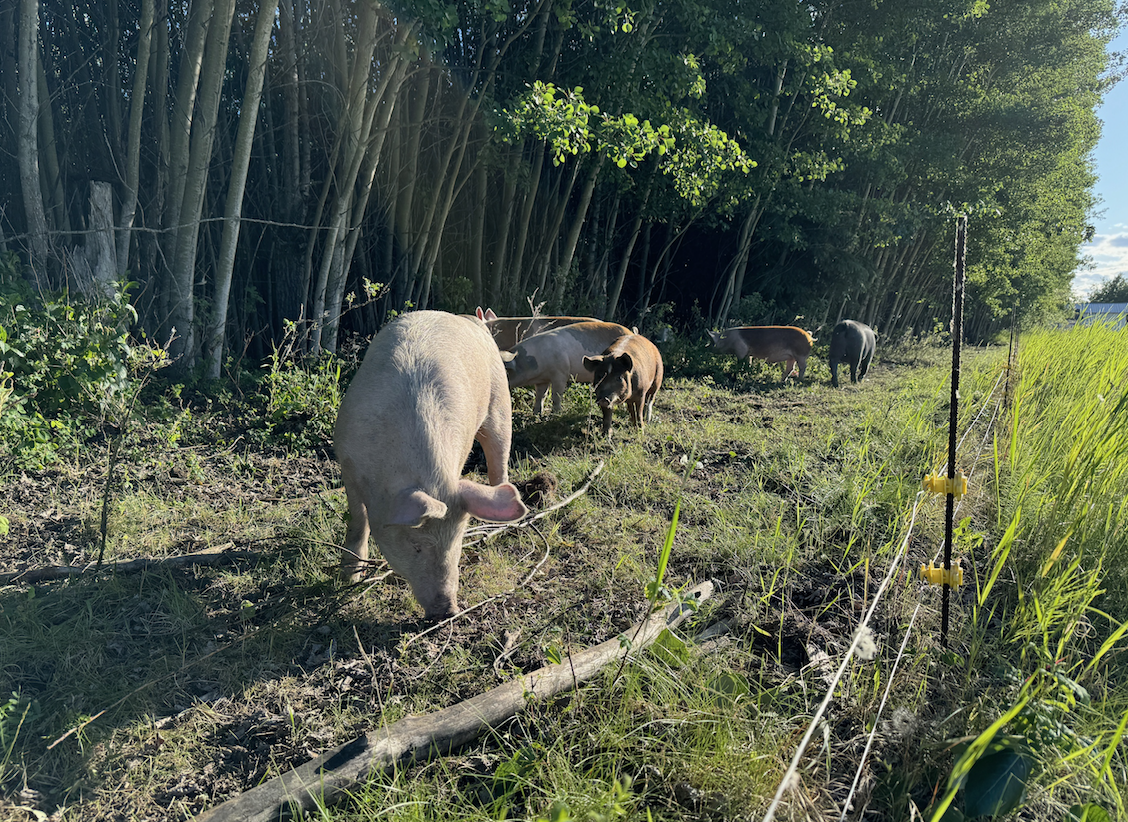
“We are big believers in allowing all of our animals to live the most natural lifestyle possible,” it notes. “In the summer months, our poultry and pigs are rotationally grazed in both the pasture and the forest while being supplemented with grain. They live a stress-free life while they enjoy exploring, scratching or rooting for insects, roots, forage etc.”
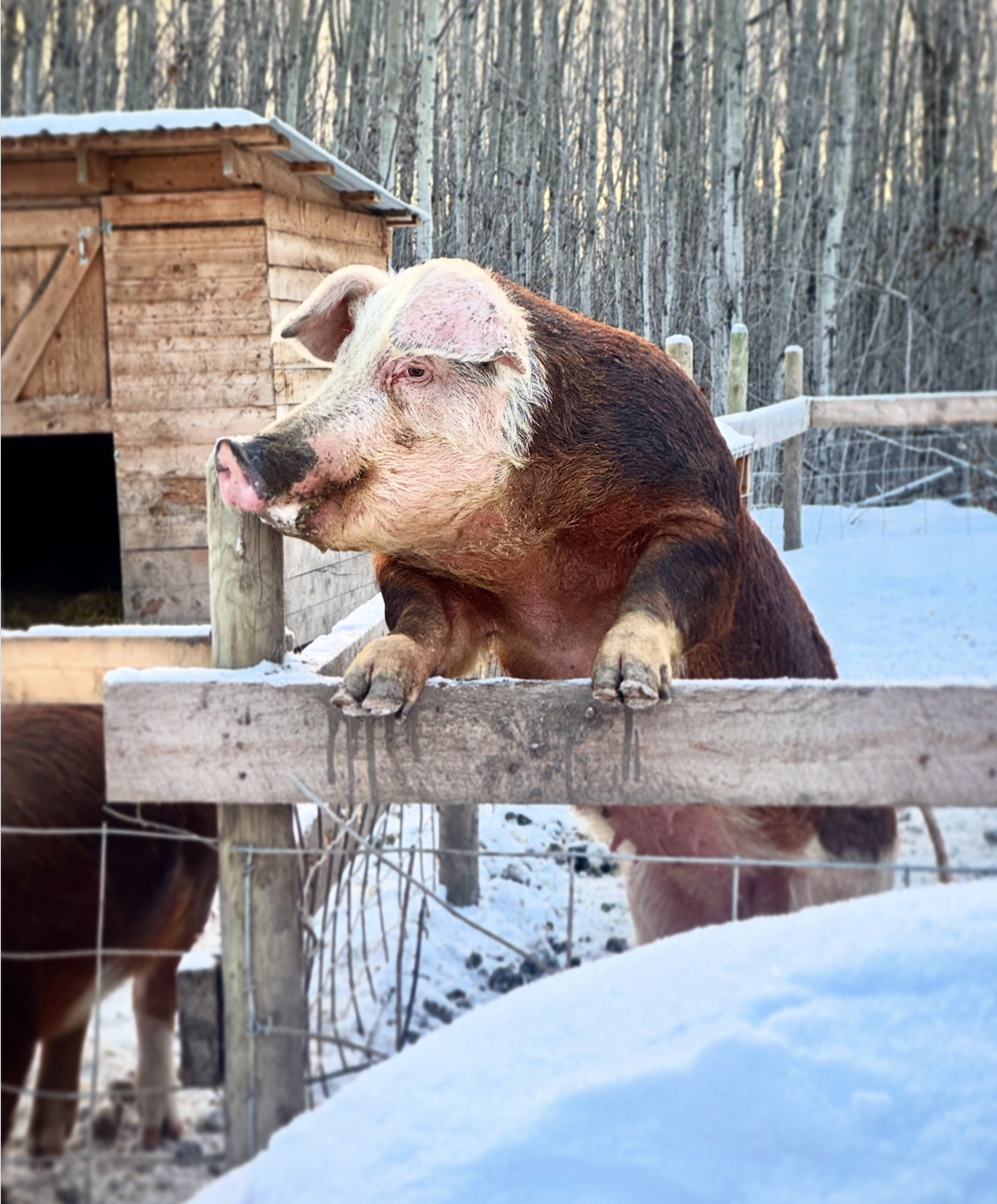
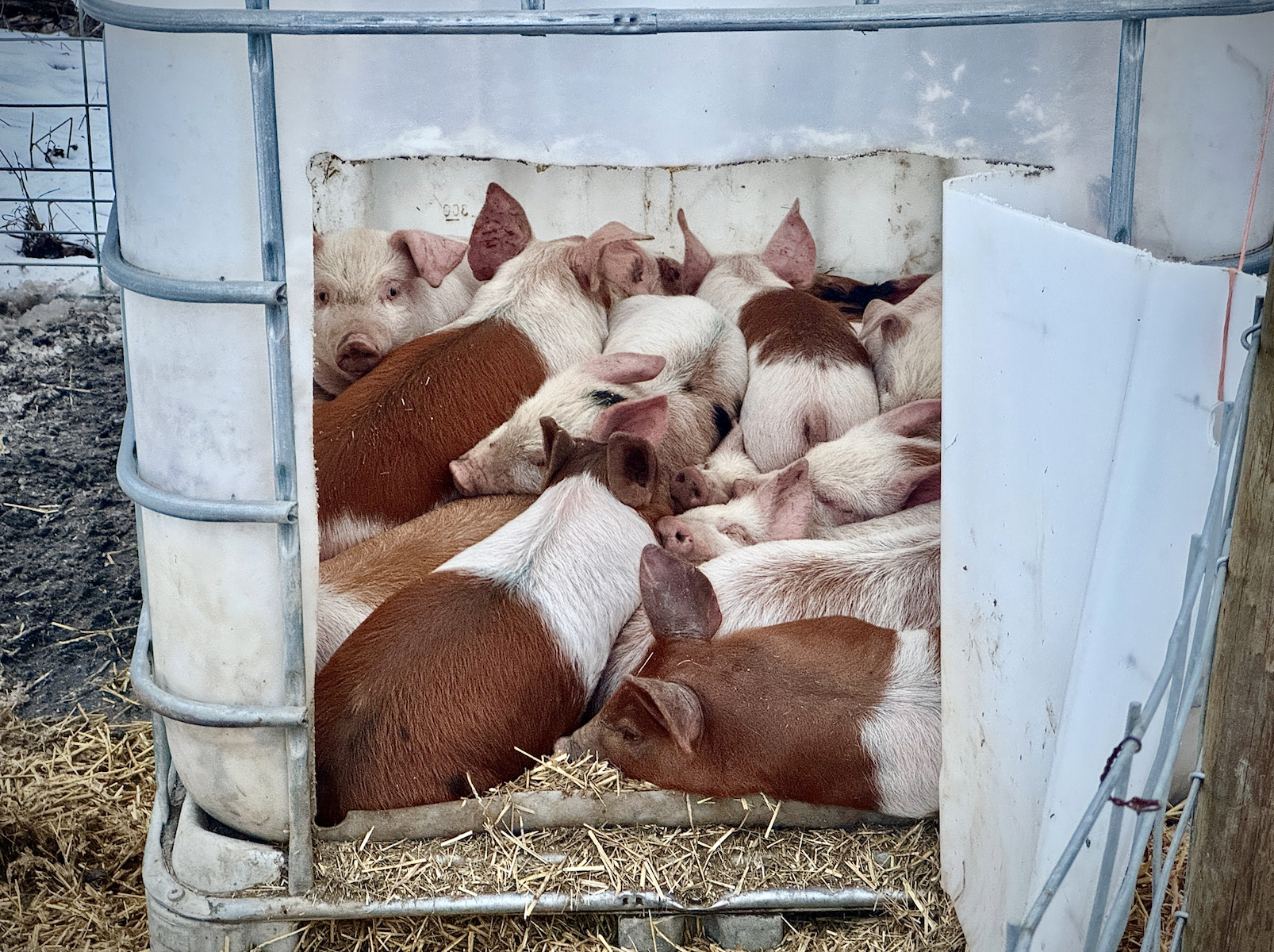
The Hereford’s name was inspired by its strikingly beautiful color pattern of intense red with white trim that resembles the coloration of Hereford cattle. The breed description calls for hogs to be primarily red, with a white face and two or more white feet. The shade of red can vary though deep red is preferred, details livestockconservancy.org
While liking Herefords the breed does have its challenges in terms of bloodlines.
“At this point we are not registering our stock, as we have really struggled to find an unrelated line to breed to,” said Jacob.
“There are only a couple of lines in Canada, and we have noticed that due to that; there seems to be a lot of inbreeding within this breed here. Part of it is due to not registering and not knowing lineage, which is hard to enforce as there is not a large market for registered pigs among our market of people wanting to raise their own meat, but that’s not the only issue.
“The bigger issue is a lack of genetic diversity in general. We have extensively looked into importing new lines into Canada, but our country makes it incredibly challenging to import new swine in.
“Due to these issues, we have started to see a lot of fertility issues popping up in boars especially, but also sows.”
The Herefords need to be hardy at Burnt River Ranch too.
“Farrowing pigs in our cold climate also poses its own challenges,” said Jacob.
“We raise outdoors but farrow inside of a barn as we begin farrowing in February.
“Our feeder pigs are raised on large pastures in the forested areas on our property during the summer.
“We currently feed everyone a custom grain ration twice per day, so it can be labour intensive and ties us down, but we find this is the best way to properly ration our breeding herd.
“We sell strictly direct to consumer, through whole and half hogs, variety boxes, and we also sell to a local restaurant in Grande Prairie a few times a year.”
Looking to the future Jacob said they hope to grow Burnt River Ranch.
”We are definitely always looking to grow, to improve our operation and improve the Hereford hog,” she said. •
— By Calvin Daniels
all photos supplied