
As the date gets closer to new regulations that limit the use of zinc oxide in nursery pigs in Canada, pork producers are exploring ways to keep their pigs healthy without zinc in the diet.
By June of 2026 pork producers must reduce the amount of zinc oxide in pig diets from its current level of 500 ppm to 150 ppm. Zinc oxide had been used in piglet diets because of its positive benefits on pig growth and intestinal health.
Concerns have been raised about zinc, a heavy metal, being excreted from the diet and accumulating in the environment. It is also believed to spur antibiotic resistance.
“Around the world more countries are putting regulations on the use of zinc oxide,” said Ethan Stas, a swine nutritionist with Pipestone, a US swine nutrition company, during a pre-conference session at the Banff Pork Seminar.
US pork producers are currently still able to use pharmacological levels of zinc oxide from 1500 to 3000 ppm because of its positive benefits on pig growth and intestinal health, he said.
For years nutritionists recommended zinc in the diet as an effective way of protecting the piglet’s gastrointestinal tract by reducing inflammation as well as stimulating feed intake.
In studies with the Advanced Swine Nutrition Team at Kansas State University, Stas looked at not just zinc in the diet, but ABC-4, or Acid Building Capacity at a pH of 4. What Stas learned was low ABC-4 diets help the performance of piglets when zinc oxide is removed. Low ABC-4 formulation diets improve fecal dry matter and can recover some growth performance lost when zinc was removed from the diet.
With zinc soon to be eliminated from the tool kit in Canada, some producers and nutritionists are looking across the ocean to Europe where zinc has been eliminated in piglet diets since 2022 after a five year phase out period.
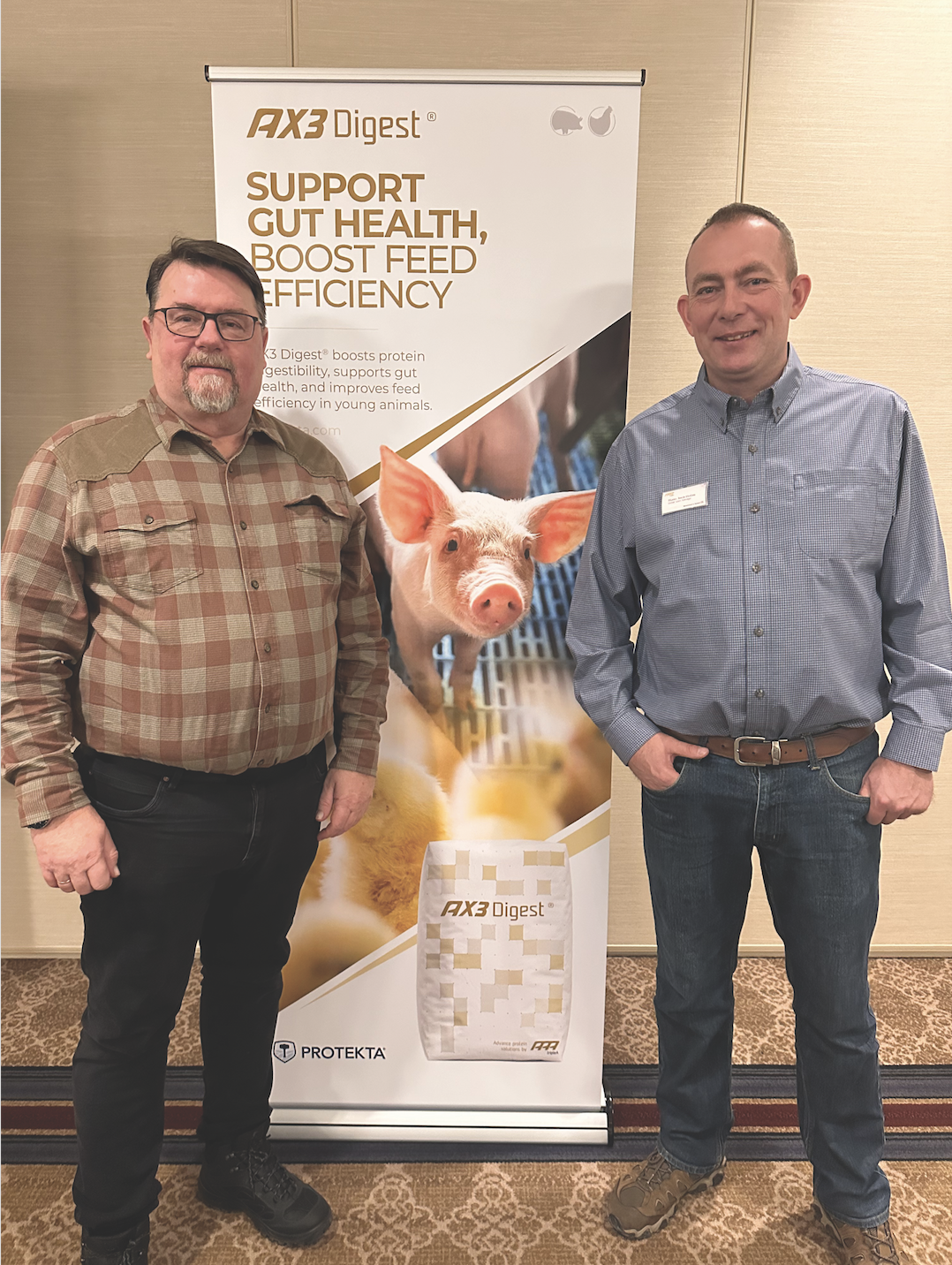
It was during that time Danish pro producers turned to AX3, a soluble soy protein developed in their own country that has helped pork producers transition from a no-zinc diet without getting diarrhea or losing their feed conversion efficiency.
The product is used in starter pig rations and significantly reduces the risk of diarrhea while maintaining high digestibility, said Hans Jorn Holm, global salesman for Triple A, the company that produces and sells the product.
“I speak to farmers all over the world. Any farmer you speak to say if their pigs have a good start they have a good ending. This is one of the reasons this product has become more popular because in a world where we see an ever increasing amount of piglets per sow, nutrition becomes more important,” said Holm, during a pre-conference event at the Banff Swine Seminar.
“In Denmark we don’t use zinc and we use very little antibiotics.”
Lars Kristensen, head of sales with Hornsyld Kobmandsgaard, Triple A’s parent company, said they started promoting the product with 25 of Denmark’s largest pork producers. Denmark has about 3,500 hog producers, about one million sows and produces about 30 million pigs a year.
About half of Denmark’s weaning pig diets now include AX3 as a weaning protein. Veterinarians doing their monthly health checks on pig farms saw the success of AX3 in the piglets and spread the news to other producers, said Kristensen.
The additive ensures 80 percent of the protein in the diet is digested within 30 minutes which means there is less protein left in the manure to create problems and diarrhea.
“It is very important for the little pig that they can quickly and easily get to the protein.”
Holm, said AX3 isn’t a magic solution, but part of a good management plan for ensuring herd health.
“I often say you can feed them old newspapers if you feed them zinc oxide, but if you don’t have zinc oxide then you have a new situation then there is nothing better than this product.” •
— By Mary MacArthur