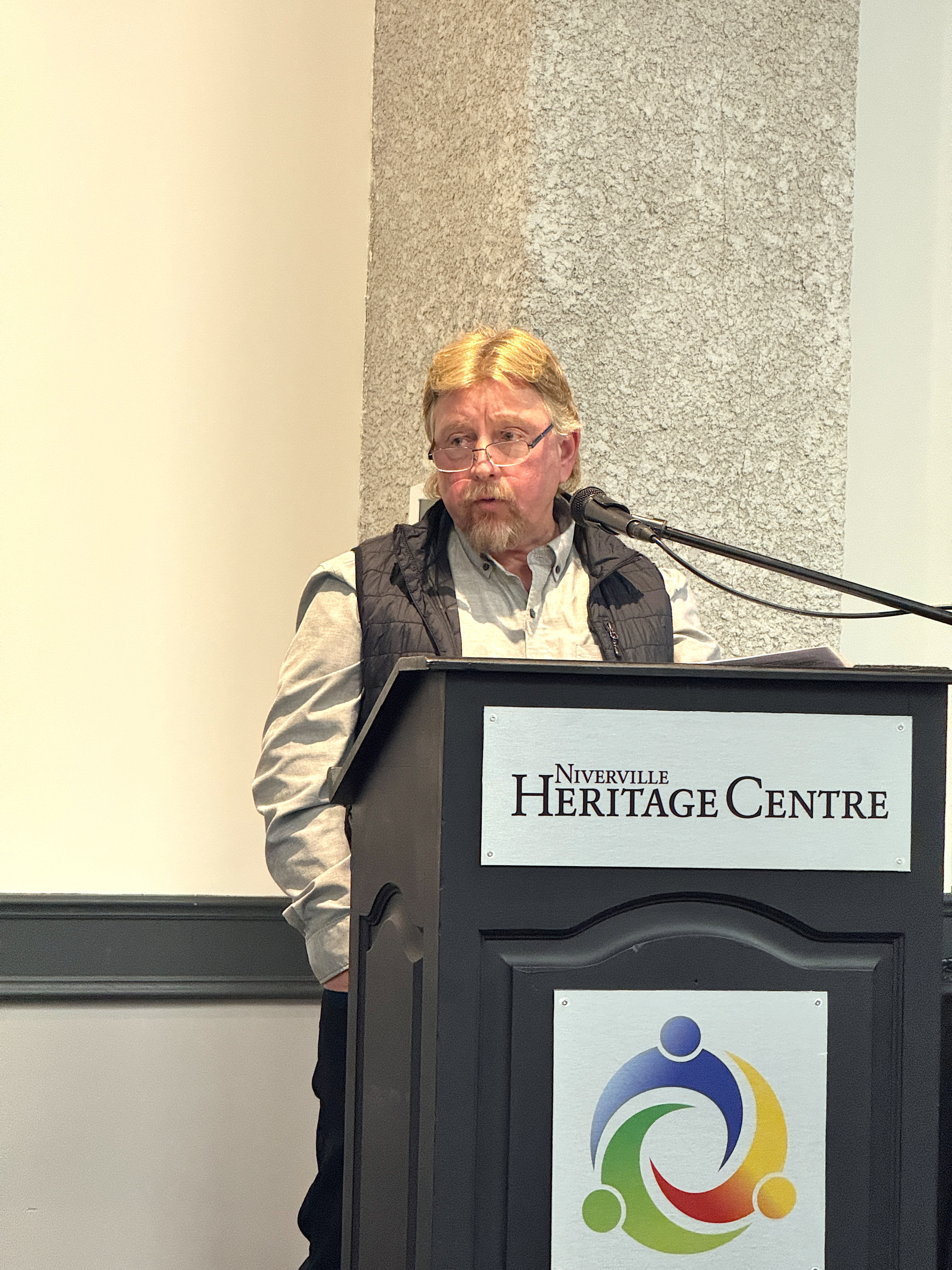
Rick Bergman, vice-chair of Manitoba Pork, laid out the pressures facing Manitoba’s hog sector and the work needed to protect its future. He said the province exports about 90 percent of its pork, so any disruption hits producers immediately. Open markets keep barns operating, plants running, and communities employed.
Bergman said challenges grew far more complex since his early days in farming. “When my wife and I started farming in 1987, we were dealing with things like bullnose or rhinitis. It seemed serious at the time, but compared to today’s pressures—disease management, trade instability, and protectionism—it looks small,” he said. Today’s environment forces producers to respond to global shifts that often occur without warning.
He said protectionism remains one of the sector’s biggest threats. COOL sits high on the list as the United States prepares a voluntary labelling regime that can still discriminate against Canadian pigs and pork. Bergman said state-level actions such as California’s Proposition 12 add more uncertainty. “The protectionism in the U.S. isn’t limited to one party,” he said. “It affects Canadian pork directly.”
Bergman pointed to rising friction with major global partners. He said China’s tariffs on Canadian pork and canola came after Canada imposed tariffs on Chinese electric vehicles, steel, and aluminum. “Play stupid games, win stupid prizes,” he said, stressing that political decisions carry real consequences for producers already coping with tight margins and market volatility.
To push back against uncertainty, Manitoba Pork continues to strengthen outreach. Bergman said the organization maintains strong relationships with major U.S. buyers in Iowa and Minnesota. It participates in federal trade missions such as the recent one to Mexico led by Agriculture Minister Heath MacDonald. Manitoba Pork also remains active in the Tri-National Accord with the U.S. and Mexico, working on animal health and cross-border cooperation. “Keeping markets open is one of Manitoba Pork’s top priorities,” he said. “It drives much of our advocacy work with both the federal and provincial governments.”
He said provincial relationships help the sector make progress. Bergman credited Manitoba Pork’s engagement with Premier Wab Kinew and cabinet ministers for influencing a letter from the premier to the prime minister supporting the pork sector.
Labour shortages continue to add pressure. Federal immigration cutbacks aim to ease housing problems in major cities. Still, Bergman said those policies hurt rural communities that rely on skilled and semi-skilled workers for barns and processing plants. “The right policies for Montreal or Vancouver don’t work for Steinbach, Brandon, or southeastern Manitoba,” he said. Manitoba Pork continues working with the premier and ministers to keep rural labour needs on the national agenda.
Public trust, environmental stewardship, and animal welfare remain essential to the industry’s ability to grow. Bergman said outreach changed the sector’s image. “There was a time when our sector had a black eye in this province,” he said. “Now it’s recognized as a driver of Manitoba’s economy.” Manitoba Pork continues meeting with municipal councils to explain the value of hog production and prevent misunderstandings that stall barn projects. He pointed to a recently denied 6,500-sow project in North Dakota as a reminder of how quickly opposition can shut down growth.
Bergman said the sector faces real uncertainty, but he believes strong advocacy, producer engagement, and solid partnerships help Manitoba’s pork industry stay resilient, export-driven, and focused on long-term success. •
— By Harry Siemens