danish entries, showers and an office to ensure
top-notch biosecurity.
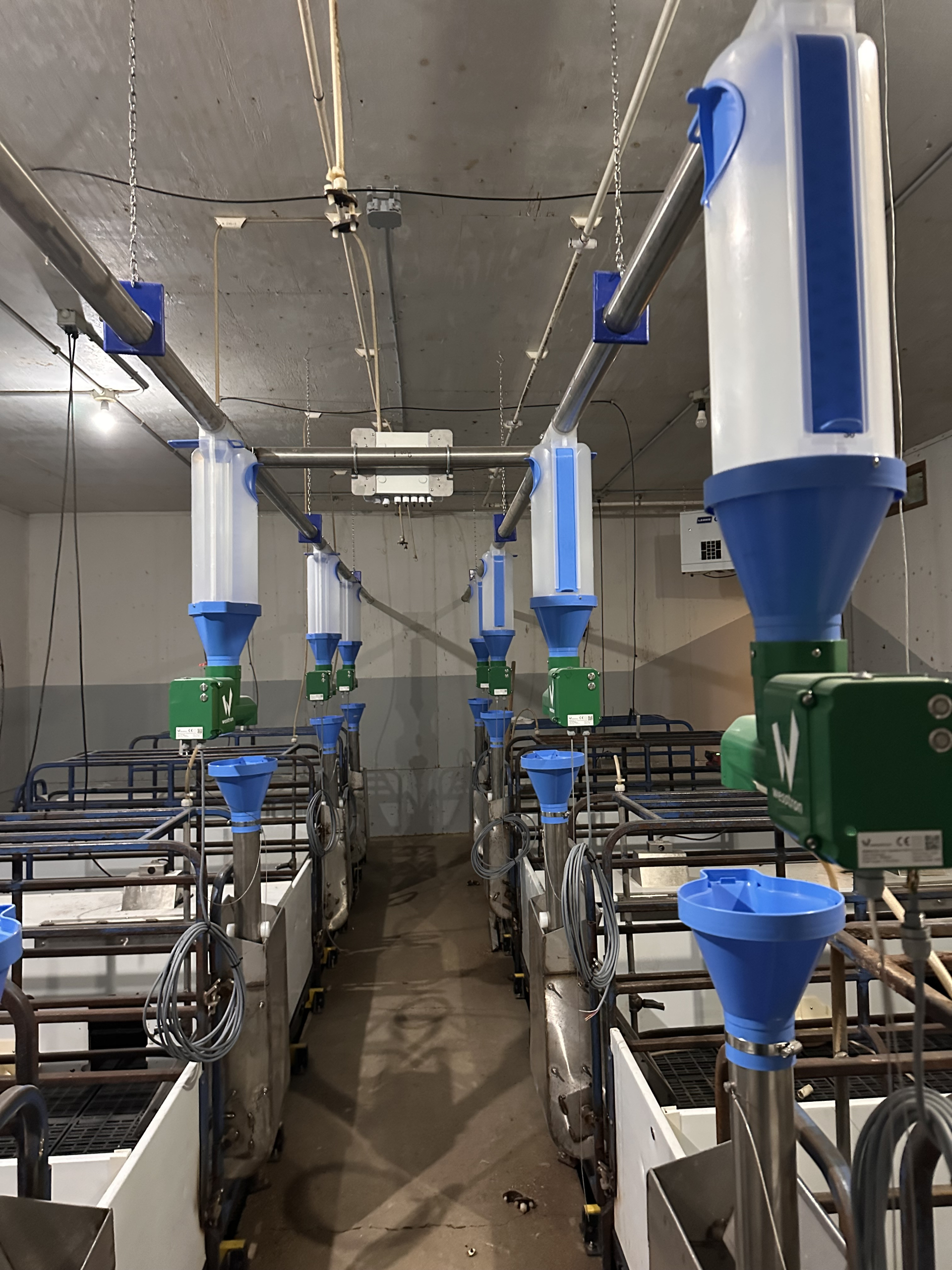
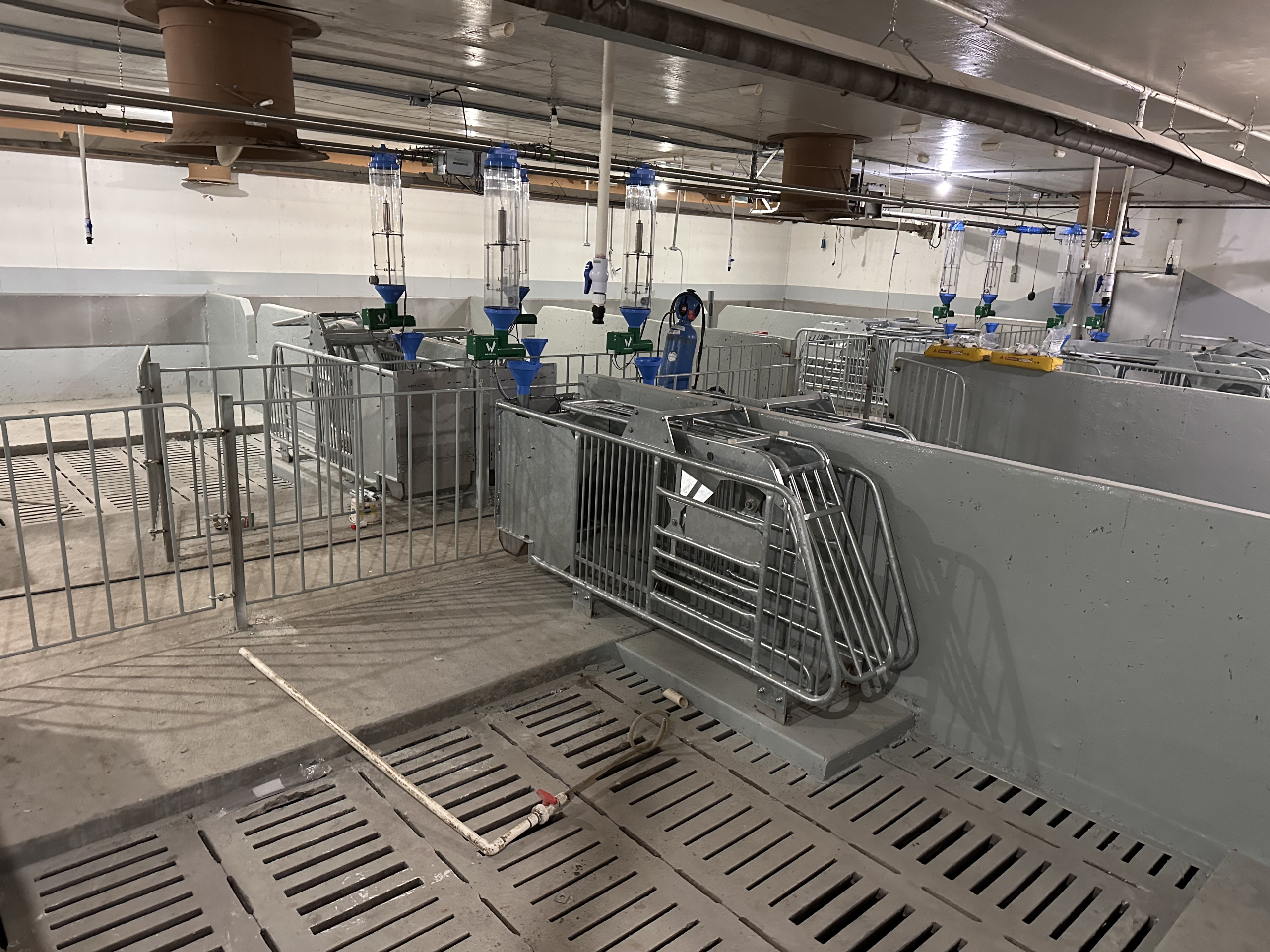
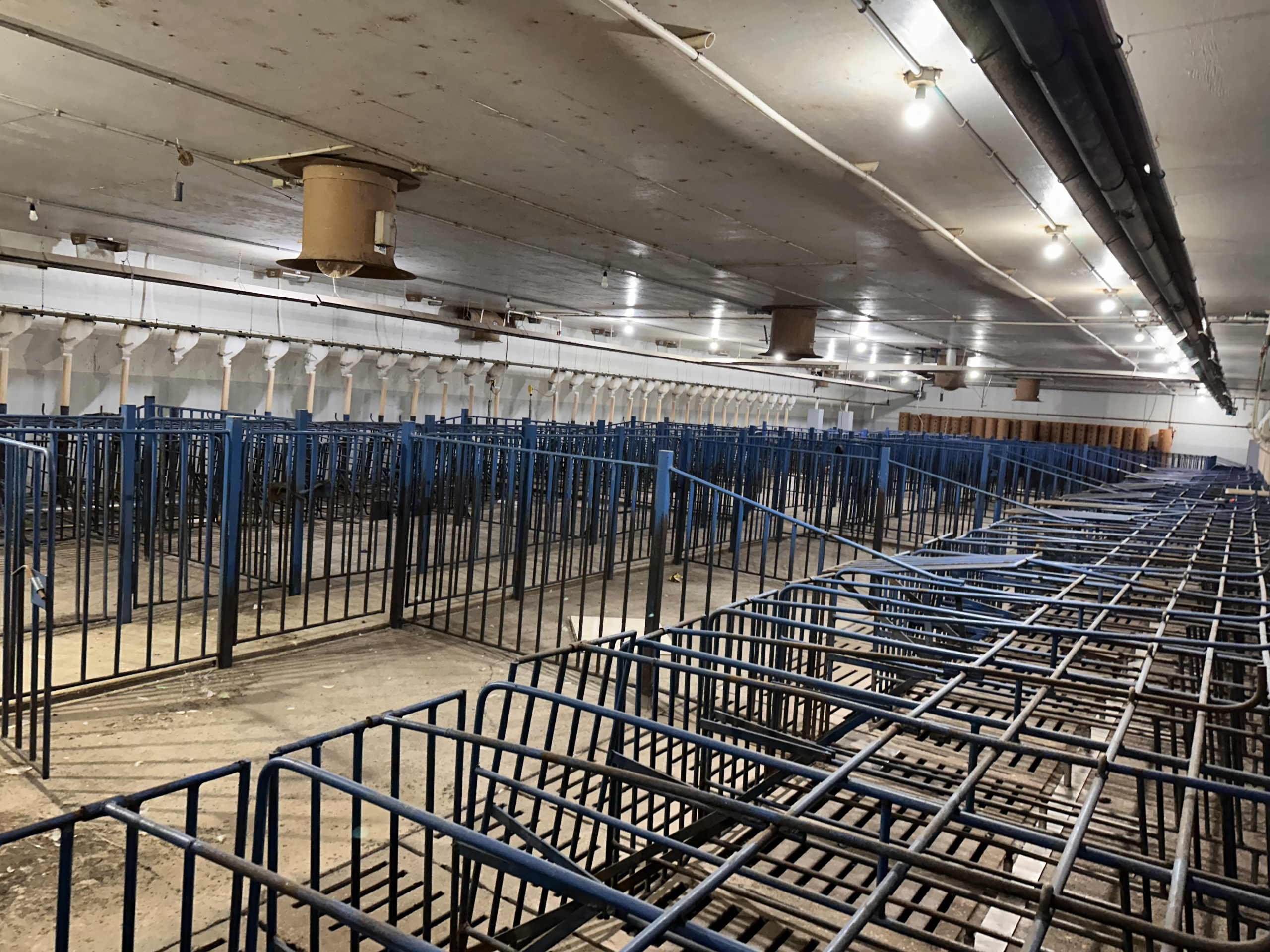
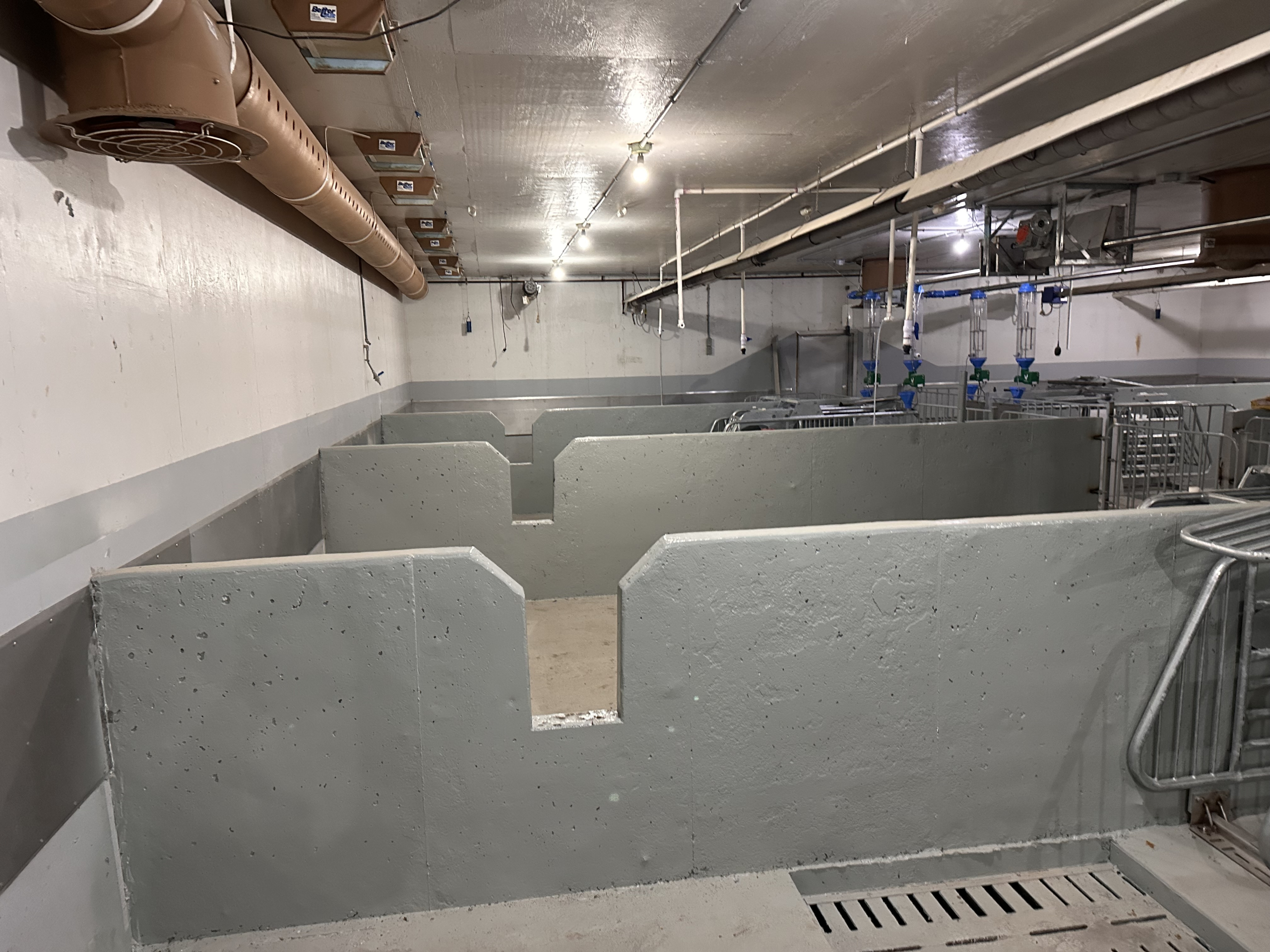
The Keho Lake Hutterite Colony knows a barn renovation will meet new requirements for dry sow housing, reduce labour and lower disease in the herd.
Upcoming changes to loose sow housing regulations that require dry sows to be housed in group pens was a key decision that needed to be made if the colony was to continue raising pigs on their southern Alberta farm.
The new construction will also decrease the risk of disease outbreaks in the barn, especially PRRS, porcine reproductive and respiratory syndrome, that had recently plagued the herd.
“We tried everything under the sun to eliminate it, but we could not get a handle on it. Some weeks we thought we had a handle on it, but other weeks you would almost tear your hair out,” said Joe Wurz, hog barn manager.
“In the nursery the mortality was sometimes up to 20 percent. You didn’t want to get up in the morning.”
With the barn now emptied of pigs, washed and new bio-security measures planned, Wurz knows they can reduce the disease in the barn.
When the colony made the decision to upgrade the dry sow housing, they also decided to upgrade other parts of the barn, including automating the feeding systems and improving bio-security.
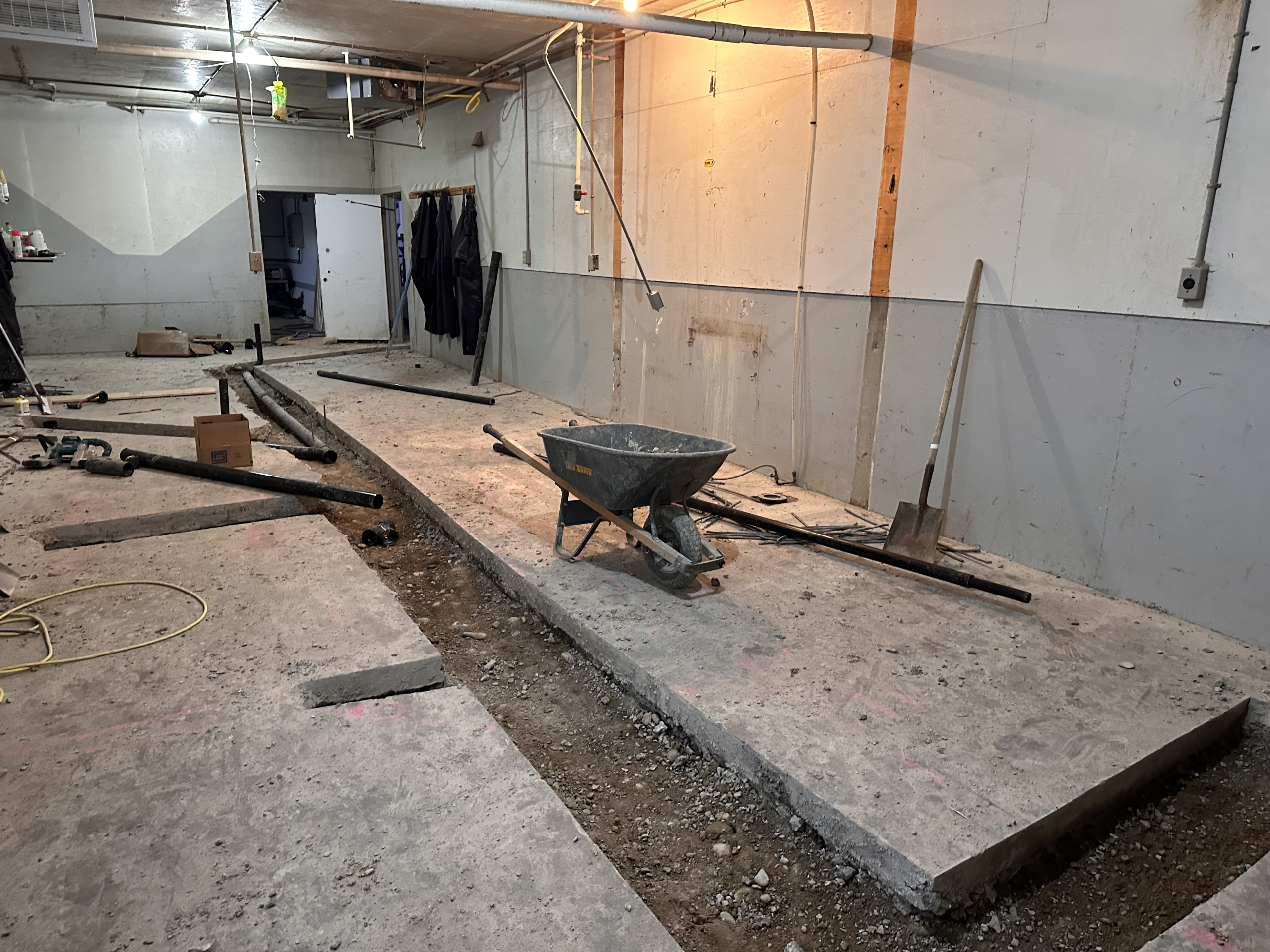
In the former entrance will now be a danish entry, fumigation room, two showers and a second danish entry after leaving the shower. All tools, equipment or vaccines will pass through a fumigator before entering the barn.
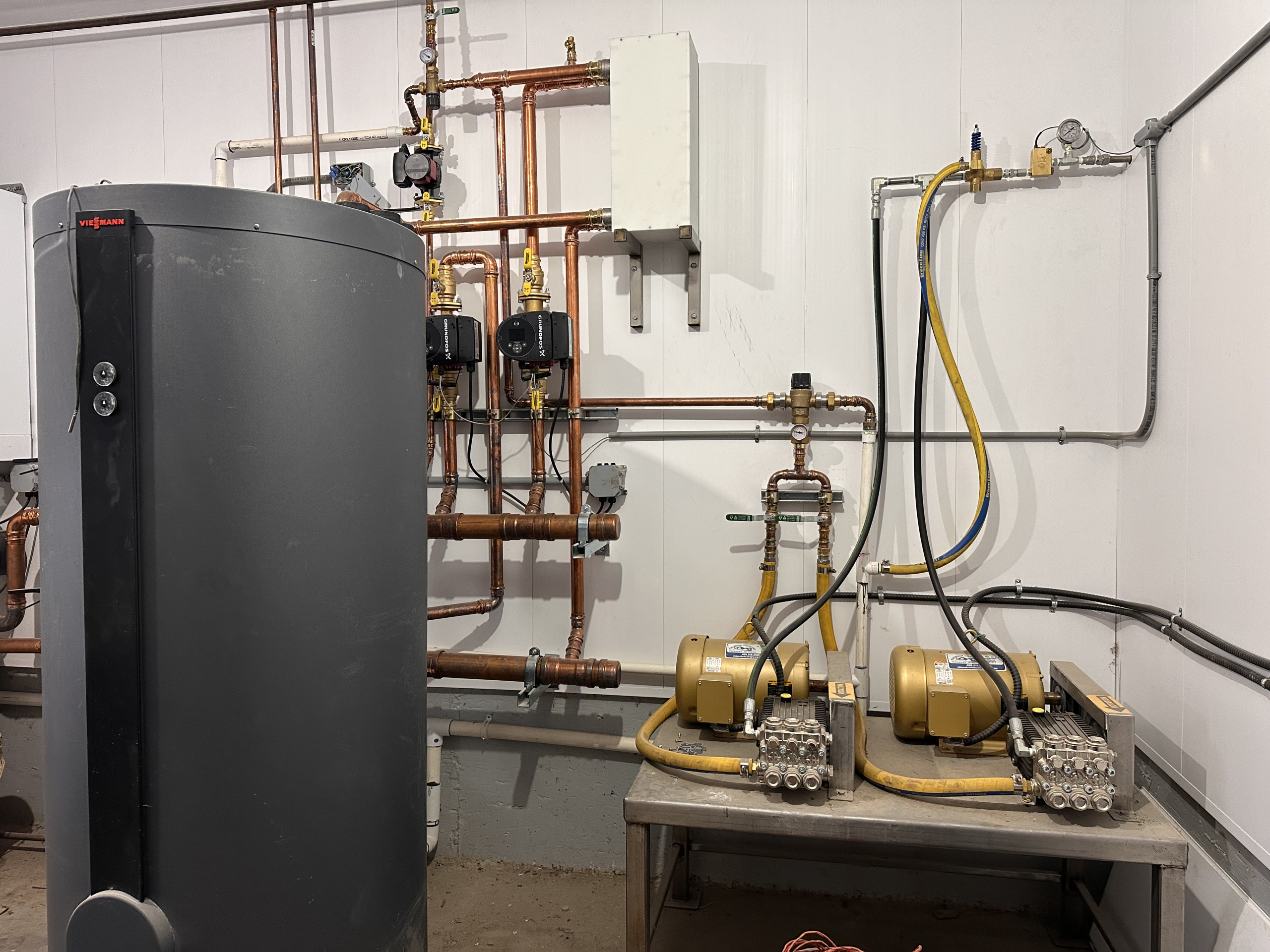
All the water drained from the office area and showers will bypass the barn septic system as one more barrier to viruses entering the barn. New hot water tanks and pressure systems were also added to the aging barn.
“Everything that enters the barn either has to go through the showers or through fumigation. There is no entrance before showering,” said Wurz.
It was almost a year ago the colony began exploring options to upgrade their barn, said George Wurz, the former hog barn manager and now the farm manager. After dozens of phone calls and planning, the colony settled on Fetura, a hog barn equipment software from Poland. Instead of scooping feed by hand each day, the new electronic feeding system will drop the feed automatically in front of the pigs.
“Up till now we had to hand feed the sows. Now we don’t have to be there. Now when you are there you can do more important things like taking care of piglets, fostering piglets. The most important things that make you more money in the long run versus hand scooping feed. That is a no brainer,” said Joe Wurz.
George Wurz added: “The technology is one of the best. All you have to do is enter a room and on each feeding system is a green light or a red light. If you go to the dry sow room and if you open a door and if everything is green you really don’t have to do much. If it’s red you know there is a problem at the station. That was an eye opener for us.”
The automated feeding system will allow the pigs to eat when they want and not force staff to come back on a summer’s evening to feed pigs when it is cooler and the pigs are ready to eat.
“In the summer it is hot in the barn and sows won’t eat during the day so it is a night time feeding in the barn. If you have married couples and children to look after you don’t want to go to the barn and feed anymore. This system does it all automatically. If the sow wants to eat she gets up and the feed gets dropped down to where she needs it and it is monitored according to temperature and when she wants to eat. Most sows will eat when they are most comfortable,” said George.
The death of the hog barn manager forced the colony to make changes. With one less person in the barn, staff did not have enough time to do all the work required.
“We will have the same amount of guys now, but the work will be done more efficiently. And you will be able to do stuff that is more important than feeding sows,” said Joe Wurz.
Originally the plan was to only upgrade the dry sow barn to loose sow housing with the new electronic equipment, but the lower prices of the electronic feeding and monitoring equipment from Poland allowed the colony to add automatic feeders to the farrowing barns as well.
Joe Wurz estimates it cost about $100,000 for the electronic equipment for the sow stations, farrowing feeder drops, chain discs and sow RFID ear tags. It was another $100,000 for the rest of the barn renovations. They estimate it will take two to three years to pay for the changes, but also make it easier to raise the pigs.
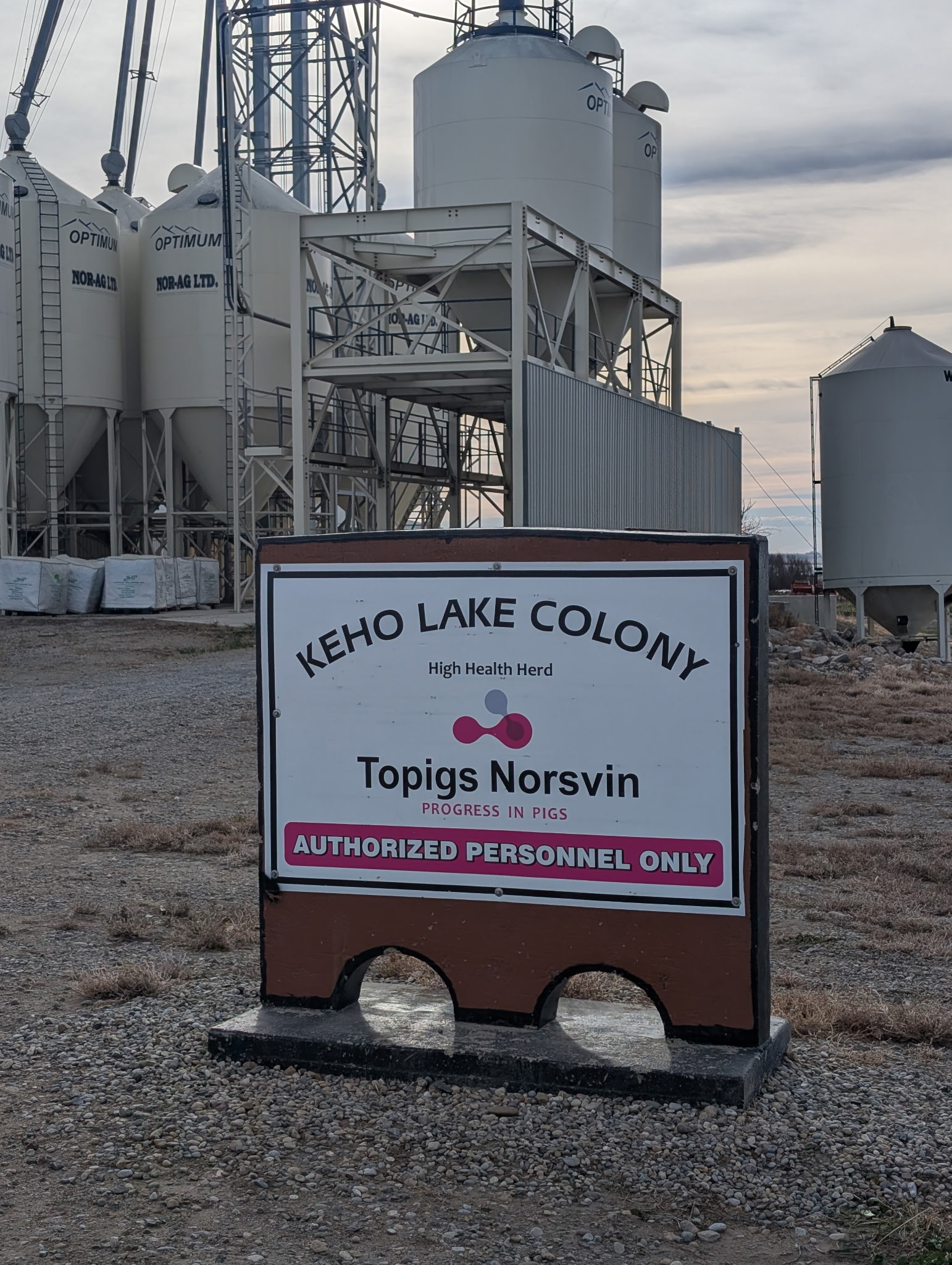
Planning of the new barn started in February and construction began in July. With the barns emptied of pigs, the dry sow room was emptied of the old equipment, the concrete was poured for the new group housing and new feeding equipment added. Over the next few weeks, the entrance work will also be complete and they can begin repopulating their 220-sow herd, the same number of Topigs Norsvin sows, as were in the barn before the closure.
Without doing a massive expansion, they decided to keep the barn the same size and just do minor upgrades. The colony is planning a dairy and broiler barn expansion.
“There were so many options a guy could take. You have to look at your facility and have to ask yourself is it worth it to expand,” said Joe Wurz. •
— By Mary MacArthur