Swine dysentery is a severe, highly contagious intestinal disease in pigs caused by Brachyspira bacteria, primarily Brachyspira hyodysenteriae. It causes bloody diarrhea (mucohaemorrhagic), reduced growth, weight loss, and potentially high mortality rates, impacting pig production economically. Transmission occurs through the fecal-oral route, and the bacteria can survive in the environment, making biosecurity, hygiene, and cleaning critical for control.

A new compound, modified from an active ingredient in turmeric, has been found to reduce post weaning swine dysentery and has the potential to save pork producers millions of dollars a year, said a University of Calgary veterinarian.
Research at Eduardo Cobo’s Cobo Lab at the University of Calgary showed pigs treated with the curcumin-derived CMC2.24 novel compound had an 82 percent reduction in the number of pigs displaying clinical signs of swine dysentery, or mucohemorrhagic diarrheal disease, in young pigs, said a research article.
As Canada moves toward eliminating the use of in-feed antibiotics, finding new non-antibiotic treatments is needed, said the report. Research suggests targeting harmful enzymes and supporting gut health may help pigs recover more quickly and maintain growth during their illness.
The novel compound, known as CMC2, is a chemically modified form of curcumin, the active ingredient in turmeric and designed to block protease enzymes that are known to break down proteins. Proteases play a critical role in tissue damage and colitis associated with swine dysentery. By targeting these enzymes, CNC2.24 aims to limit intestinal damage and inflammation during infection.
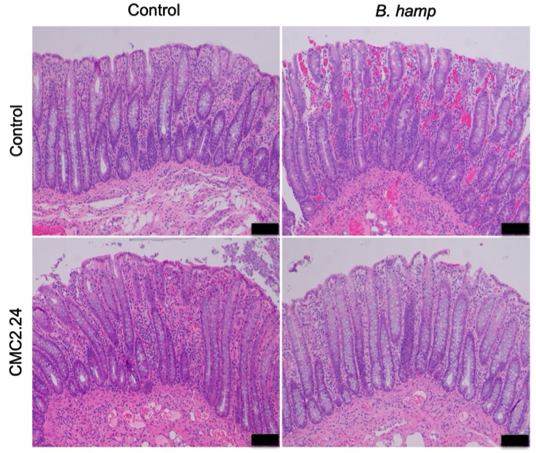
In controlled trials, weaned pigs were infected with Brachyspira hampsonii and treated orally with CMC2.24 from days five to nine post-infection. Researchers monitored clinical signs, bacterial shedding in feces, gut health and the production of beneficial metabolites in the gut. Lab tests examined the compound’s effect on bacteria and immune cells.
Pigs treated with CMC2.24 experienced an 82 percent reduction in the number of pigs showing clinical signs, less bacterial shedding, improved survival and healthier colons compared to untreated animals. Treated pigs also exhibited higher levels of beneficial gut metabolites, an indicator of improved intestinal health. Laboratory studies also showed CMC2.24 may limit bacterial activity and reduce harmful inflammation in the gut.
The compound works through a variety of ways. It weakens bacterial colonization, reducing excessive inflammation and protecting the gut’s mucosal barrier. Researchers believe this compound may be an attractive antibiotic alternative for managing swine dysentery.
For pork producers, the compound could help maintain pig health, improve survival and reduce the need for antibiotics. The study estimates CMC2.24 could save producers between $11 and $16.50 per pig in costs associated with swine dysentery, including treatments, reduced growth, increased feed conversion, mortality and non-marketable animals. An operation finishing 10,000 pigs a year could save $110,000 to $165,000. Across Canada, the savings could surpass $200 million. •
— By Mary MacArthur