Hog barn temperature control
When you put the thermostat controls into the hooves of the pigs they will tap it down five to eight degrees.
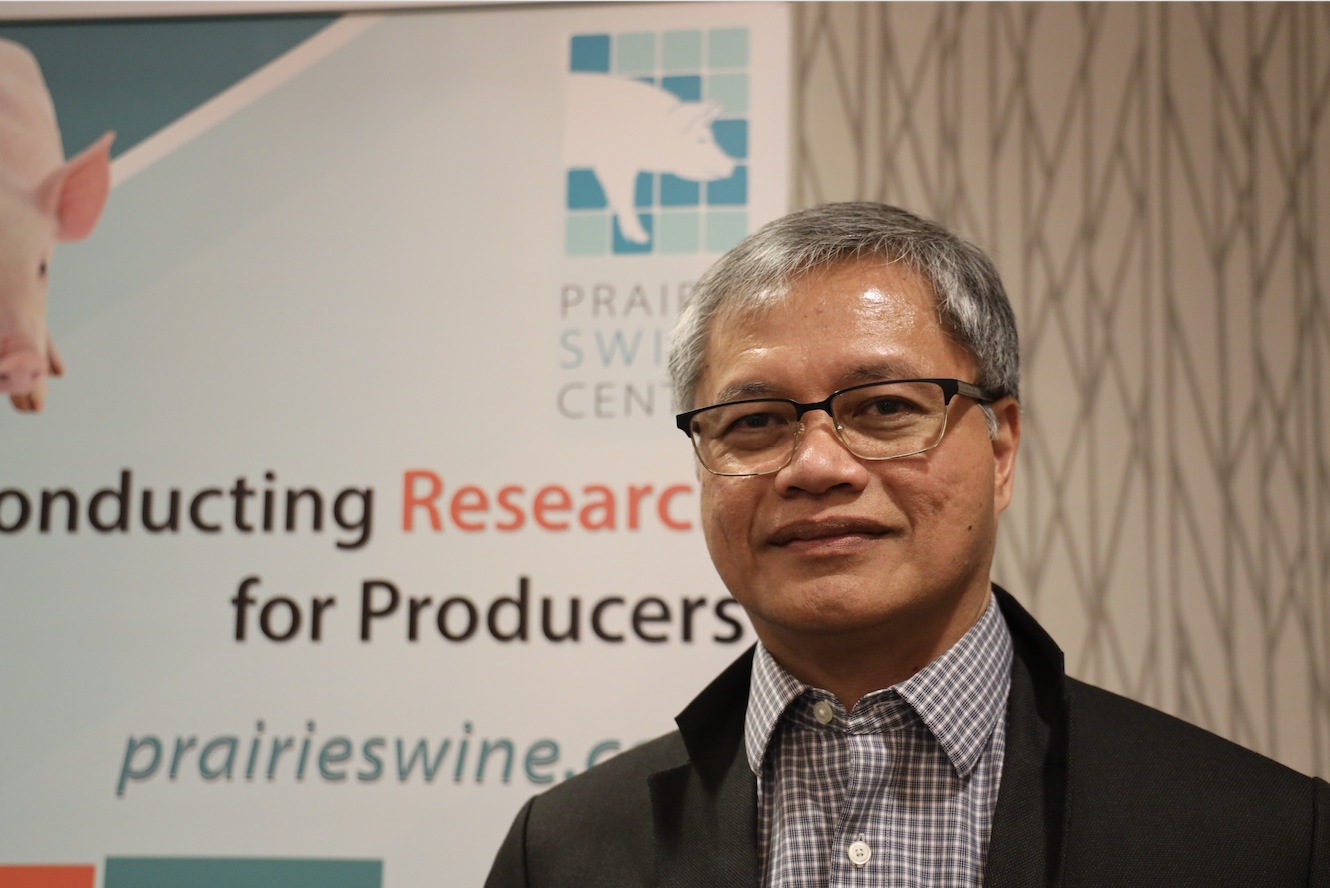
Instead of the normal, cozy 16.5 C in group sow housing, the pigs adjusted the temperature down to 8C without any noticeable side effects except energy savings, said Bernardo Predicala, a research scientist with the Prairie Swine Centre in Saskatoon.
Predicala said when the study was designed to allow the pigs to control the temperature in the barn, they thought the pigs may adjust the temperature in their group housing setting, but not as drastically as they did.
“We were expecting it to be lower, but not five to eight degrees lower. That is really significant. If it was lower by one or two degrees then maybe we continue what we have in the past, but five to eight degrees is really significant but then that is only the temperature.”
With plans to convert barns to group housing of mated sows and gilts by 2029 the study was an opportunity to look at all parts of barn design, including temperature, said Predicala.
“Group housing is going to come. We have no choice. What else can we benefit from by doing that? Maybe the pigs will huddle and cope with lower temperatures because in stalls they couldn’t huddle. Maybe we can lower the temperature in the barn.”
Early results showed when the temperature was reduced to 8C, there was a 39 percent reduction in electricity and a 53 percent reduction in natural gas consumption compared to when the temperature was set at 16C.
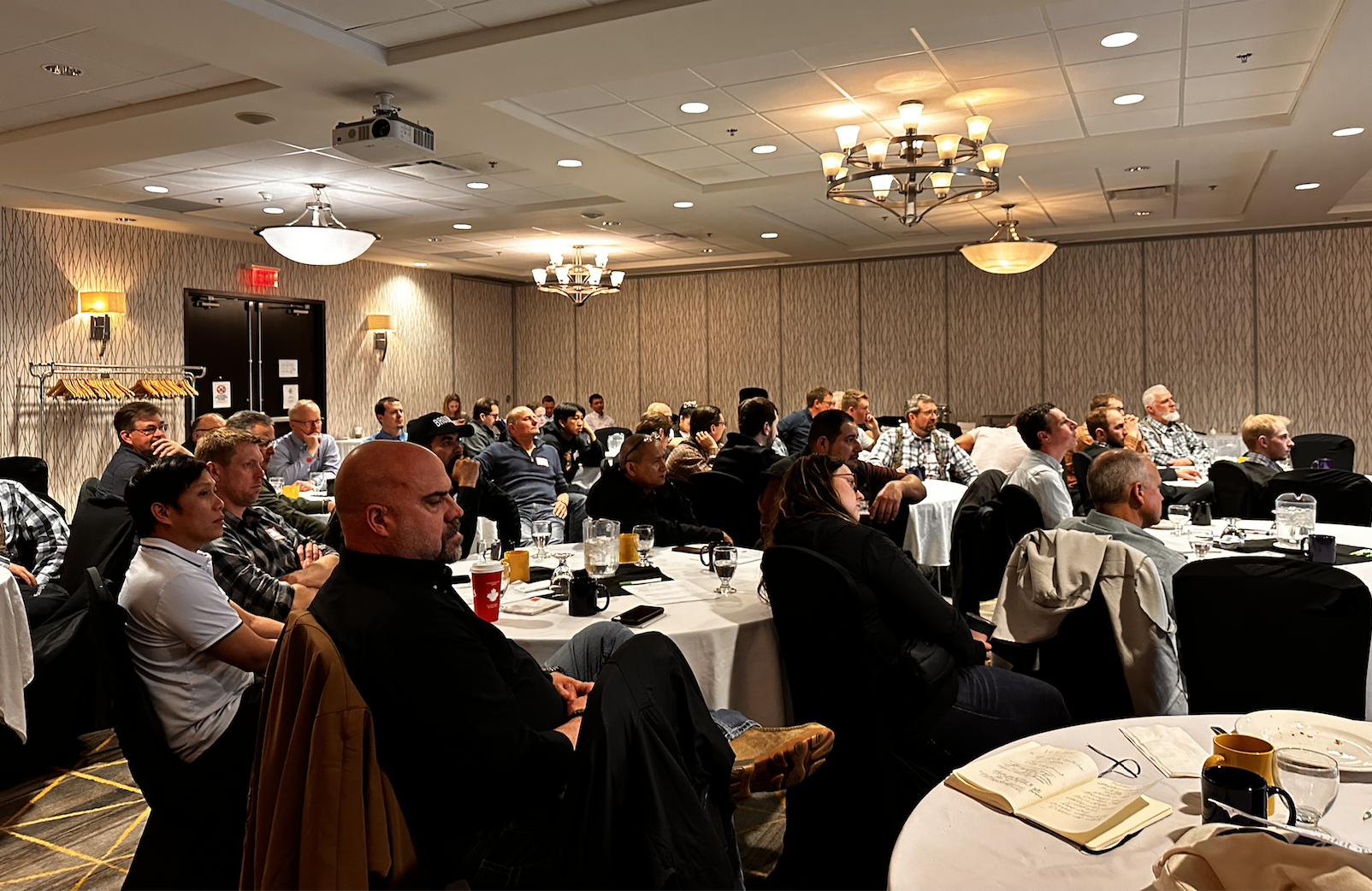
Tests showed the reproductive and growth performance was not adversely affected, Predicala told a group of pork producers at the Prairie Swine Centre producer meeting in Red Deer.
A similar study on grower-finisher pigs showed similar results. “Grower-finisher pigs can tolerate temperatures as low as 10C, which is significantly lower than current typical set points, without adversely impacting their growth performance and physiological response,” he said.
The forced change in housing design is an opportunity to look at historical norms. The pigs are different than they were years ago, barn designs have changed, feed rations have changed and maybe the set temperature in the barn during winter can also change, he said.
“Are those typical set point recommendations from long ago still the valid value we should be using?”
No significant feed increases or negative impacts on the sows were associated with the lower temperature, but more tests need to be done to see if there are pregnancy losses, or any impact on piglets, he said.
“There are lots of things to look at. Are they doing good? Maybe there are unintended consequences. Yes, we are saving on energy but there are things that are negative in terms of the sows. We don’t have that answer yet.”
Hog producer Peter Hofer said he likes the idea of challenging previous temperature settings. Was the normal 16C temperature based on science, or the comfort of the workers in the barn.
“How low do they actually like it? Is it just our own mentality how we grew up and how warm the room should be.”
Hofer also thinks we should challenge conventional beliefs in huddling. When he sees pigs huddling, he assumes it is because they are cold, but maybe it is just cuddling up to each other like piglets do in a farrowing crate.
“We are setting the temperature of what we would like the pigs to lay at. Maybe it is their natural instinct to huddle up to mom,” said Hofer, of Alix, Alta.
Before Hofer changes the heating temperature in the barn to save energy costs, he wants to see more research on the long-term impacts on the animals, especially any health issues.
“You can not fall over the dollar to pick up the penny.”

Nipple numbers
Pig litter sizes are getting larger. In January a sow in Brazil set a world record of a litter of 45 piglets, 41 born alive. At the same time as litter sizes are increasing so is the number of functioning nipples on a pig, said a Pig Improvement Company veterinarian.
“The total number of live piglets born is increasing year after year. We are already above the teat count of the total born. If we want to keep milking the same amount of piglets out there we need to have extra teats on the sow,” Mauricio Gonzalez told the Prairie Swine Centre producer meeting in Red Deer.
Ten years ago the average number of teats on a sow was 14. In 2018, 65 percent of the animals in PIC’s Elite Farms had 16 teats or more. In 2023, 69 percent of the animals had 16 or more teats.
“We are developing them year over year. We are genetically focusing on that trait.”
The benefit to more teats is simple, said Gonzales: “More functional teats is more access to milk. You can have more piglets on one sow. You increase the dinner table. You have more places to sit. You have more plates on the table and easy access to the resource. In this case the milk.”
Increasing the number of teats and the size of the litter is not enough on its own, but must go hand in hand with ensuring good sown body condition.
“We need to provide these animals what they need every day to ensure ideal body condition for maximum milking ability.”
“The message is that just keep your sows in ideal body condition with the focus on ideal when they enter the farrowing room or due to farrow. Feed consumption during lactation will be higher.”
Adding, “higher feed consumption will be translated into more milking ability and more milk production and you mitigate the risk of higher piglet mortality.”
Air filtered trusts to limit disease
A new air filtered transport truck design may help limit the spread of pig diseases between farms, said a Prairie Swine Centre research scientist.
The specially designed trucks, now in use in Europe, would not be used for general transport, but for hauling pigs between barns that demand disease-free pigs.
“The trucks are only for protecting pigs that are going to live somewhere else. That is why it is the genetic companies that are using it because it is demanded by their clients. When you are bringing genetic stock to a new plant then it has to be negative for all the listed diseases. The one way to do that is during transport not being exposed to diseases,” said Bernarado Predicala.
The addition of two filters in the prototype trailer was able to prevent airborne entry of pathogens into the animal compartment of the trailers in both warm and cold conditions.
Predicala said while there are at least two of the prototype trailers in Canada, they will only become more common if there is an increased disease risk in Canadian barns. Their studies showed “financial feasibility” of an air-filtered trailer with an estimated payback period of 2.8 years for an assumed price premium of $5 per pig for every stock transported in an air-filtered trailer.
PED rapid tests
A simple-to-use rapid test available to detect North American PEDv strains has been developed and ready to be handed over to a commercial company to make and promote, said a Prairie Swine Centre researcher.
Bernardo Predicala said the tests which can produce results in 30 minutes are ideal for testing for PEDv in barns, trucks or equipment is ready for commercial production.
“Hopefully we can get someone to make it commercially. It doesn’t need to be a pharmaceutical company, but from a university lab one batch at a time,” he said.
The centre proved the rapid tests can accurately detect PEDv and could be used in combination with existing PED surveillance and monitoring programs. The tests cost about $10 each.
Predicala said their goal was to develop the test kits, prove their validity and hand the project over to a commercial company. •
— By Mary MacArthur