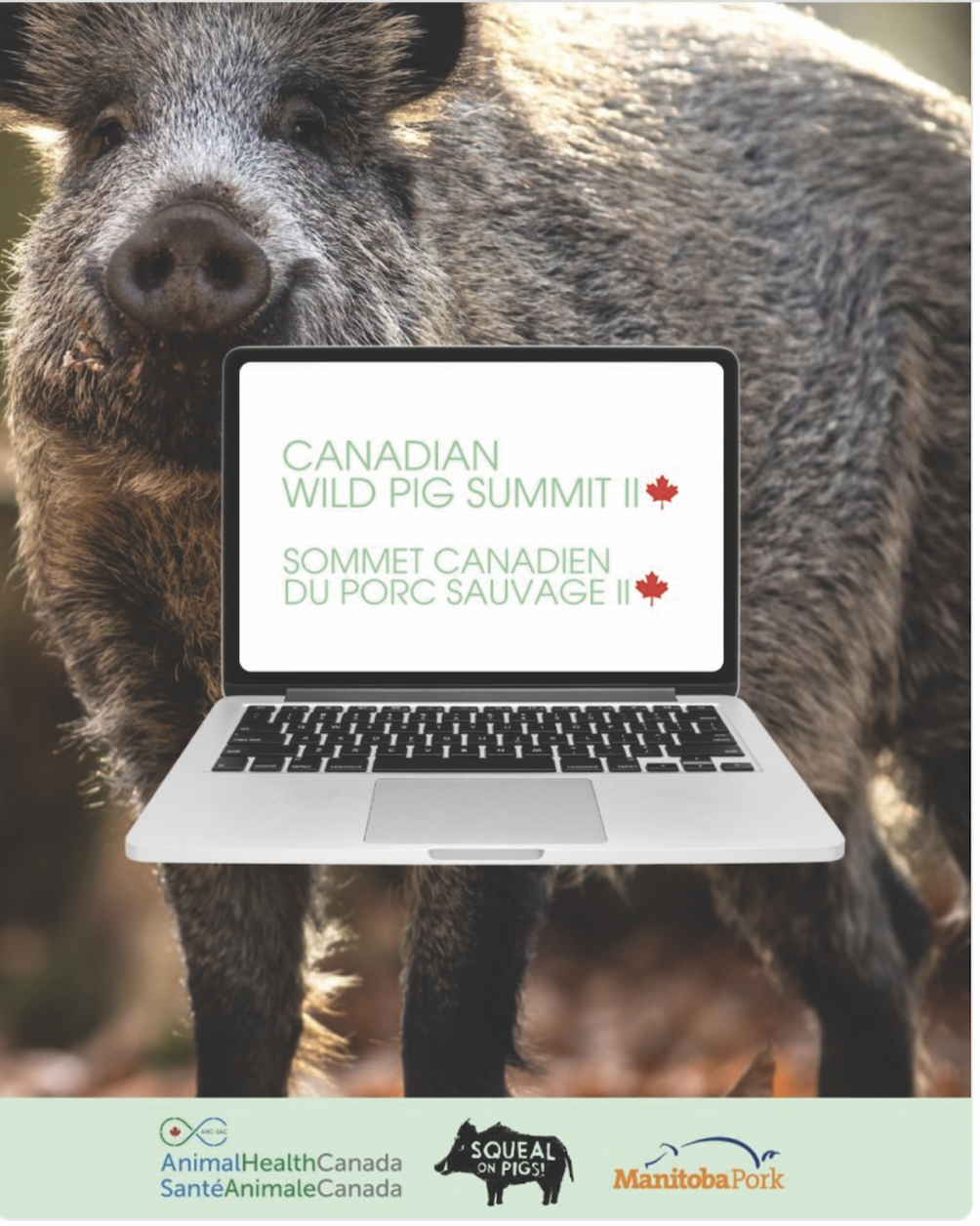
At the second Canadian Wild Pig Summit held virtually on April 29, 2025, Gabby Nichols, Programs Manager with Invasives Canada, delivered a detailed presentation on Indigenous engagement and its critical role in Canada’s invasive wild pig strategy. Her talk highlighted national efforts to incorporate Indigenous knowledge and leadership in the fight against invasive wild pigs.
“Thank you for the opportunity to speak,” said Nichols. “I’m here to share how Indigenous engagement shapes our national response to this growing issue.”
Invasives Canada, formerly the Canadian Council on Invasive Species, is a nonprofit that supports action against invasive species through tools, resources, and collaboration. Nichols noted the organization’s role in coordinating the National Invasive Wild Pig Leadership Group, supported by Animal Health Canada. The group includes regional partners working to implement Canada’s wild pig strategy.
Canada’s wild pig strategy emerged in 2021 in response to growing concerns about the ecological, agricultural, and disease risks wild pigs pose. The final strategy, released in 2023, focuses on four goals: assembling partners, raising awareness, coordinating eradication, and tracking impact.
“This is a living document,” Nichols explained. “It adapts to changes on the ground and integrates feedback, especially from Indigenous nations.”
A major theme of her presentation was the delayed, but now prioritized engagement with Indigenous communities. Although the original drafting doesn’t include Indigenous input, Nichols said recent efforts aim to rectify that.
“We recognize now that Indigenous participation should be in from the start. Wild pigs impact land, water, and wildlife—resources deeply tied to Indigenous culture and stewardship,” she said.
With new funding from Animal Health Canada, Invasives Canada partnered with Shared Value Solutions, an Indigenous-focused consulting firm, to restart engagement in 2024. This included surveys, regional webinars (focused on B.C., the Prairies, and Ontario), and one-on-one interviews with Indigenous nations and organizations.
“We connected with over 100 groups and learned about existing knowledge and concerns,” Nichols said. “The feedback was thoughtful and clear.”
Common themes included the need for continued engagement, increased Indigenous leadership, a distinction-based approach, and more public education. Participants emphasized that each Indigenous nation has unique rights, relationships, and perspectives, and the strategy must reflect that.
Another strong message is to respect and include Indigenous ways of knowing. “First Nations have been managing animals and landscapes for millennia. Their practices can complement Western science in eradication efforts,” said Nichols.
Land guardians and other Indigenous programs already active in environmental stewardship could also play key roles in pig surveillance, trapping, and response. Nichols added that these programs need proper funding.
“Dedicated support is essential. We can’t just ask communities to act without giving them the necessary tools and resources.”
Feedback also supported improved tools for reporting wild pig sightings. Nichols noted the importance of apps, websites, and non-digital options for remote communities. Consistent communication and long-term engagement are important.
“Many said we need to keep the conversation going, not just check a box,” she said.
Participants also called for public awareness campaigns targeting key groups like farmers, hunters, and trappers. Several emphasized the value of a central online portal with current data, resources, and reporting options. Others encouraged more transparency about regional pig activity and control actions.
Cross-jurisdictional coordination remains a top concern. “Pigs don’t know boundaries. We need aligned efforts across provinces and territories,” Nichols said. The creation of regional sub-strategies under the national plan also received strong support.
In March 2025, they shared a revised draft strategy reflecting this feedback with contributors. Updates include strengthened language on Indigenous rights, more precise implementation roles, and the integration of Indigenous-led recommendations.
Long-term actions remain. Nichols outlined goals to continue engagement, research cultural impacts, and increase Indigenous leadership across all levels. “We’re still learning and adapting. Indigenous engagement is not a one-off activity—it’s a sustained commitment.”
She said Indigenous experts should participate in leadership groups and field operations. Training opportunities for Indigenous land stewards and trappers should grow through collaboration.
Nichols also recommended that local and regional initiatives receive more funding and support to track wild pig movement and damage. Many communities already observe environmental changes, and supporting them strengthens our national response.
The updated strategy and a feedback-friendly website will launch soon. Nichols said the website will offer resources, reporting tools, and updates and serve as an ongoing feedback mechanism.
“We’re creating lasting mechanisms for dialogue,” she said. “The strategy must evolve as conditions and communities do.”
Nichols thanked Animal Health Canada for supporting the work and encouraged everyone to stay involved. “The path to wild pig eradication is collaborative. Indigenous perspectives are not just valuable—they’re essential.”
The Wild Pig Summit continues to provide a national platform for discussion, evidence sharing, and unified action against one of Canada’s most serious invasive species threats. •
— By Harry Siemens