The Indo-Pacific region continues to offer major growth opportunities for Canada’s beef and pork industries, as government, industry associations, and trade commissioners collaborate to expand market share and tackle access barriers in Southeast Asia.
At an online market briefing hosted by the Indo-Pacific Agriculture and Agri-Food Office (IPAAO) on May 13, Canadian officials and trade leaders explored export dynamics and upcoming market priorities in six ASEAN (Association of Southeast Asian Nations) countries: Indonesia, Vietnam, the Philippines, Malaysia, Thailand, and Singapore.
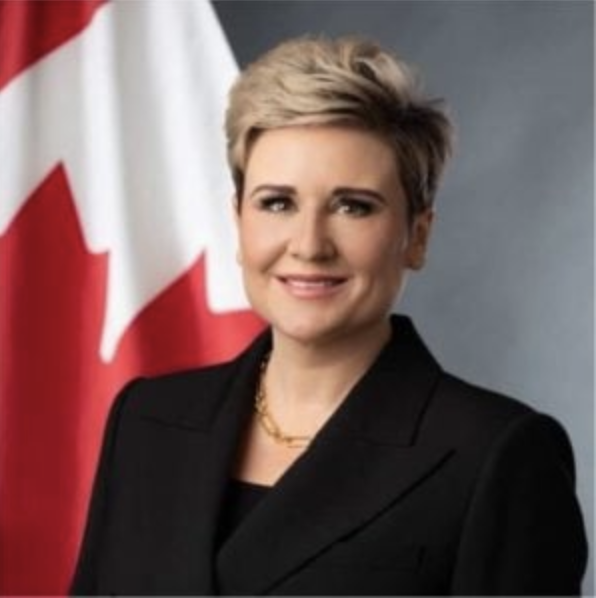
“The Indo-Pacific region is not a homogeneous space. There are real differences in access, consumer demand, pricing expectations, and trade policy,” said Diedrah Kelly, Executive Director of Indo-Pacific Agriculture and Agri-Food Office.
“But across the board, we are hearing: they want to do more with Canada.”
The IPAAO, launched late in 2022, is a joint initiative between Agriculture and Agri-Food Canada (AAFC) and the Canadian Food Inspection Agency (CFIA). It is part of an ongoing commitment to bolster ties, advance technical cooperation, assist Canadian exporters in finding new business opportunities, and help position Canada as a preferred supplier in the region.
Kelly said the region is closely watching U.S. tariffs and negotiations with China. While some countries consider new bilateral deals with the U.S., others are considering Canada to diversify supply chains.
Canada Pork and Canada Beef joined the session alongside representatives from the Canadian Meat Council, Canadian Cattle Association, and major processors such as JBS Canada. Representatives emphasized that Southeast Asia remains a critical area of future demand despite logistical and regulatory challenges.
“The Philippines is already an important pork export market for Canada,” said Annie Tremblay from Canada Pork. “But we also see real growth potential in Singapore, Malaysia, and Vietnam.”
Albert Eringfeld, V-P, Export Market Development, who leads international market development for Canada Beef, highlighted a busy agenda of trade shows, missions, and promotional campaigns in the region.
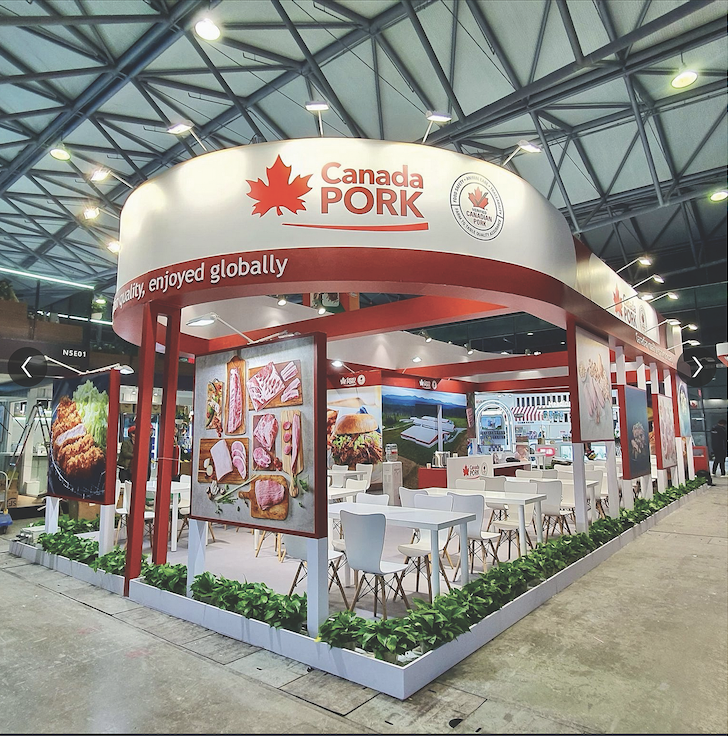
“We’re present on the ground in Vietnam, Taiwan, South Korea, and the Philippines,” said Eringfeld.
He added “Over the next six months, we’re hosting events in Hong Kong, Indonesia, and the Philippines, and plan to bring key buyers to the Calgary Stampede.”
Most of the meeting focused on the importance of branding and building presence. Trade Commissioner Wayne Fan from the IPAAO detailed market data for pork and beef across ASEAN’s six largest economies. He emphasized that the Philippines and Singapore represent the clearest short-term wins.
“We have strong market access in the Philippines and Singapore. It’s not about removing trade barriers anymore – it’s about getting Canadian products in front of buyers,” Fan said.
He presented import data showing that while Canada performs well in the Philippines, it trails competitors like the U.S., Australia, and Brazil in Singapore despite offering comparable or superior product quality. Singapore imports premium chilled cuts, which Canada offers.
“But we’re only capturing 0.5 percent of their pork imports compared to 18 percent by the U.S.,” he said. “That’s a market development gap we can close.”
Malaysia was another standout. Canada holds 12 percent market share of Malaysia’s pork imports and faces no market access restrictions. Katia-Maud Laflamme from the Canadian High Commission in Kuala Lumpur said the market is ripe for further expansion.
“Local industry is tired of cheap buffalo meat coming in as beef. There’s demand for authentic, premium Canadian meat,” she said. “Canada already has a great brand reputation here. We need to leverage it.”
However, not all markets are open. Thailand remains closed to Canadian pork exports due to self-sufficiency policies. Indonesia permits beef and pork imports, but the certification and quota systems are complex.
Jasmine Labelle, Counsellor (Agriculture) and Regional Trade Commissioner in Jakarta, explained that Indonesia has regained access to boneless Canadian beef as of 2025, but challenges remain. “The market requires facility audits, import quotas, and importer registration. It’s not a simple file. But it’s active, and we’re working on it.”
Kelly added, “Indonesia is talking dairy, dairy, dairy. They want to supply school milk for millions of children. If we can offer genetics or technical expertise to support that, even if we don’t sell live dairy cows, we become part of the solution.”
Canada Beef and CCA flagged concerns about ongoing delays, especially in processing approvals in Indonesia.
Trade officials and industry leaders agreed that momentum is building despite these barriers. Martin Sullivan of the IPAAO outlined dozens of upcoming events, including major trade shows and missions where buyers will sample Canadian pork and beef. •
— By Harry Siemens