
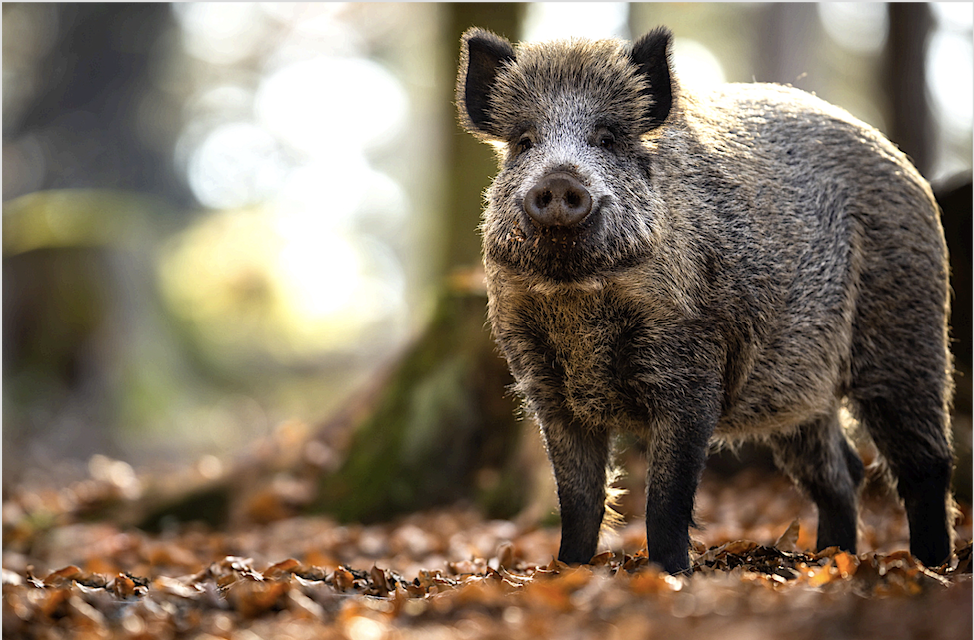
Experts from across Canada gathered virtually on April 29, 2025, for the second Canadian Wild Pig Summit, hosted by Animal Health Canada in partnership with Squeal on Pigs Manitoba and Manitoba Pork. The event highlighted national progress in monitoring, managing, and removing invasive wild pigs, while supporting broader efforts to prevent African Swine Fever (ASF) through the Pan-Canadian Action Plan.
Erica Charlton, Director of Animal Health Canada’ s emergency management division, welcomed over 200 registered attendees. “Thank you so much for your interest in this event.”
Wild pigs significantly impact the environment, agriculture, natural habitats, and native species. They can also serve as reservoirs for diseases threatening wildlife and livestock, with African Swine Fever being our most significant concern.
Charlton explained that while ASF has not reached Canada, the country continues to take proactive steps. “The Canadian Invasive Wild Pig Strategy coordinates and supports regional prevention, management, and removal efforts,” she said. “This summit is one of several initiatives supporting that strategy, and ultimately supports the Pan-Canadian Action Plan on ASF to enhance national prevention, preparedness, and response efforts in the event of an outbreak.”
The virtual format allowed for broader access and no registration fees. Presenters shared recent field updates from Saskatchewan, Manitoba, Alberta, and Ontario, including insights on Indigenous engagement and new technologies for tracking wild pigs. “We wanted to focus this year’s content more tightly and highlight the tools, progress, and lessons from those working directly on the ground,” said Charlton. She also thanked Squeal on Pigs Manitoba and Manitoba Pork for their help organizing the event, and acknowledged support from the Government of Canada through the Sustainable Canadian Agricultural Partnership.
One presentation came from Dr. Doug Schindler, President and Senior Scientist at Joro Consultants Inc., who shared results from an aerial wild pig survey conducted in January 2025 for the Saskatchewan Crop Insurance Corporation (SCIC). “Our goal was to support wild pig eradication by estimating population density, identifying overwintering sites, and refining management strategies.”
Dr. Schindler explained that wild pigs came through escape and intentional domestic stock release in the late 20th century. They are highly adaptable animals that cause significant damage to cropland, native vegetation, and wetlands. They also threaten livestock as disease vectors. The aerial survey targeted east-central Saskatchewan, specifically around the Tisdale area. The region was divided into blocks based on reported sightings and habitat conditions, with a complete census conducted in Block A and partial surveys in Blocks B and C.
“In Block A, we observed 20 groups totalling 107 animals, with an average group size of 5.4 pigs,” Schindler said. “The pigs clustered in cattail wetlands and willow thickets, areas ideal for winter nesting and foraging.” Block B had 32 pigs in eight groups, and Block C had 19 pigs in four groups. “We also noted extensive rooting, nesting, and trenching activity in those areas.”
Schindler reported a density of 0.23 animals per square kilometre in Block A and observed that lone adult boars, usually males, were often far from sounders.
“Our results showed pigs distributed unevenly across the landscape,” he said.
However, they show strong habitat preferences, particularly for Typha wetlands with nearby forest cover. These findings closely align with SCIC’s current trapping efforts, validating their focus areas.”
Charlton emphasized the need for cross-sector collaboration. “Animal Health Canada is proud to coordinate these efforts across federal, provincial, and territorial governments, industry, and other animal health partners,” she said. “Sharing data and best practices like this helps everyone move forward with a more effective, unified strategy.”
Dr. Schindler said the aerial survey was a full count rather than a distance sample due to the low number of wild pigs observed, but he expressed confidence in the results. “We saw lots of other wildlife and followed an intensive search pattern,” he said. “You don’t just fly by—you circle and flush the pigs out.” He added that aerial hunting could be a highly effective control method if done by the right team, though retrieval and cost remain key challenges.
He told summit attendees that with more aerial surveys across representative habitats, researchers could estimate Canada’s wild pig population by building resource selection models and national risk maps. He explained that wild pigs rely heavily on cattail roots in winter and show limited signs of reproduction during the cold months. “We only saw one group with piglets,” he said. “Their winter home ranges are small due to snow, but lone boars likely travel much farther.”
Schindler emphasized that winter surveys are essential for validating control strategies and guiding future planning. •
— By Harry Siemens