Vertical integration comes in many forms across Alberta; some massive, some not so much.
About 15 minutes west of Didsbury, a young couple with three small children hope to grow their farming business enough that it can support the whole family.
Aron and Aleah de Gier were still newlyweds when they moved onto their two-acre plot, about 12 years ago. Access to a few extra acres of adjacent farmland provided an opportunity for Aleah to develop a market garden and raise a few beef calves while Aron completed his welding apprenticeship.
Bolstered by Aleah’s experience working on her parents’ market garden, just a few kilometres away, Beef and Greens began making its mark at local farmers’ markets about three years later, offering fresh vegetables and home-grown beef.
Ironically, the de Giers are not building their future on beef or greens. Rather, they have become hooked on hogs.
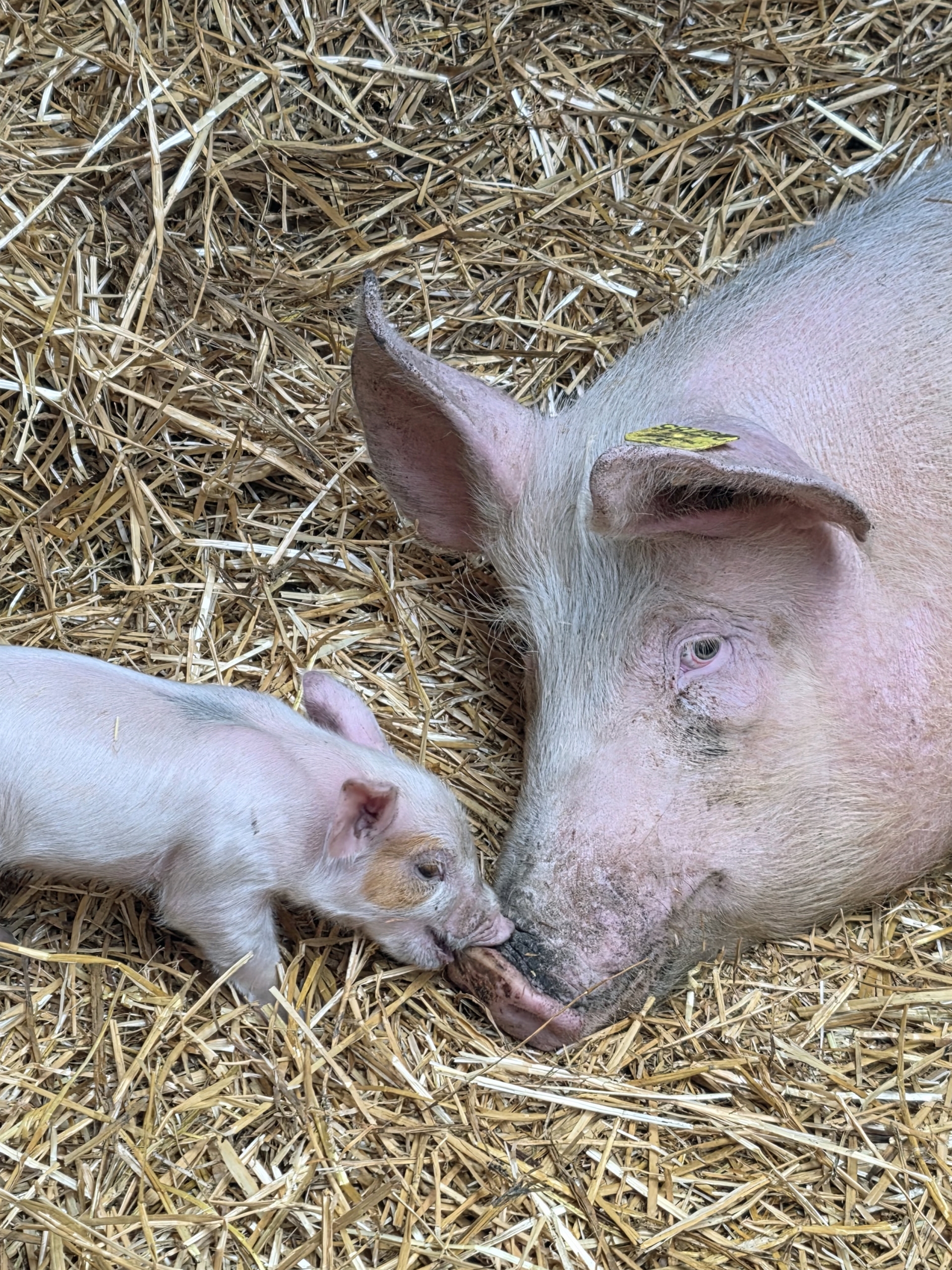
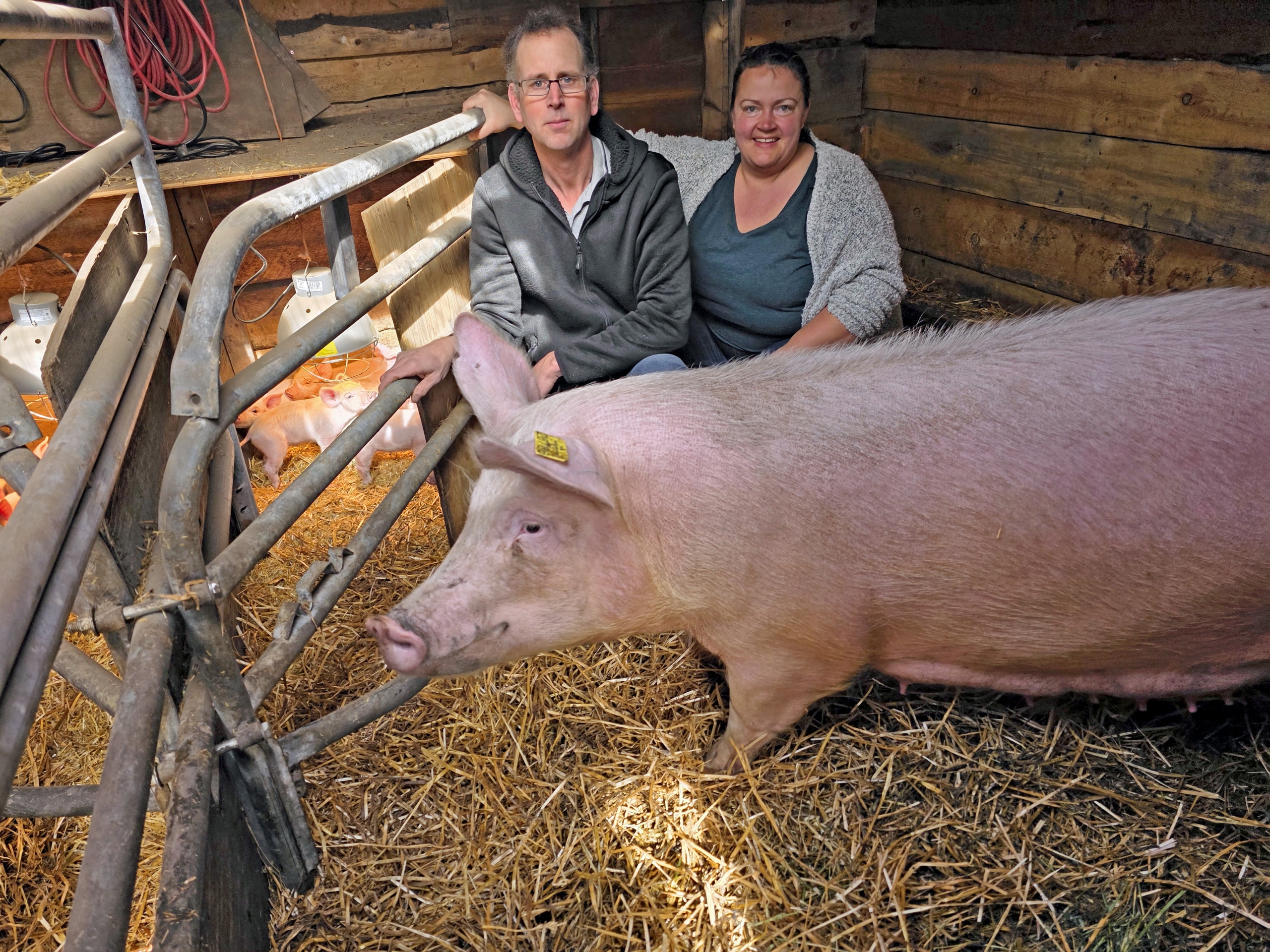
“We started off with beef and vegetables and we were doing pretty good with that,” said Aleah during a walk through the small barn where three sows are each nursing a batch of healthy pigs, one litter ready to wean and two more that had just been farrowed a week earlier.
“We were also doing chickens at first and so that was going okay, and then we decided to get into pigs, because a bunch of our customers like pork.”
Encouraged by the continuing inquiries about pork products, she and Aron purchased their first three weaners about six years ago, raised them to slaughter weight, and then had them processed at a facility near Penhold.
Satisfied with the results, they purchased a few more weaners. They held back a couple of the gilts to try their hand at farrowing their own pigs. Raised in the Netherlands, Aron had worked as a teenager on a 250-sow farm, so they weren’t completely green – but they had a steep learning curve ahead.
The commercial gilts they tried breeding were good mothers, but the litters were small and the pigs weren’t up to snuff. Their first farrowing pen was a multi-purpose shed, divided into two small units. A high-quality gilt purchased later ended up crushing her first litter in the deep wallow she had dug in a pen that was too small.
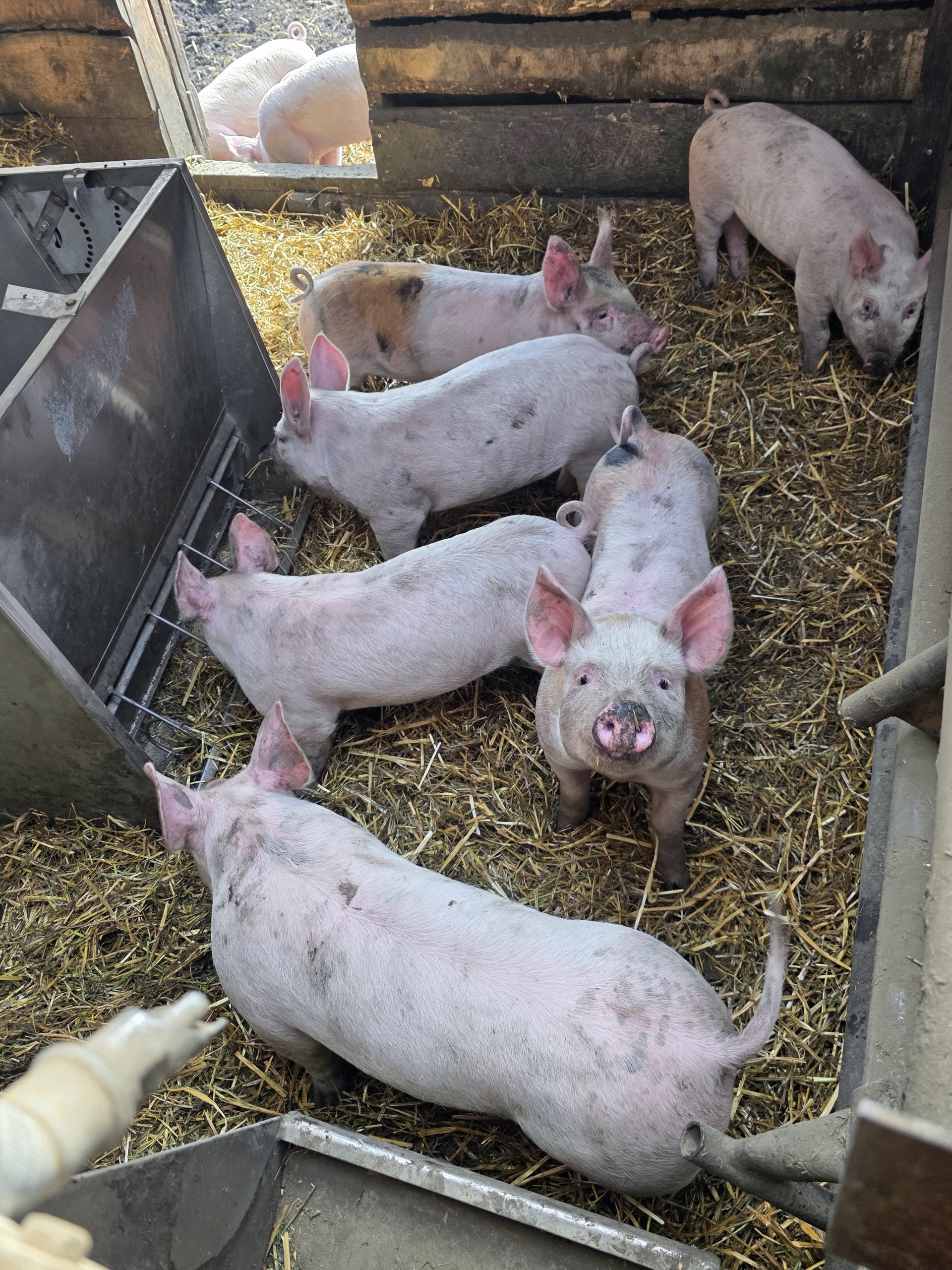
The de Giers also experimented with different breeds and different feeds. They learned that heritage breeds, especially dark-skinned varieties such as Berkshires, were too fatty for most consumers and the sows had smaller litters.
Additionally, they learned that a few extra dollars spent on purchasing specialized rations would significantly improve weaner performance.
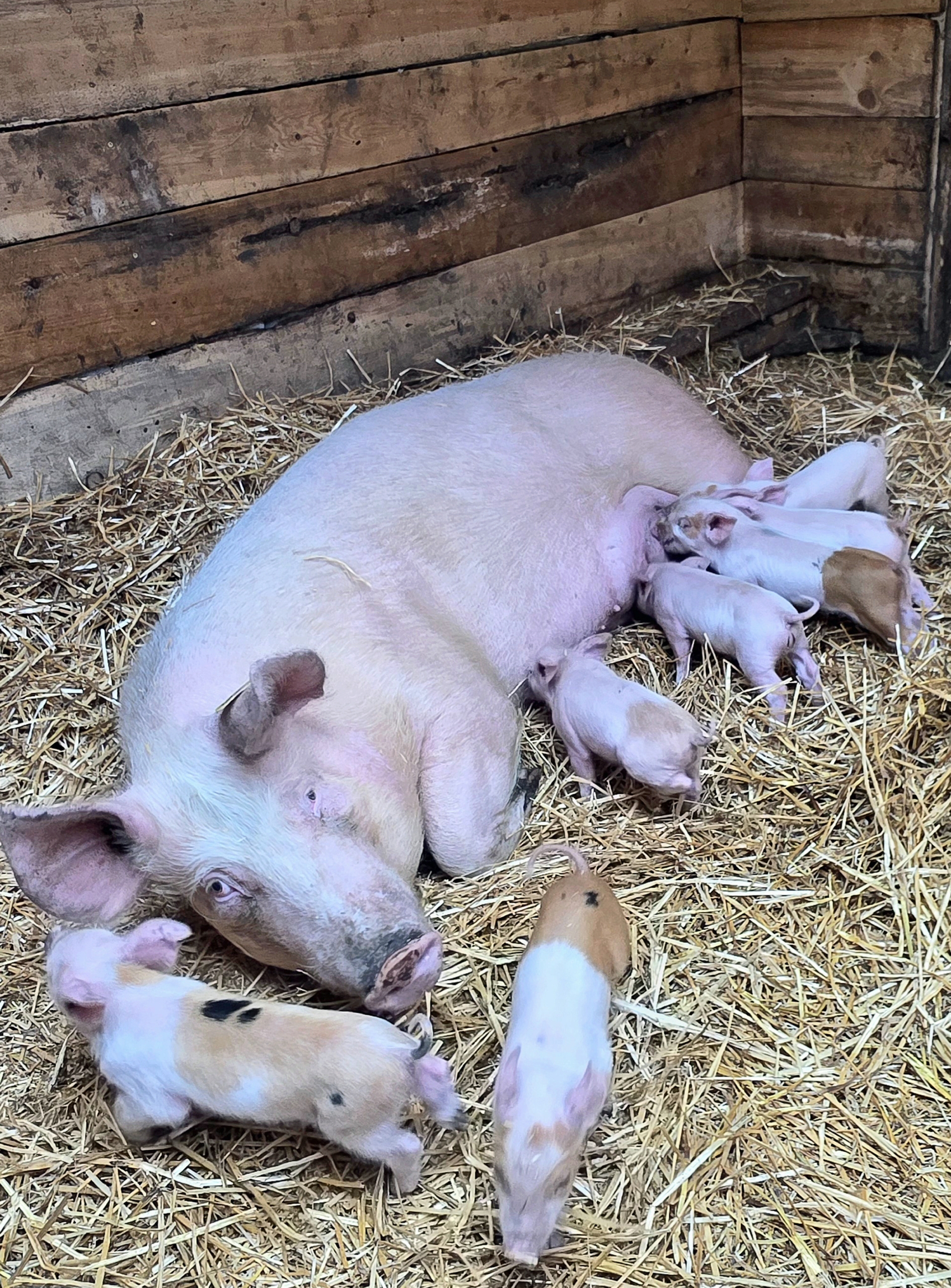
With six years of hog farming under their belts, Aron and Aleah are now set up in a small barn with three pens, all of which have outdoor access. Sows and their litters are bedded on straw and each pen has a creep with a heat lamp where the pigs can rest between meals.
Production this spring was 11 pigs each from the two gilts and 10 from a sow that had four previous litters.
All replacement gilts are now TN70s from Topigs Norsvin, bred by artificial insemination to Duroc semen provided by Magnum Swine Genetics.
Aron says that while he castrates the male pigs, he does not nip teeth or dock tails because there has not been a lot of problem with aggression among the piglets. One tail biting issue was resolved through fine-tuning the minerals provided in the ration.
Deworming is performed through providing natural ingredients including charcoal while composted straw provides supplemental iron.
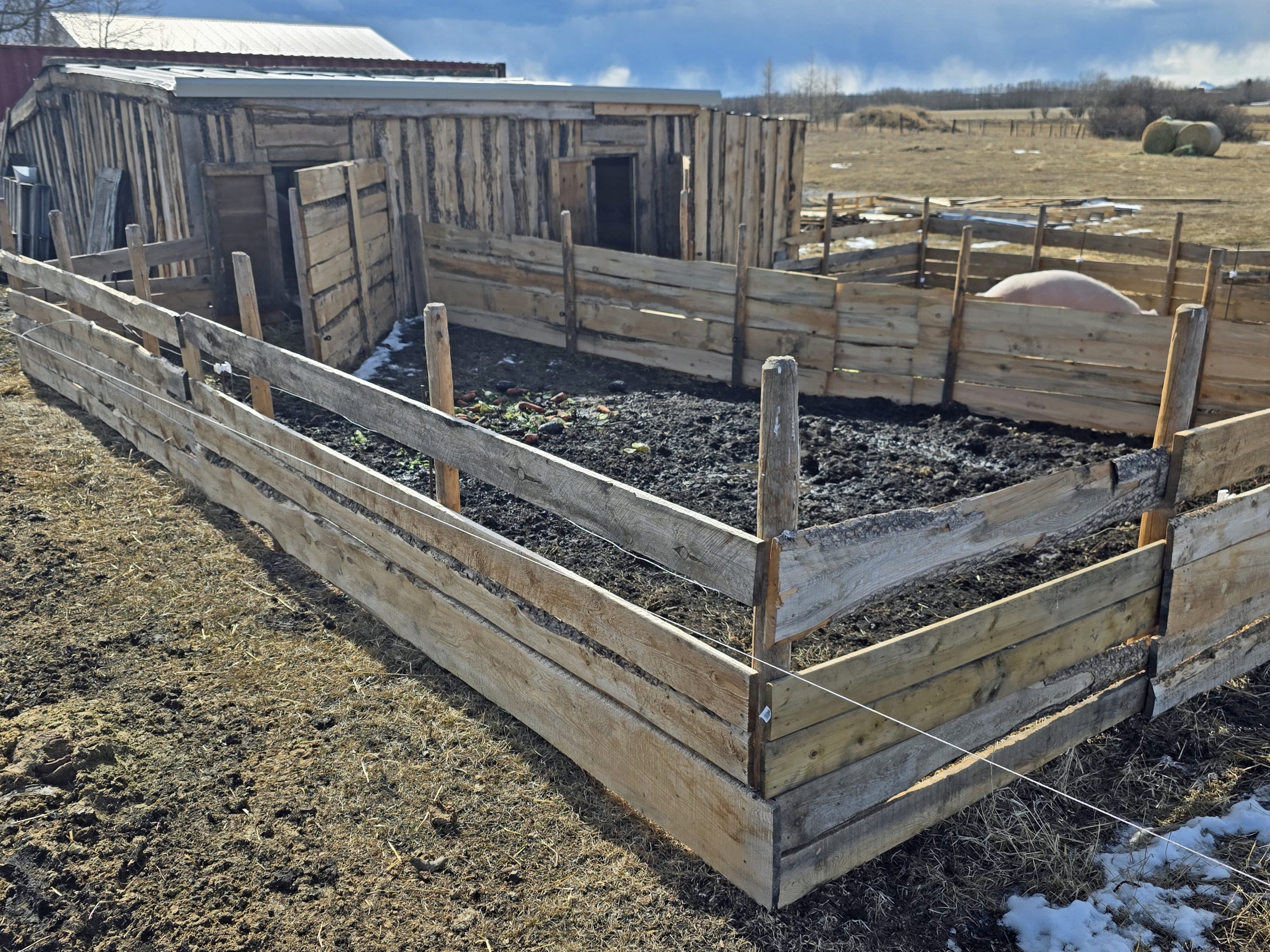
Weaned hogs are shipped for finishing to a secondary site, where the de Giers have leased 12 acres and shelter on a former feedlot.
Aleah kicked their marketing program into gear by reaching out to former customers of her parents, who had sold their farm and moved away.
“I learned a lot there on marketing, because back then there was this website that you could advertise your market garden, and through that, we actually got a TV spot, which I don’t know if it really got us a ton of customers,” she said.
“As a result, I did have a bit of a customer base because they stopped that farm and then a couple years passed and then we started a farm.
“So, I reached out to my prior customers . . . and I said, ‘Hey? You know, we’re doing this.’”
The farmers’ markets were good for products that they could put on the table, including vegetables and bread, but not so good for selling meat that could not be displayed.
Aleah said 2021 was the last year that she and Aron used a farmers’ market.
“I was there with a playpen in the back and my baby crawling around and I sold bread and microgreens on the table, and I had my information out that we were doing beef and pork at that time . . . but the amount of people that would engage me in conversation about the other stuff that wasn’t physically on the table was very low.”
With their third child on the way, the de Giers decided to quit the market garden because it was too much work for Aleah and concentrate instead on hogs and a bit of beef.
Meat sales proved better through social media advertising, including Facebook and Kijiji.
“The first time that we wound up having to advertise on Facebook, we had determined a delivery date, and we were going to go to Calgary, so I advertised locally and in Calgary, and within two days, we had everything that we had available sold – and some of them were coming in from hours away.”
Six years into their operation, they deliver as far away as Red Deer, Rimbey and Calgary. They sell their meat for $4.50 per pound and average $2 a head in profits, with their pork sales now bringing in 15 to 20 per cent of their net annual income.
They want to grow that number to 100 per cent and are weighing the possibility of finding a better site for their operation.
Aron has arranged to learn meat cutting from one of the butchers who has been processing their hogs, with plans to leave his welding job and do the cutting and wrapping on farm in the future.
Finding and keeping butchers has been a problem, he said, partly because of timing and largely because most butchers don’t like to do hogs. Timing can be an issue, and the facility has to be thoroughly cleaned after the hogs are processed because they are so greasy.
One butcher, who had done a great job on two previous sets of hogs, told them that he was never going to cut another pig.
Maintaining a consistent product has been difficult, because some butchers do not make bacon or hams, while those who do all have different recipes. Therefore, repeat customers are sometimes put off because the flavours are different.
Also throwing a wrench into their efforts is the boar’s nest of regulations which determine, among other things, the level of inspection required for them to sell their meat. There is no inspection required for sale of a whole carcass, but halves must be inspected as do the carcasses that go into boxed meat.
The de Giers hope their marketing plan will gain traction and become the sole source of income for their family. Already, two of the children are showing interest in farming and animals. The middle child, however, has set his sites elsewhere. He wants to be a gold miner. •
— By Brenda Kossowan